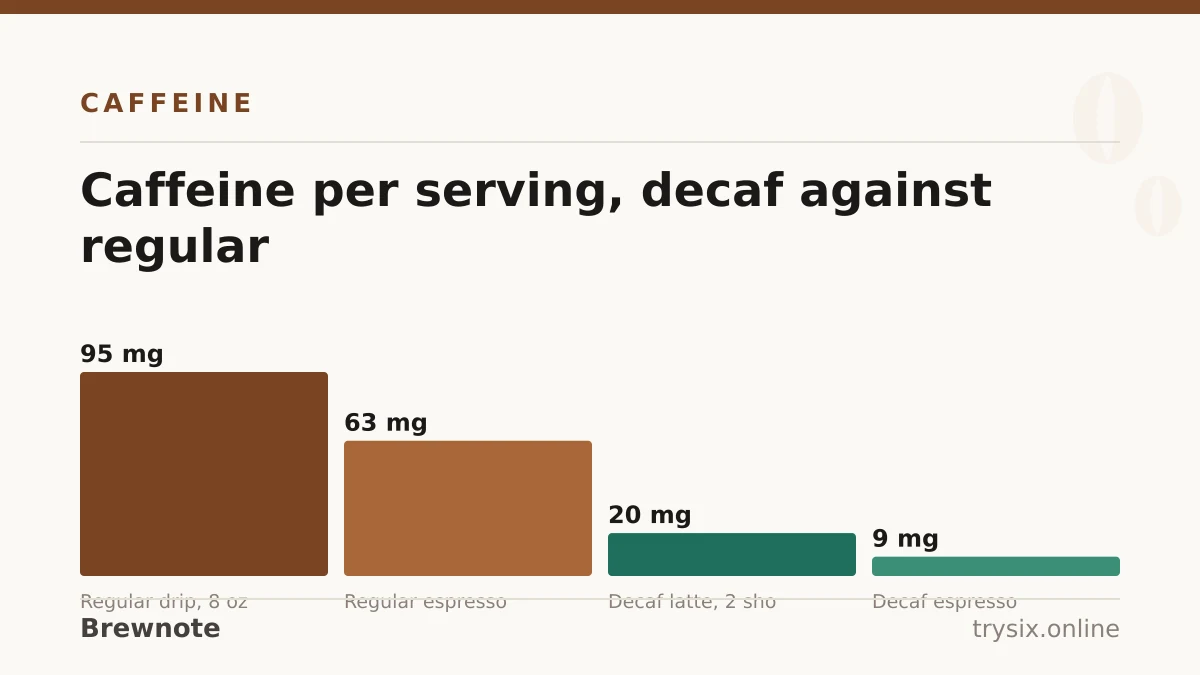
Most people assume decaf means no caffeine, which is a fair reading of the word. It is not quite what the label means, and if you have ever wondered whether that evening decaf is really keeping you up, the answer is more interesting than a simple yes or no.
The numbers
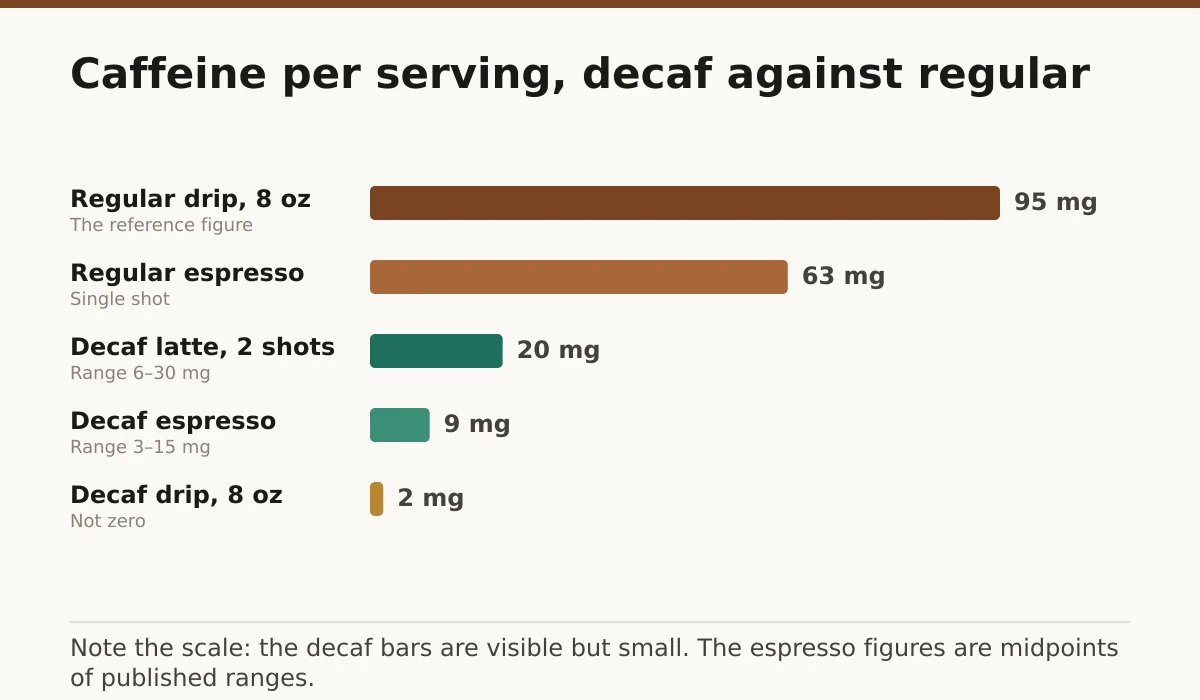
| Drink | Serving | Caffeine | Versus regular |
|---|---|---|---|
| Decaf drip coffee | 8 oz | ~2 mg | About 2% |
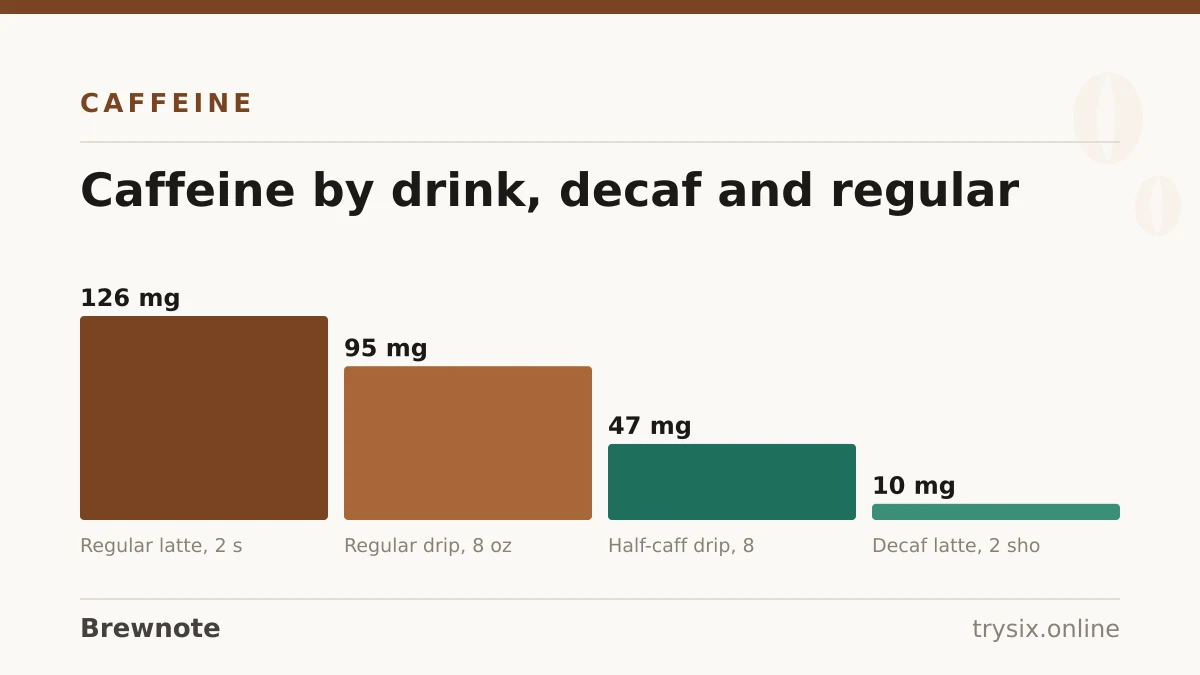
| Regular drip coffee | 8 oz | ~95 mg | — |
| Decaf espresso | 1 shot | 3–15 mg | 5–20% of a regular shot |
| Regular espresso | 1 shot | ~63 mg | — |
| Decaf, 5 cups | 40 oz | ~10 mg | About 1 regular half-cup |
| Decaf instant | 8 oz | ~2 mg | Similar to decaf brewed |
What the 97 percent rule actually says
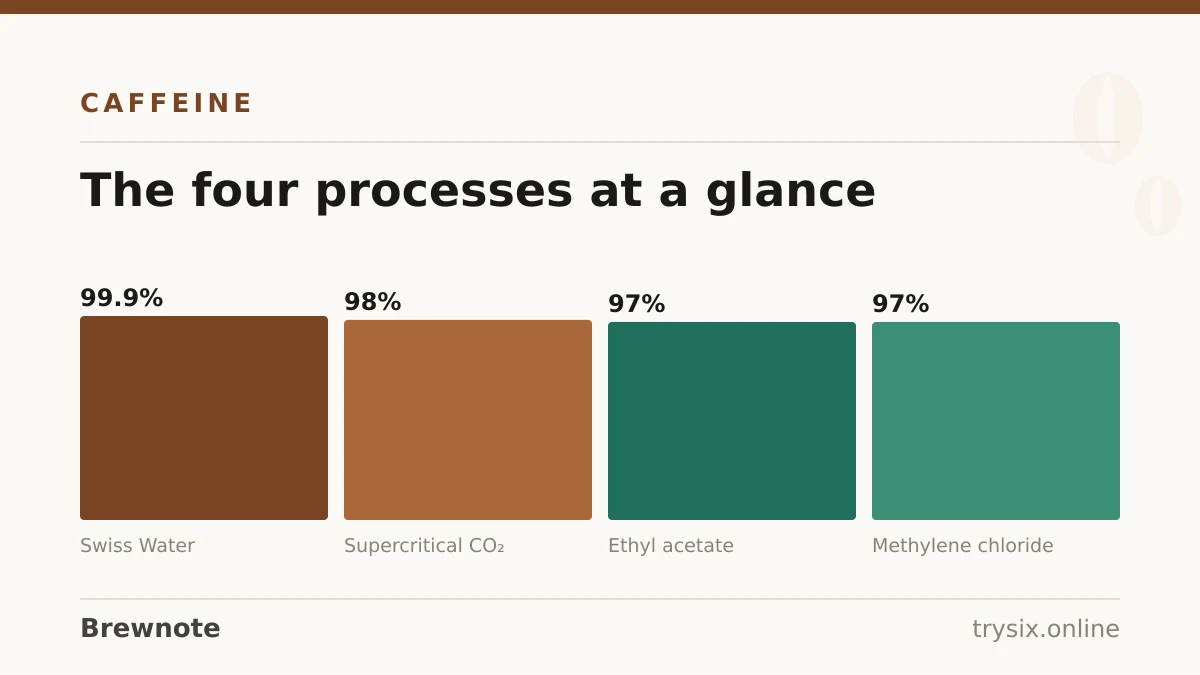
In the United States, coffee sold as decaffeinated must have had at least 97 percent of its caffeine removed. That is a process standard applied to the coffee, not a cap on what ends up in your cup — and it is expressed as a removal percentage precisely because complete removal is not achievable at commercial scale.
The EU standard is stricter in form: roasted decaffeinated coffee must not exceed 0.1 percent caffeine by dry weight. Both approaches leave a small residue, and both mean the word 'decaffeinated' describes a threshold rather than an absence.
Why decaf espresso is different
A decaf espresso shot carries meaningfully more caffeine than a cup of decaf drip — 3 to 15 mg against about 2 mg — for the same reason regular espresso is concentrated. The dose of coffee per serving is high and the volume is small.
The range is also wider, because it depends on the dose, the bean species and how thoroughly that particular batch was decaffeinated. A decaf latte with two shots could reach 30 mg — still under a third of a regular cup of coffee, but no longer negligible if you are counting carefully. Decaf espresso and lattes has the detail.
When the residue matters
For most people, it does not. Two milligrams is well below the threshold at which caffeine produces measurable effects in adults. The situations where it is worth attention are specific.
- Very high consumption. Ten cups of decaf is around 20 mg — a fifth of a regular cup. Noticeable for someone unusually sensitive.
- Clinical caffeine restriction. If a clinician has told you to eliminate caffeine rather than reduce it, decaf is not the same as none, and that is a conversation to have with them.
- Decaf espresso drinks. Several decaf lattes in a day can reach 60 to 90 mg, which is a real dose.
- Late-evening drinking by people with disrupted sleep. The evidence here is thin, but 20 mg is not nothing for someone who reacts strongly.
What decaf is genuinely useful for is the large majority of cases: wanting the drink without the stimulant, in the evening, or when reducing intake. The reduction is real and large — roughly 98 percent — even though it is not total.
Does decaf taste different?
Historically, yes, and often badly. Decaffeination was once a crude process that stripped flavour along with caffeine, which is where decaf's reputation comes from. Modern processes — particularly Swiss Water and carbon dioxide methods — are considerably better, and good decaf from a roaster who cares is a genuinely pleasant cup.
Two structural things remain true. Decaf beans are more fragile and roast faster, so they are easy to over-roast, and the decaffeination step happens before roasting, adding weeks to the supply chain. Buying decaf from a roaster who dates their bags matters more than it does for regular coffee. How is decaf coffee made covers the processes.
| Signal | Why it matters |
|---|---|
| Named process (Swiss Water, CO₂, sugarcane) | Roasters who name it usually chose it deliberately |
| Roast date on the bag | Decaf stales like any coffee; the supply chain is longer |
| Medium roast rather than dark | Decaf beans roast faster and scorch easily |
| Single origin | Suggests the coffee was worth decaffeinating |
| No process named at all | Often solvent-based commodity decaf |
The related claims
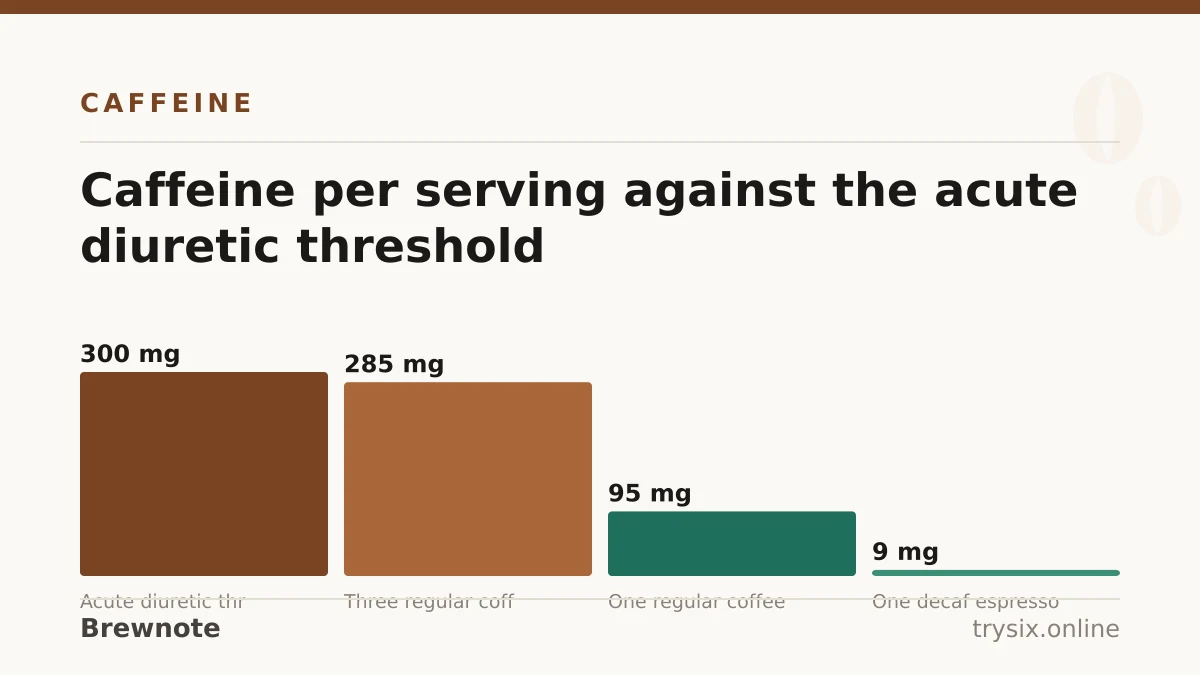
Two things frequently asserted about decaf are worth separating. That it dehydrates you: this is largely unsupported, and even regular coffee's diuretic effect is smaller than commonly believed — is decaf coffee a diuretic goes through the evidence. That it causes anxiety: with 2 mg per cup, a pharmacological mechanism is implausible for most people, though decaf is not a placebo either.
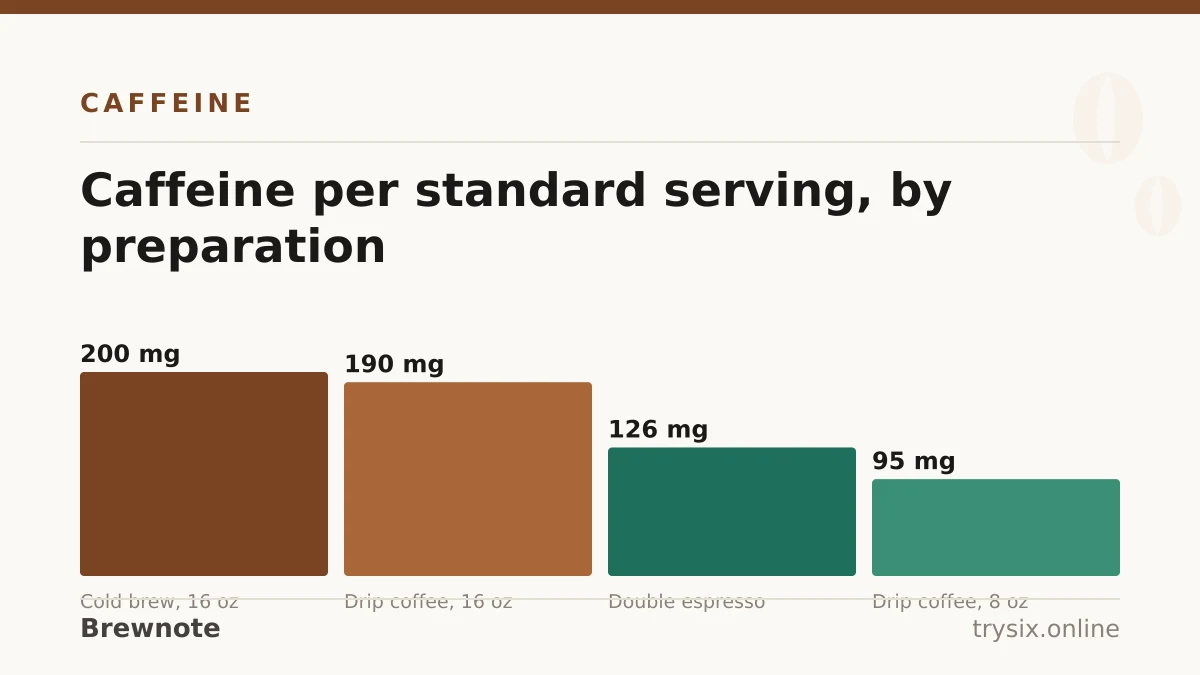
If you are tracking intake across all sources, the FDA's 400 mg per day reference for healthy adults is the usual anchor, and how much caffeine is in a cup of coffee has the figures for everything else you might be drinking.