Brewing
What Is Ground Coffee?
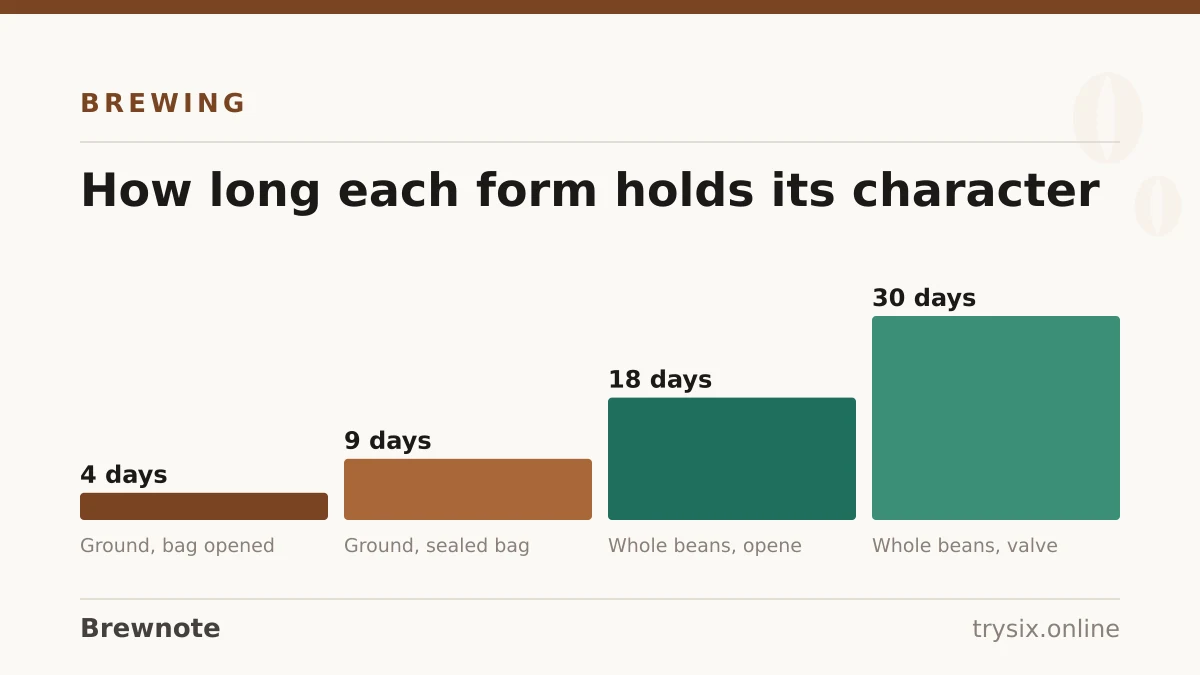
Ground coffee is roasted beans broken into particles for brewing. What the grind labels mean, how it differs from instant, and how fast it goes stale.
Read
Ratios, grind, water and time — the four dials that decide how a cup tastes.
Almost every complaint about home coffee — bitter, sour, thin, harsh — traces back to one of four variables: how much coffee you used, how finely it was ground, how hot the water was, and how long the two were in contact. Change one and the cup changes predictably.
These guides start from a 1:16 ratio by weight (about 60 g of coffee per litre of water) and 200°F water, then explain what to move when the result is wrong. Where a method needs no machine at all, we say so and give the ratio anyway.
Brewing
Ground coffee is roasted beans broken into particles for brewing. What the grind labels mean, how it differs from instant, and how fast it goes stale.
Read
Brewing
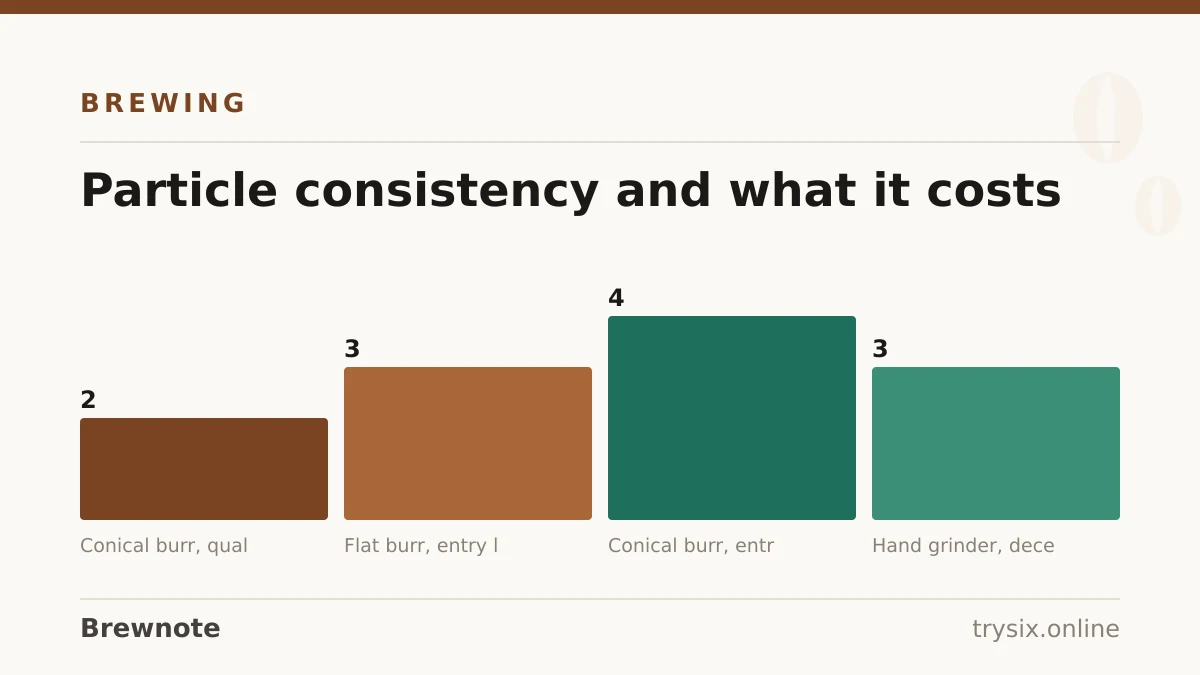
Grind size by brewing method, why burr grinders beat blades, and what to do when you have no grinder at all — including where to get beans ground.
Read
Brewing
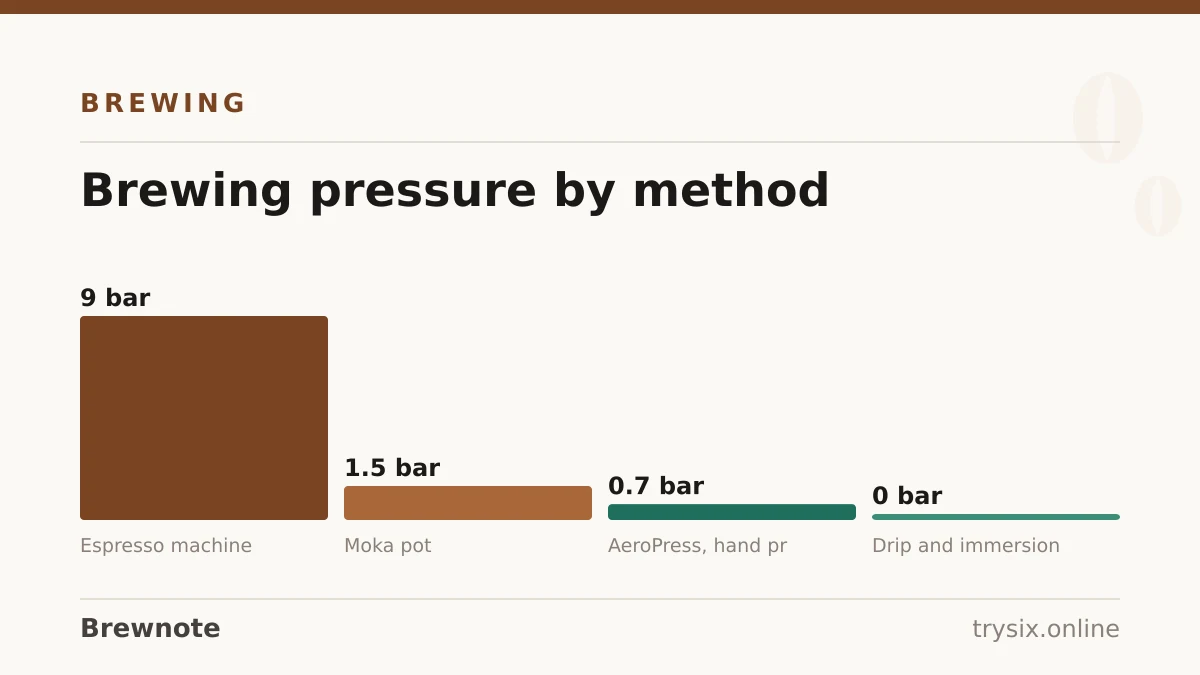
Three stovetop methods: the moka pot, the saucepan brew and the percolator. What each one does to the cup, with timings and safety notes.
Read
Brewing
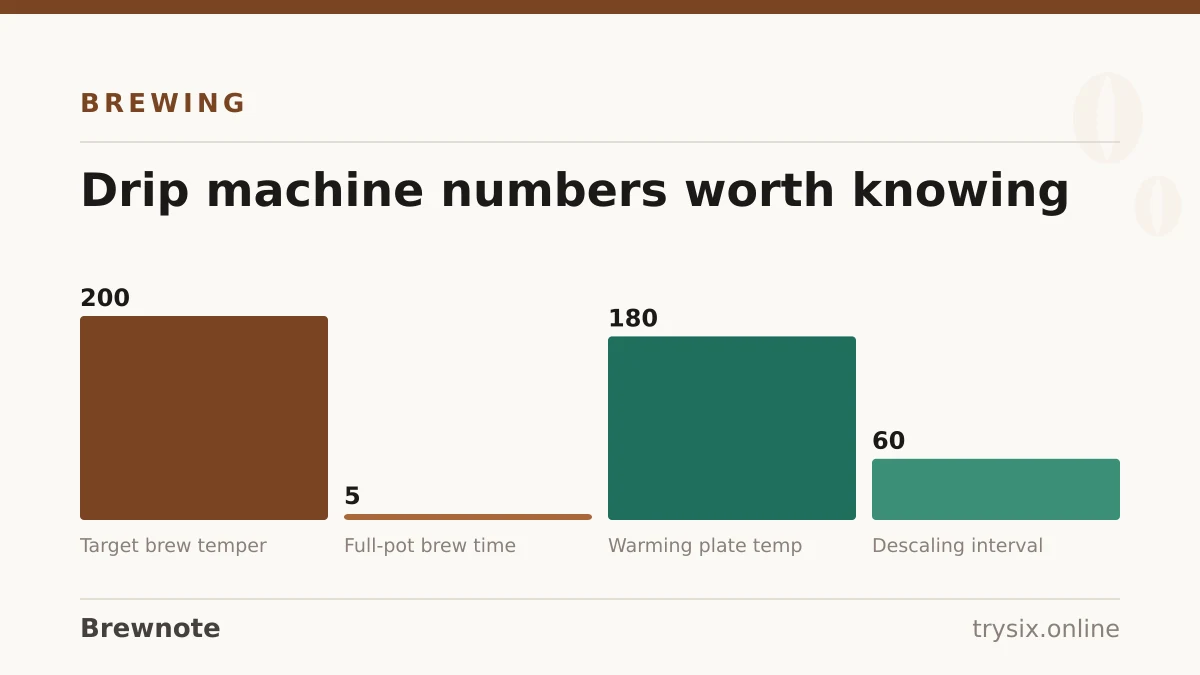
Where the water goes, how much coffee to use, which filter to buy and how often to descale — plus how a drip machine actually works inside.
Read
Brewing
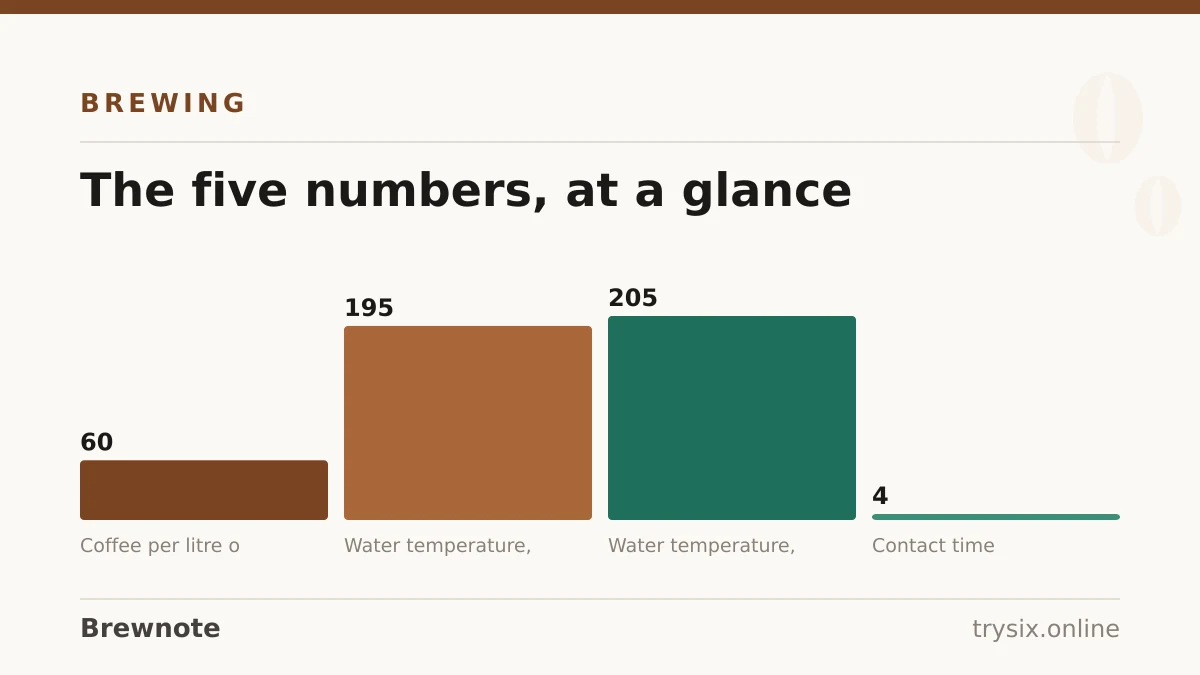
Five variables decide how coffee tastes: ratio, grind, water, temperature and time. Set them once and every cup after that is repeatable.
Read
Brewing
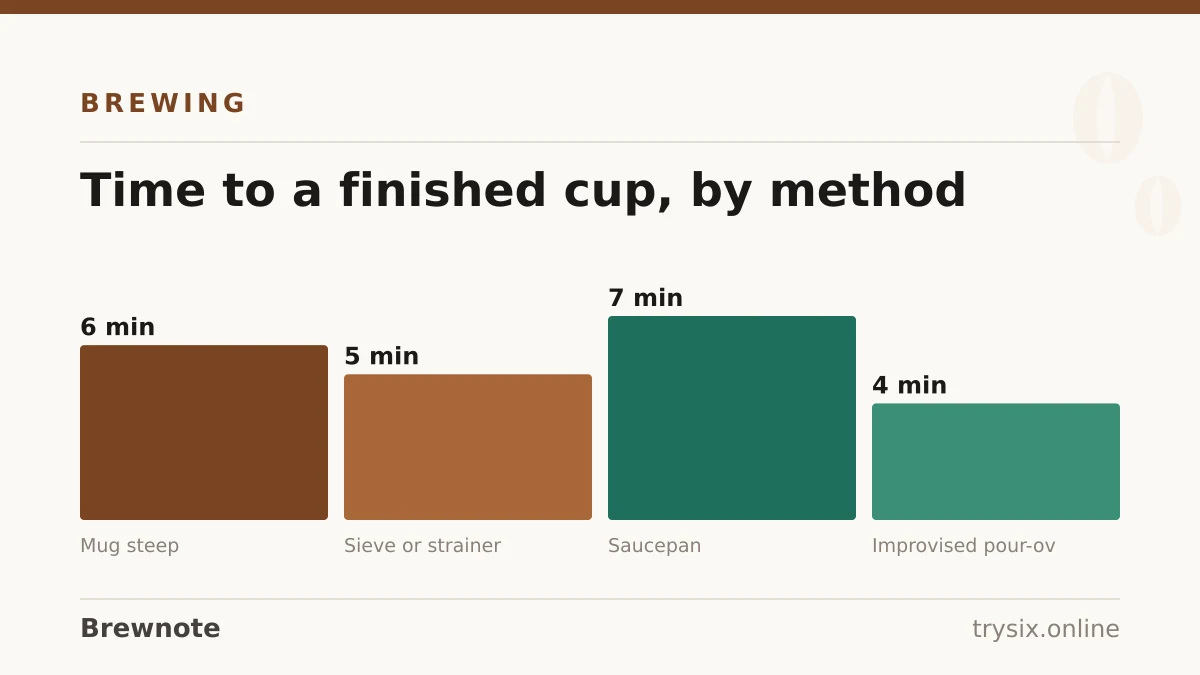
Five ways to brew real coffee with no machine: saucepan, sieve, mug steep, improvised filter and cloth. Ratios and timings for each.
Read
About 1:16 by weight — 60 grams of coffee per litre of water, or roughly 2 level tablespoons per 6 oz cup. The Specialty Coffee Association's brewing standard sits in this range, and it is a sensible place to start before adjusting to taste.
Yes. Below about 195°F extraction slows and the cup tastes sour and thin; above 205°F you pull more bitter compounds. Water taken off a rolling boil and left 30 seconds lands in range without a thermometer.
No, but it removes the biggest source of inconsistency. Ground coffee varies in density with grind size and roast level, so a tablespoon of dark roast weighs less than one of light roast. A $15 scale fixes that permanently.
Espresso
What actually defines espresso, what a shot contains, and what you can do without a machine.
Cold Brew & Iced
Steeping cold for 12–24 hours makes a different drink from pouring hot coffee over ice.
Roast Levels
Light, medium and dark describe how far a bean went in the roaster — not its strength.
Caffeine & Decaf
How much caffeine is actually in a cup, a shot, a pot — and in decaf.
Beans & Origins
Where coffee grows, how the cherry becomes a bean, and what to buy.