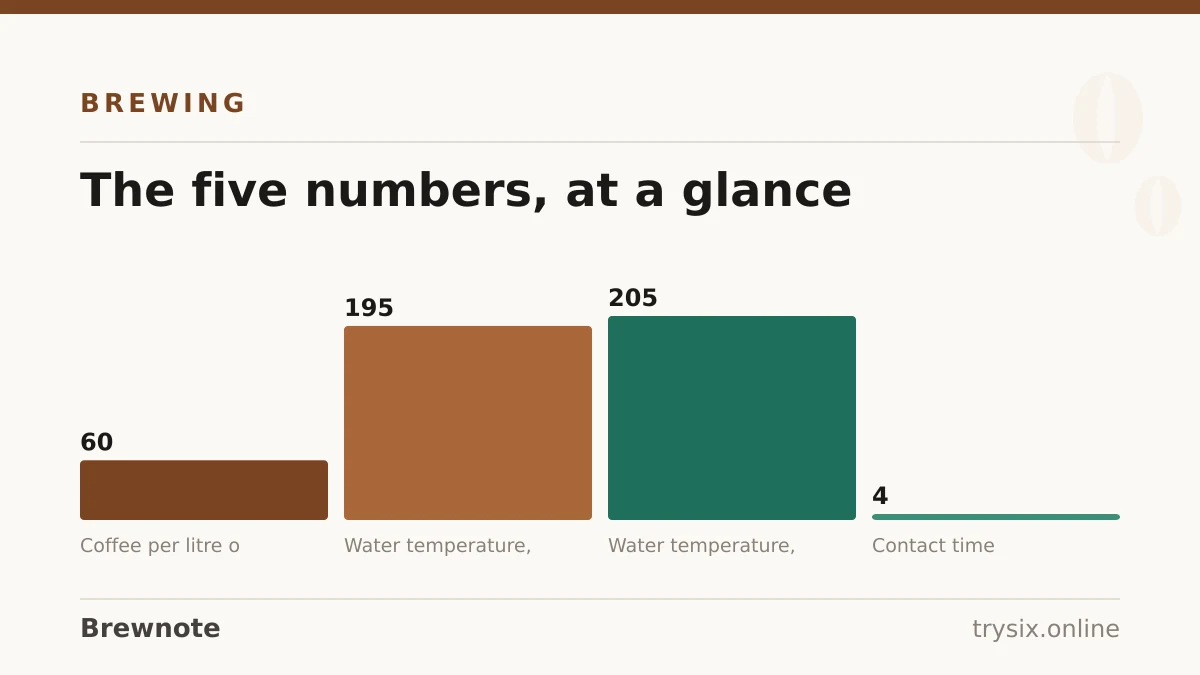
Most bad coffee at home is not bad beans or a bad machine. It is one of five numbers being off, and because nobody measures any of them, the same mistake repeats every morning without ever being identified. Set them once and the guesswork stops.
The five variables
Coffee brewing has exactly two outcomes to control: how much of the ground coffee ends up dissolved in the water, and how much water it is dissolved in. Everything people argue about — kettles, brewers, bloom times — is a way of moving one of those two numbers.
| Variable | Start here | If the cup is weak or sour | If the cup is bitter or heavy |
|---|---|---|---|
| Ratio | 1:16 by weight | Move to 1:15 | Move to 1:17 |
| Grind | Match the brewer | Grind finer | Grind coarser |
| Water | Filtered, not distilled | Check it is not softened | Check it is not heavily mineralised |
| Temperature | 195–205°F | Hotter, within range | Cooler, within range |
| Time | 4–5 min for immersion | Longer | Shorter |
Ratio: the one worth weighing
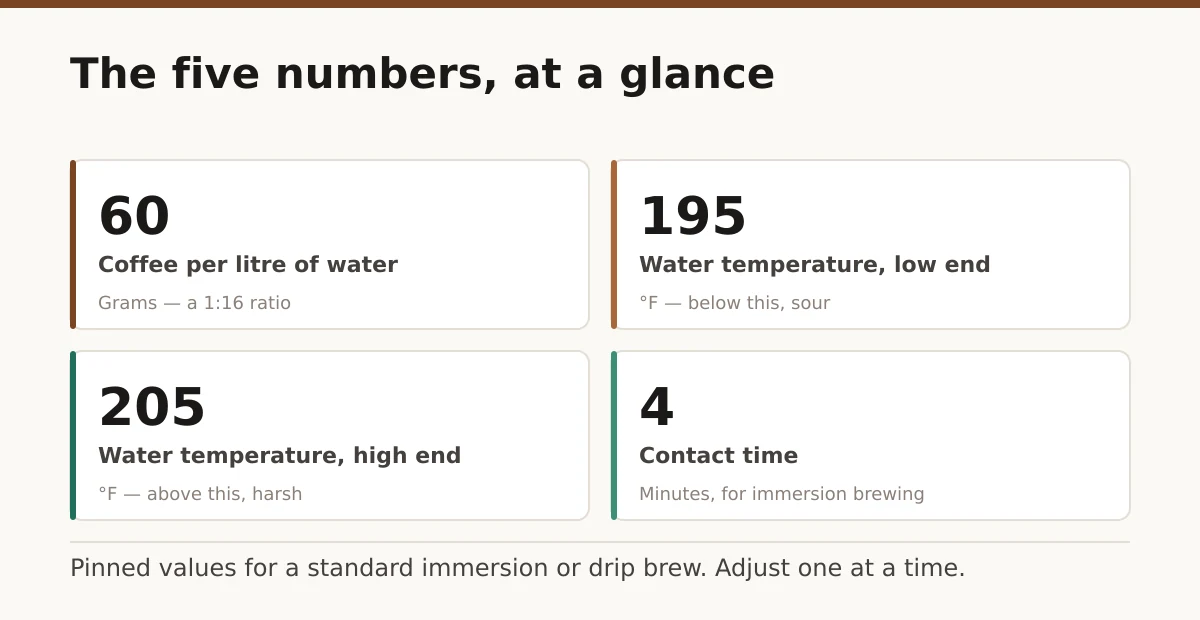
The Specialty Coffee Association's brewing guidance centres on roughly 55 g of coffee per litre of water, and most home brewers land between 55 and 65 g. Call it 60 g per litre, or 1:16 by weight, and you are in the right place for almost any method.
The reason to weigh rather than scoop is density. A tablespoon of coarse-ground light roast weighs noticeably more than the same spoon of oily dark roast, so a scoop recipe drifts every time you change bags. A basic kitchen scale removes that permanently.
| Cup | Water | Coffee by weight | Approximate scoops |
|---|---|---|---|
| Small mug | 240 ml | 15 g | 2 level tablespoons |
| Large mug | 350 ml | 22 g | 3 level tablespoons |
| Two mugs | 700 ml | 44 g | 6 level tablespoons |
| Full carafe | 1 litre | 62 g | About 8 level tablespoons |
Grind: the one that fixes bad coffee
Grind size controls surface area, which controls how fast water pulls material out of the coffee. Fast methods need fine grinds; slow methods need coarse ones. Getting this wrong is the single most common cause of a bad cup, and the good news is it is also the easiest thing to change.
- Espresso: fine, like table salt. 25–30 seconds of contact.
- Drip and pour-over: medium, like coarse sand. 3–5 minutes.
- French press: coarse, like raw sugar. 4 minutes.
- Cold brew: coarse, and 12–24 hours. See how to make cold brew coffee.
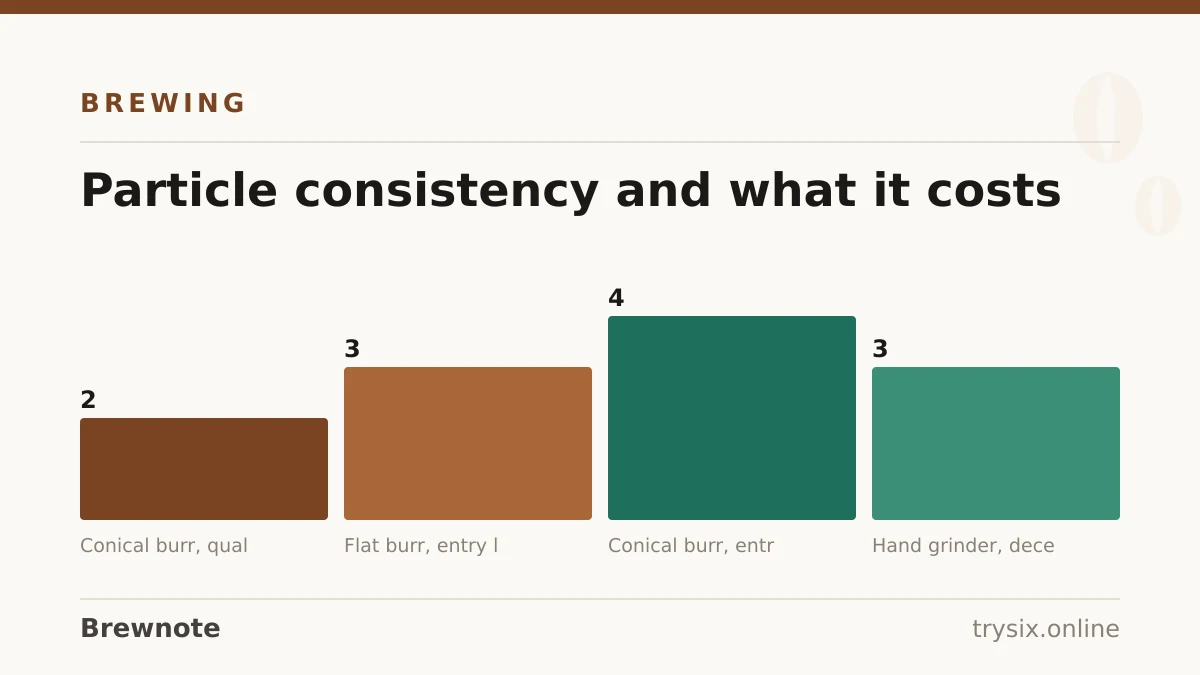
A burr grinder produces even particles; a blade grinder produces powder and boulders in the same batch, which extract at different rates and give you sour and bitter simultaneously. How to grind coffee beans covers the difference and what to do if you only have a blade grinder.
Water: 98 percent of the cup
A cup of coffee is about 98.5 percent water, so water that tastes of chlorine makes coffee that tastes of chlorine. A basic filter jug fixes this for a few pounds.
Distilled or heavily softened water is the opposite problem: minerals participate in extraction, and water with almost none of them makes flat, hollow coffee. Ordinary filtered tap water is the right answer for nearly everyone.
Temperature: off the boil, not at it
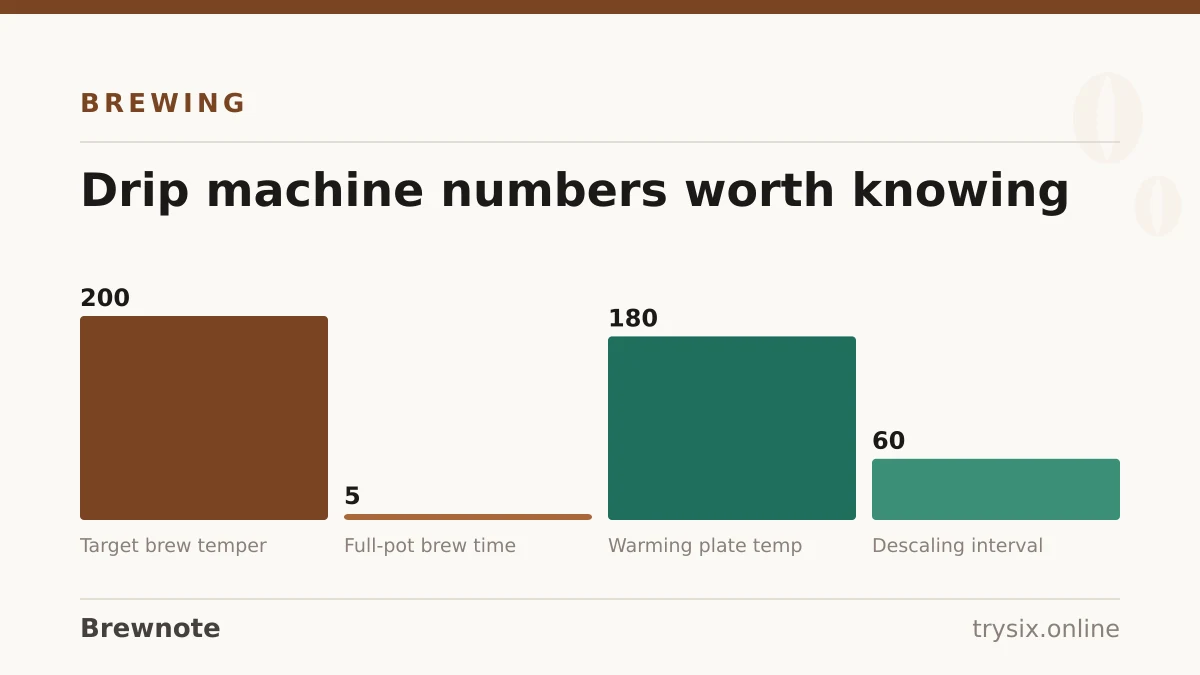
The useful range is 195°F to 205°F. Below it, extraction slows and the cup tastes sour and thin. Above it, you pull more of the bitter compounds and drive off aromatics as steam.
Without a thermometer: boil the kettle, take the lid off, and wait 30 seconds. That lands you in range in an ordinary kitchen. Pouring straight from a rolling boil is the most common temperature error, and it is why coffee made in a hurry so often tastes harsh.
Time: four minutes, and why not five
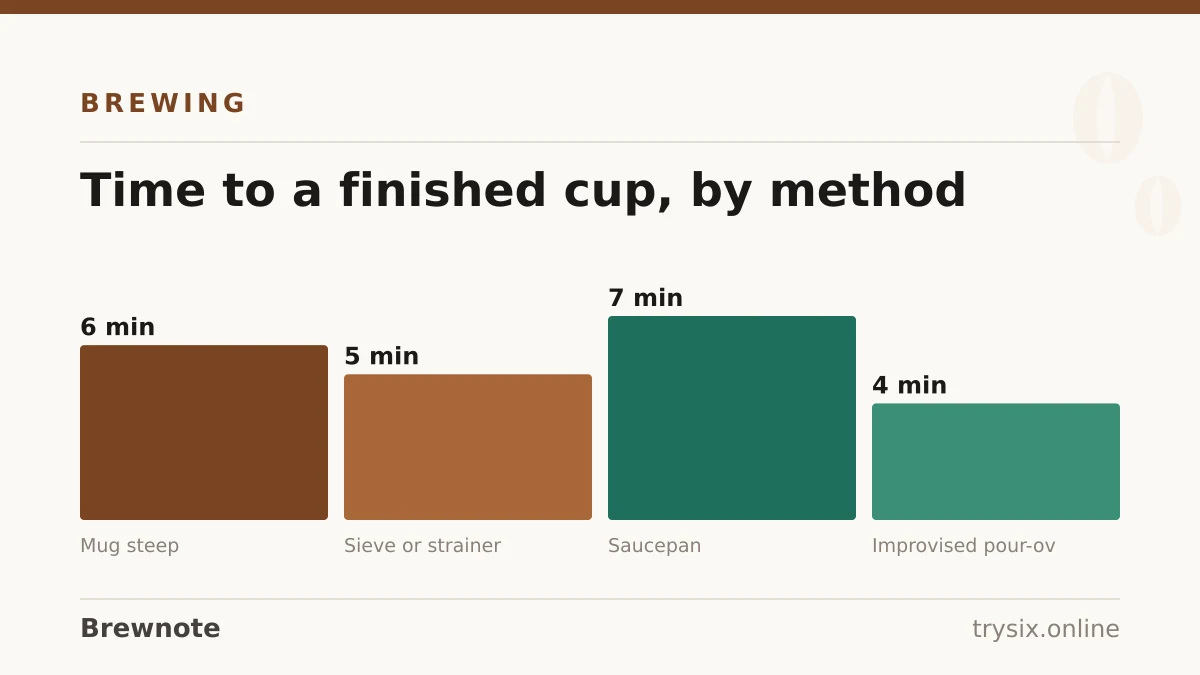
For immersion methods — French press, mug steep, anything where the coffee sits in the water — four minutes is the standard. Extraction is fast at first and slows; by four minutes the pleasant soluble material is largely out, and what continues to dissolve is increasingly bitter.
Diagnosing a cup in three sips
Step 1: Sour, sharp, empty finish
Under-extracted. Grind finer, brew hotter within the range, or extend the time. Under-extraction is the more common fault in home brewing, and it is usually mistaken for 'too weak'.
Step 2: Bitter, drying, lingers unpleasantly
Over-extracted. Grind coarser, or shorten the contact time. If you brewed in a saucepan, check you did not keep it boiling.
Step 3: Correct but thin
Under-concentrated rather than under-extracted. Do not change the grind — change the ratio, to 1:15.
Step 4: Correct but overwhelming
Over-concentrated. Ratio again, to 1:17. Resist coarsening the grind; that will make it thin and sour instead.
What does not matter as much as you think
- The brewer. A careful mug steep beats a careless machine. If you have no machine at all, how to make coffee without a coffee maker still gets you to a good cup.
- The gooseneck kettle. It helps with pour-over control and does nothing for immersion brewing.
- The origin, until the basics are right. A superb Ethiopian coffee brewed at the wrong ratio tastes worse than a supermarket blend brewed correctly.
- Roast level, for quality — though it changes the flavour a great deal. See light vs dark roast.