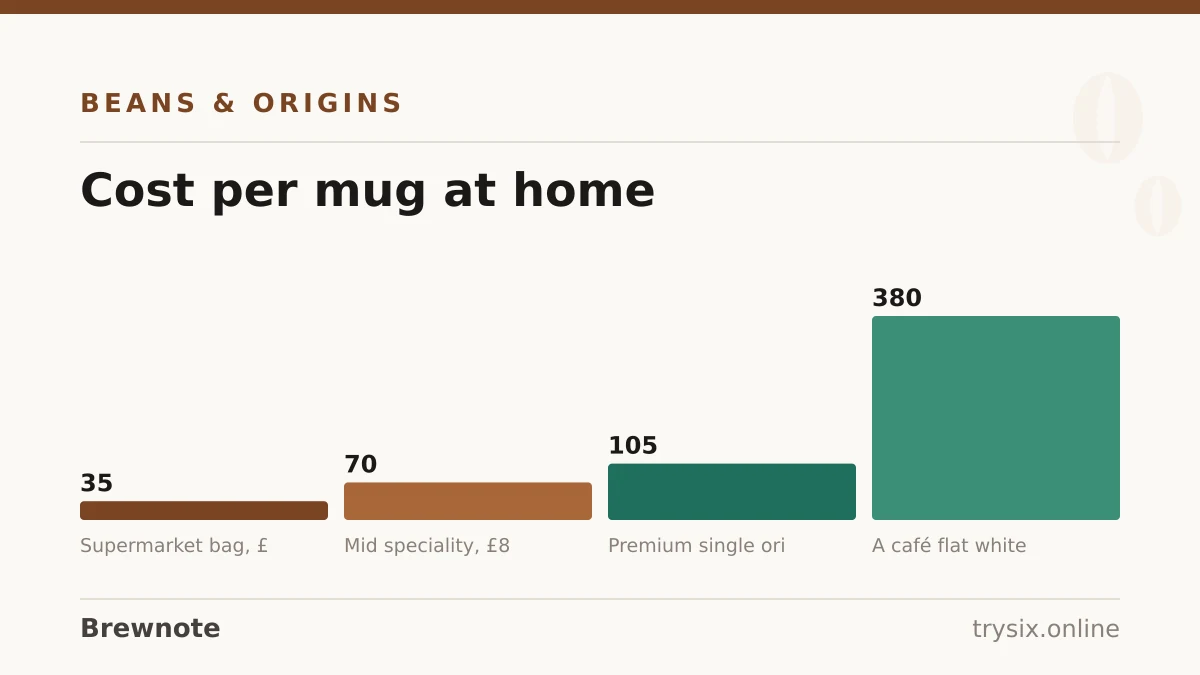
Almost everyone has done the same two things: bought the big bag because it was better value, and put it in the fridge to keep it fresh. Both feel sensible and both make your coffee worse. What actually protects it is simpler and cheaper than any storage gadget.
What actually stales coffee
Coffee does not spoil in the way food does. It goes flat, and it does so through four processes, in roughly this order of importance.
| Cause | What it does | Countermeasure |
|---|---|---|
| Oxygen | Oxidises oils and aromatic compounds | Airtight container; small headspace |
| Moisture | Begins extraction; encourages mould | Keep dry; never the fridge |
| Heat | Accelerates every other process | Stable room temperature, away from the hob |
| Light | Degrades compounds via UV | Opaque container, not a glass jar on the counter |
How long coffee actually lasts
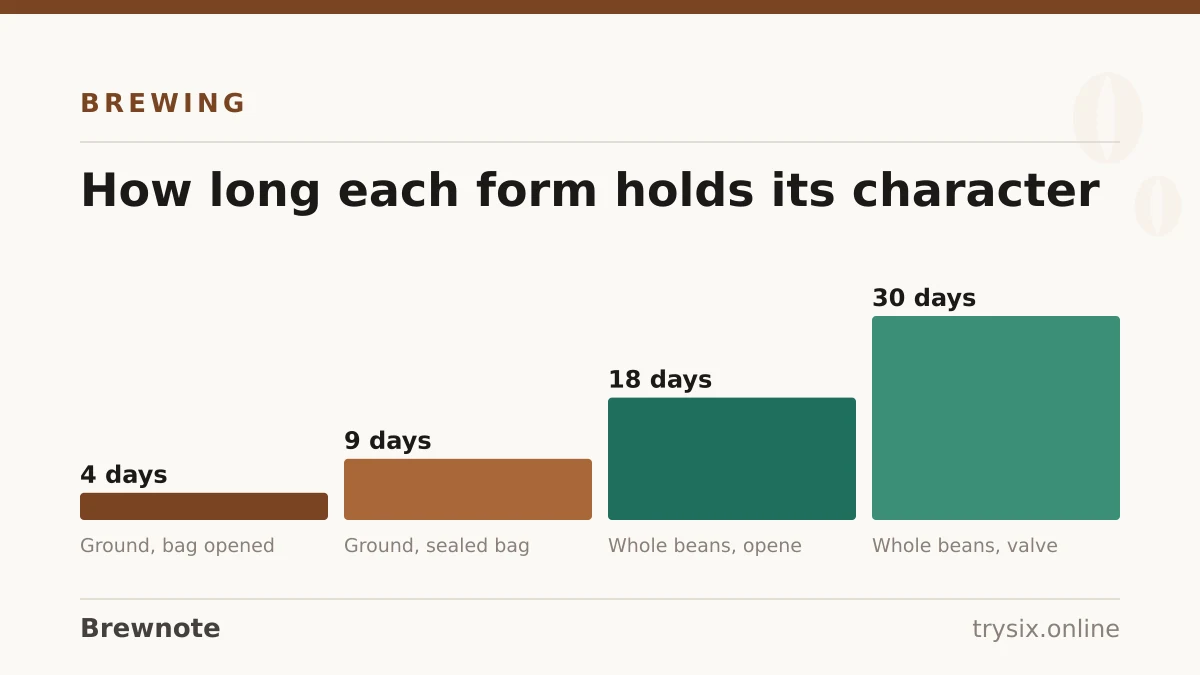
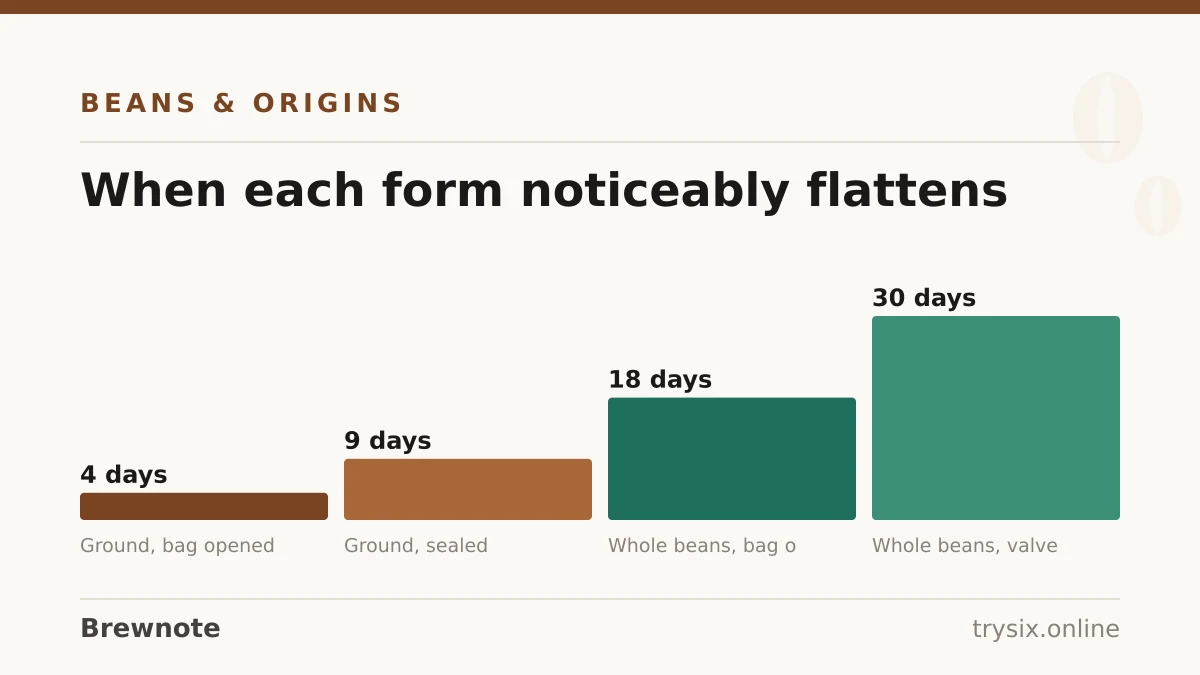
Research on coffee storage after opening finds measurable losses in volatile aroma compounds within days for ground coffee, and rather more slowly for whole beans. The difference is surface area: grinding turns one bean with a small outer surface into thousands of particles with an enormous combined one.
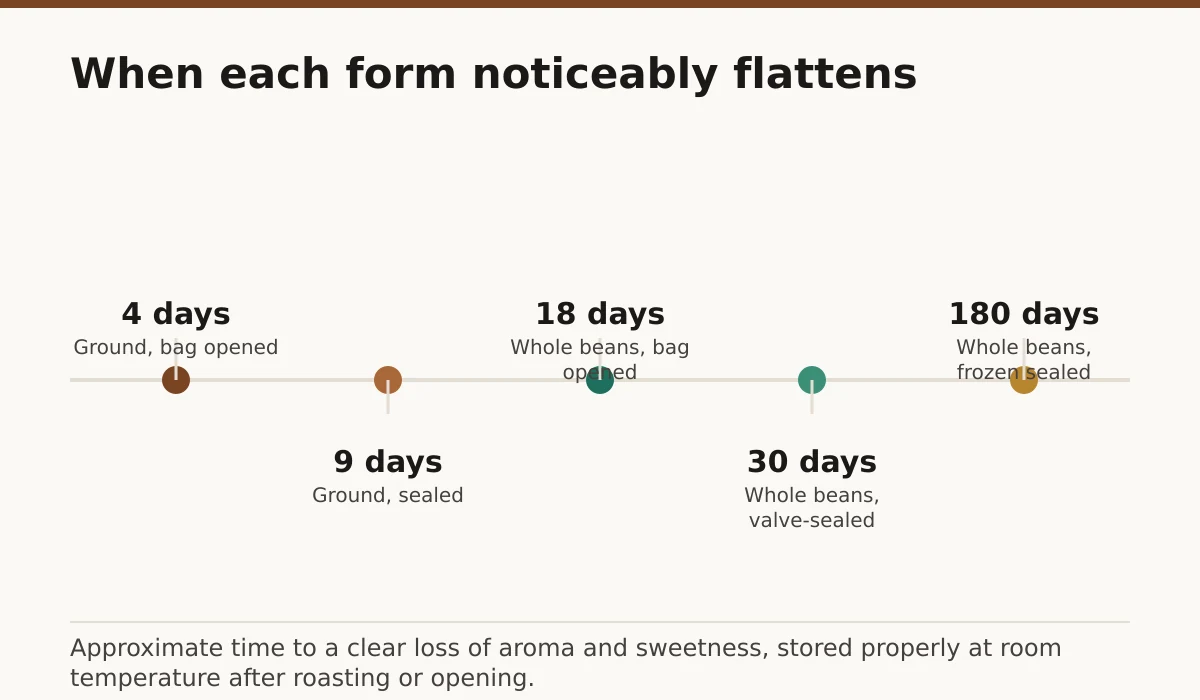
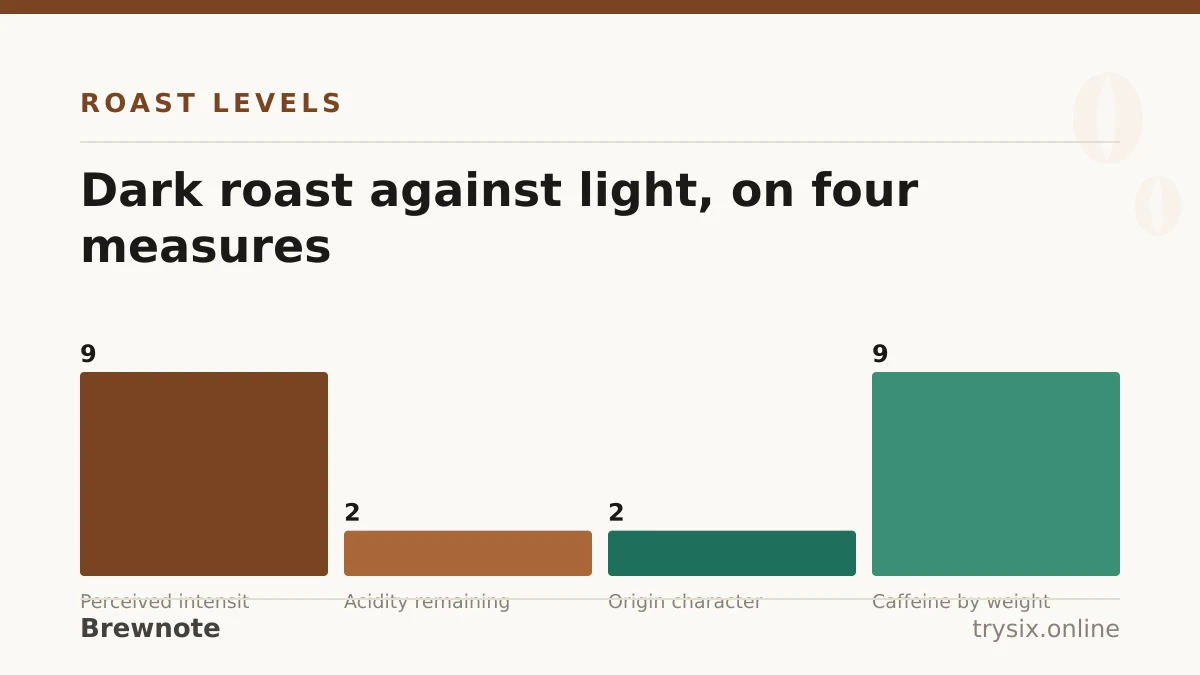
None of these are safety limits. Month-old coffee is perfectly safe; it just tastes duller — losing sweetness and aroma first, then developing a flat, cardboard-like character. Dark roasts fade faster than light ones because their surface oils oxidise, as what is dark roast coffee explains.
The container
What to keep it in
Step 1: The bag it came in, if it has a valve
A one-way degassing valve lets CO₂ out without letting oxygen in — the best of both worlds for fresh coffee. Roll the bag down to expel air and clip it. For the first two weeks this beats most containers.
Step 2: An airtight opaque canister
Ceramic or stainless with a proper gasket seal. Opaque matters: a glass jar on a sunny counter is a slow-motion way of ruining coffee. Keep the container appropriately sized so there is little air trapped with the beans.
Step 3: A vacuum canister, if you want to spend money
Removing the air rather than merely sealing it in genuinely helps, particularly past two weeks. It is a real improvement, though a smaller one than buying fresher coffee in the first place.
Step 4: Not the fridge, and not near the kettle
Both fail for the same reason in different directions: the fridge for moisture and odour, the counter above the hob for heat cycling.
The fridge and freezer question
These get conflated and they are quite different. The fridge is straightforwardly bad. It is not cold enough to meaningfully slow oxidation, it is humid, and coffee readily absorbs the smell of everything else in there. Every time you take the bag out, condensation forms on cold beans as they warm — introducing exactly the moisture you were trying to avoid.
The freezer is defensible for long-term storage, with conditions. At freezer temperatures oxidation slows dramatically, and coffee frozen properly can hold its character for months. The failure mode is repeated thawing: each cycle condenses moisture onto the beans.
- Freeze only what you will not need for weeks. Keep a working supply at room temperature.
- Divide into single-use portions before freezing — one week's worth per bag — and seal them properly.
- Take a portion out and use it. Do not return a thawed portion to the freezer.
- Grind from frozen if you like; it is fine, and frozen beans fracture slightly more consistently.
- Never freeze in the original bag if you plan to open it repeatedly.
Whole beans versus ground
Storing whole beans and grinding to order is the single largest freshness improvement available, and it is larger than any container choice. The reason is arithmetic: grinding multiplies exposed surface area by orders of magnitude, and oxidation happens at surfaces.
If you buy pre-ground, buy small bags frequently and accept the trade — that is a legitimate choice, not a failure. What is ground coffee covers the comparison, and how to grind coffee beans covers doing it yourself.
| Situation | Best approach |
|---|---|
| Bag you will finish in 2–3 weeks | Valve bag, rolled and clipped, room temperature |
| Bag you will finish in 4–6 weeks | Airtight opaque canister, room temperature |
| Bulk purchase | Freeze in weekly portions; keep one out |
| Pre-ground coffee | Airtight container; buy smaller bags |
| A special coffee for later | Freeze sealed, unopened |
| Green (unroasted) beans | Cool, dry, breathable — they keep a year or more |
Buying so storage matters less
The most effective storage strategy is buying coffee that was roasted recently, in quantities matched to how fast you drink it. A bag roasted last week and finished in three weeks never needs sophisticated storage.
That means looking for a roast date rather than a best-before, which many supermarket bags do not carry — where to buy coffee beans covers what to look for. And it means resisting the kilo bag on offer unless you genuinely drink a kilo a month, or intend to freeze most of it.