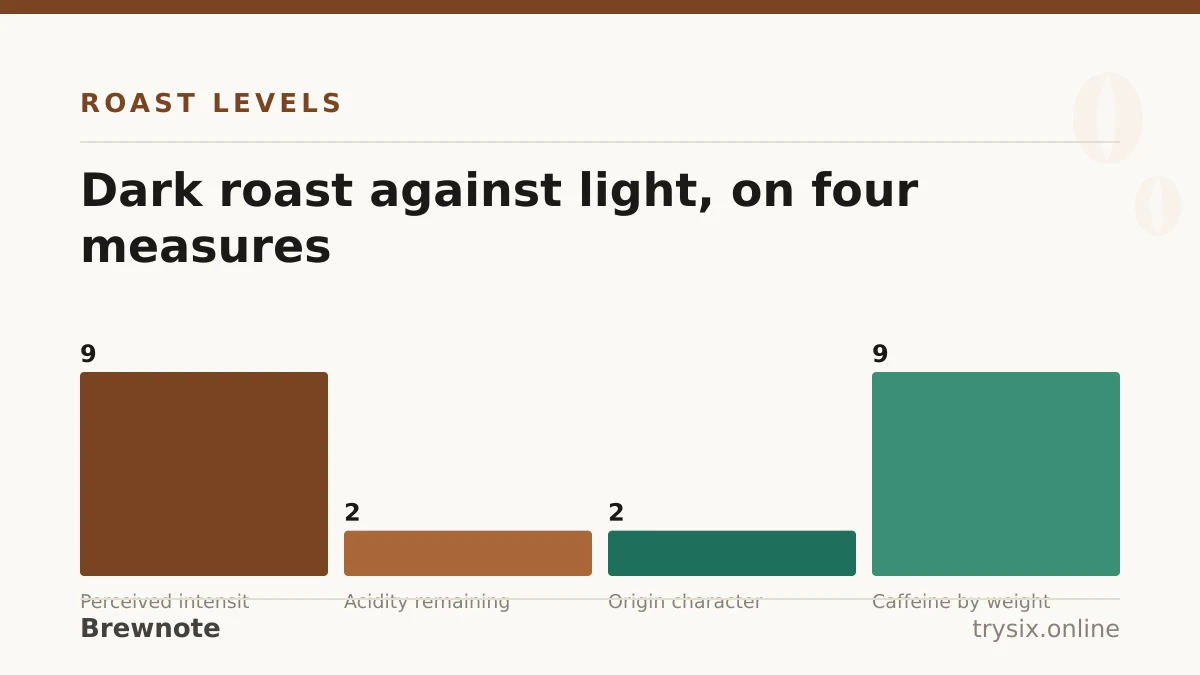
Dark roast is the one people mean when they say they like strong coffee, and that word is doing two different jobs at once. It is strong in flavour and it is not strong in caffeine, which surprises nearly everyone who hears it for the first time.
What second crack is
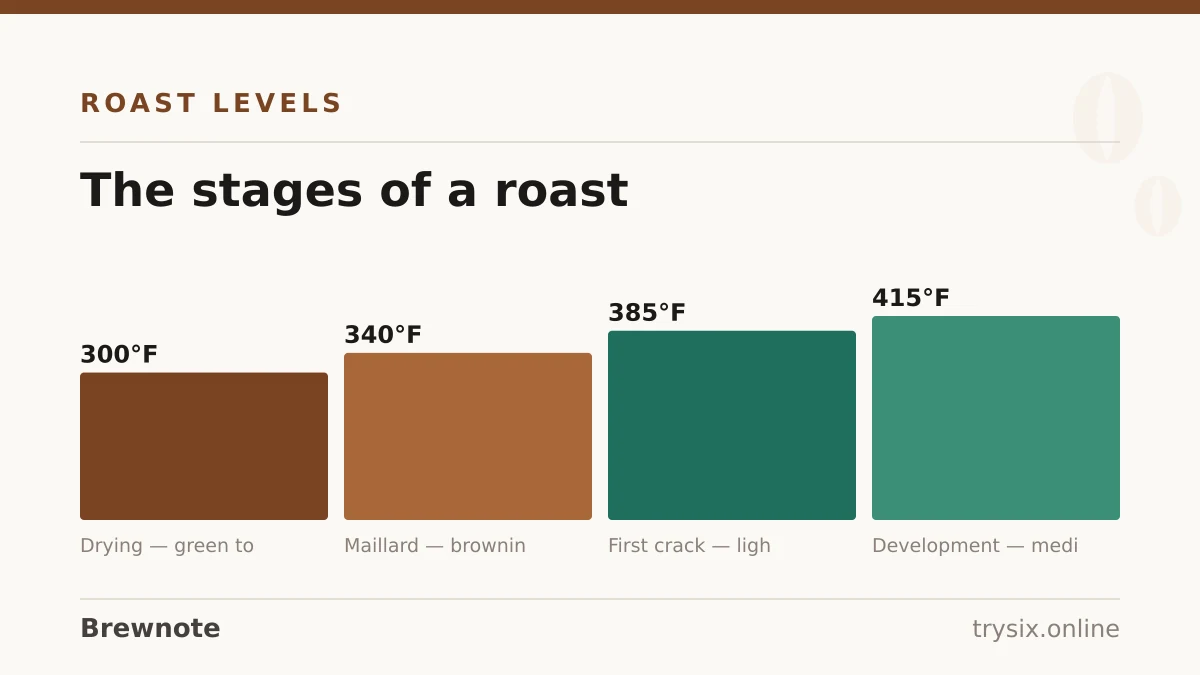
First crack, around 385°F, is trapped moisture flashing to steam and popping the bean's structure. Second crack, near 435°F, is different: the cell walls themselves fracturing as oils are forced outward. The sound is sharper and faster, more like breaking twigs than popcorn.
That oil migration is why dark-roasted beans look glossy in the bag. It is also why they behave differently — they are more porous, more brittle, more soluble, and more exposed to oxygen than lighter roasts.
Why it tastes stronger
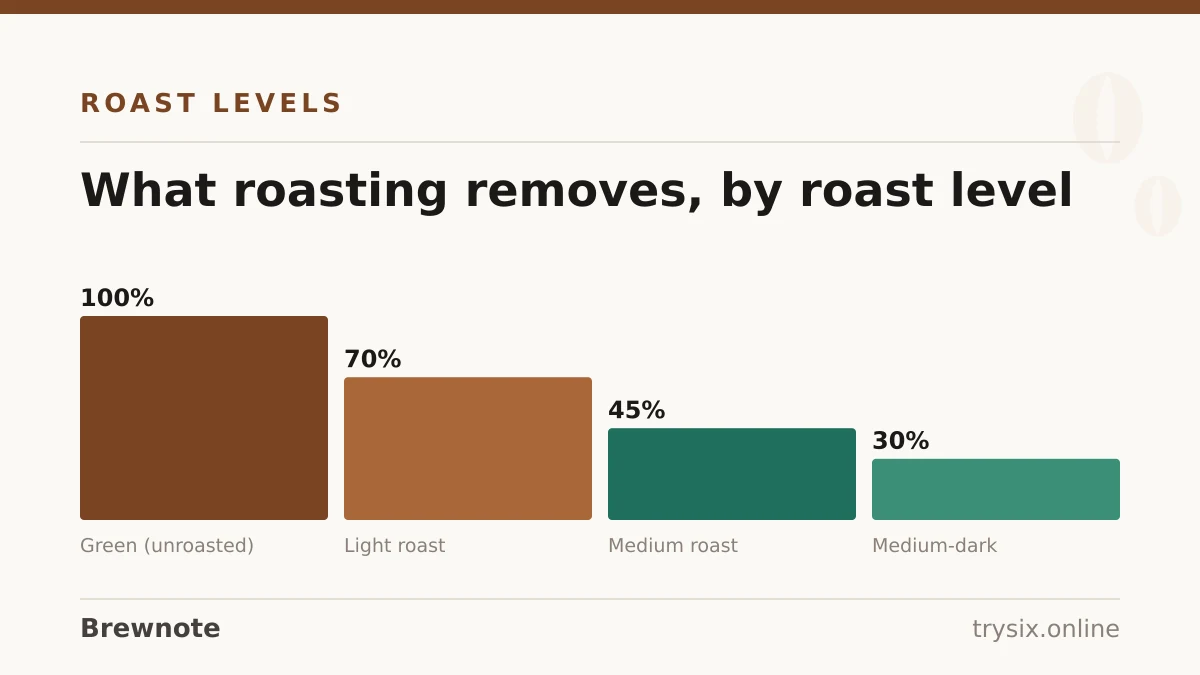
The 'strength' of dark roast is a flavour phenomenon, not a caffeine one. Prolonged roasting builds heavily caramelised and carbonised compounds that read as smoky, bittersweet and heavy. At the same time it destroys the delicate volatile aromatics and most of the chlorogenic acids that give lighter roasts their brightness.
So the cup arrives with less to distract from bitterness and body — which is what most people mean by strong. Measured chlorogenic acid content falls sharply with roast, while caffeine, which is much more heat-stable, declines only slightly.
Caffeine: the persistent myth
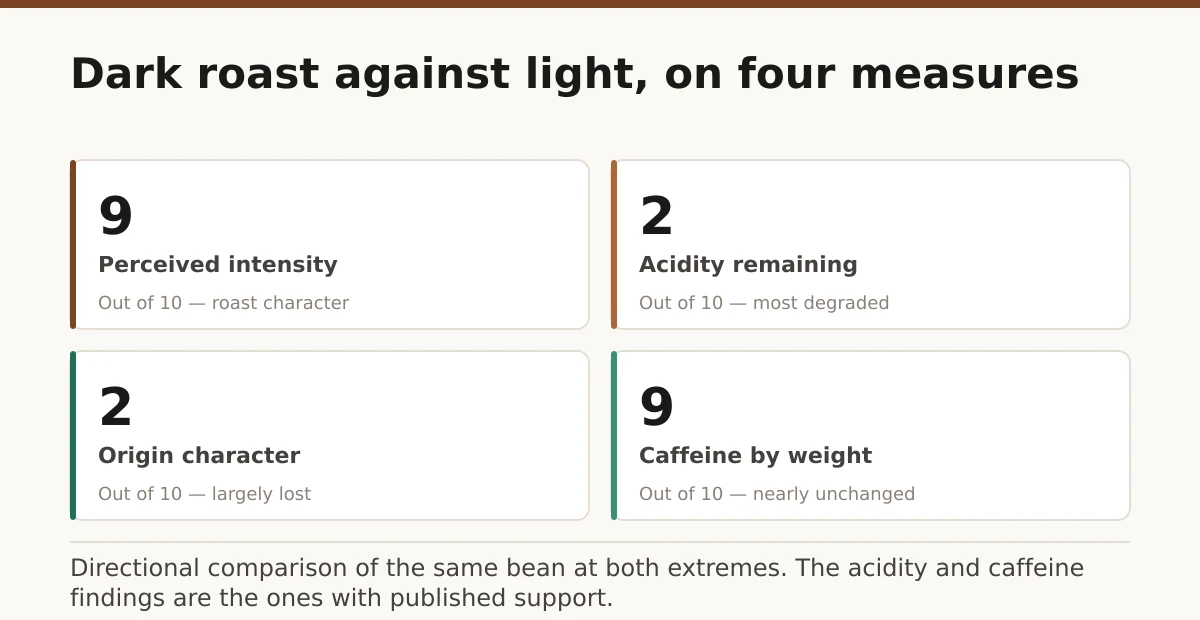
Dark roast does not have more caffeine. Roasting degrades a small fraction of it, so by weight a dark roast has marginally less than a light roast of the same bean.
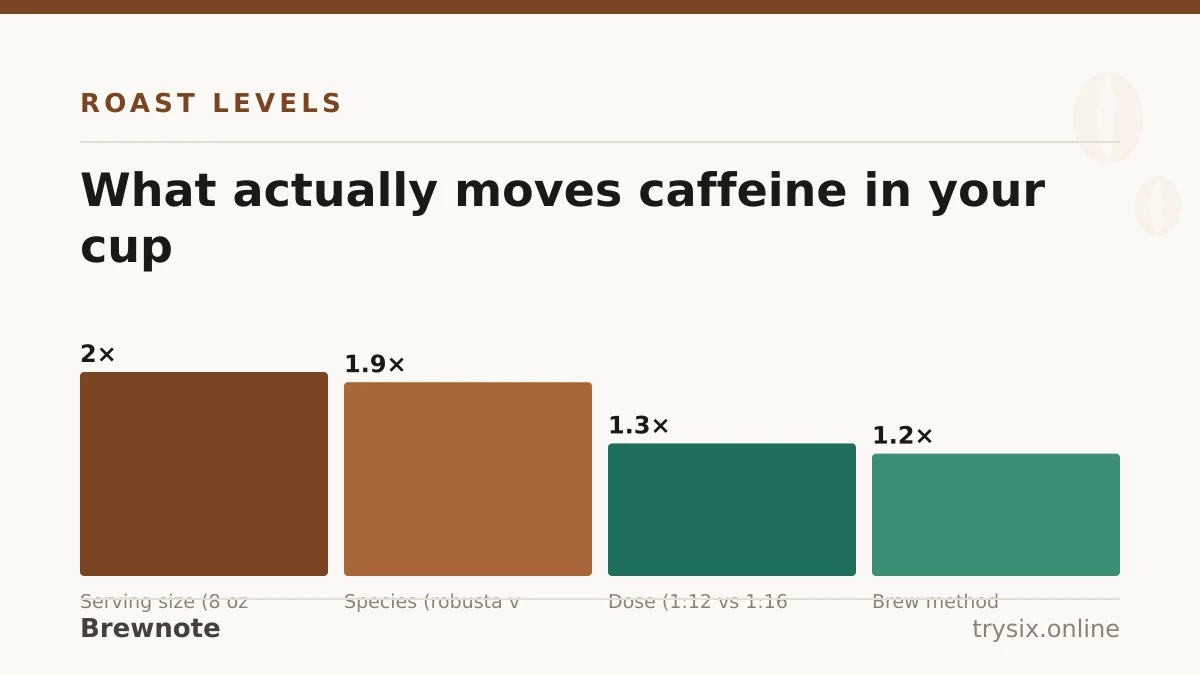
The complication is density. Roasting drives off moisture and expands the bean, so dark beans weigh less per unit volume. Measure by scoop and you fit more dark beans in, which can put more caffeine in the cup. Measure by weight and light roast edges it. Light vs dark roast has the arithmetic; the practical answer is that the difference is small either way, and dose and species matter far more, as what coffee has the most caffeine sets out.
| Belief | Status |
|---|---|
| Dark roast has more caffeine | False by weight; sometimes true by scoop |
| Dark roast is less acidic | True and measured |
| Dark roast is easier on the stomach | Plausible; poorly tested in people |
| Dark roast hides low-quality beans | Often true in practice, not inherently |
| Dark roast stales faster | True — surface oils oxidise |
Acidity, and the stomach claim
The lower acidity of dark roast is real and measurable: chlorogenic acids are progressively degraded as roasting continues, and darker roasts test higher on the pH scale than lighter ones from the same bean. That is a solid finding.
Whether it makes dark roast gentler on a sensitive stomach is much less well established. Coffee's effect on reflux involves caffeine, volume and temperature as well as acidity, and decaf can trigger symptoms too. Dark roast is a reasonable cheap experiment if acidity is your suspicion — it is not a proven remedy, and is cold brew coffee healthy covers the same evidentiary gap from the other direction.
Brewing dark roast
Dark roasts are more soluble than light ones, because more of the bean structure has been broken down. That makes them easy to over-extract, which is the most common way a dark roast ends up tasting acrid rather than rich.
Adjusting for a dark roast
Step 1: Grind a step coarser
Dark beans are brittle and produce more fines at the same grinder setting, and those fines over-extract. Going one step coarser than your usual is often enough.
Step 2: Drop the water temperature
195–200°F rather than the top of the range. The extra solubility means you do not need the heat, and lower temperature reduces the bitterness you pull.
Step 3: Shorten the contact time
Three and a half minutes rather than four on an immersion brew. If the cup is harsh and drying, this is usually the fix.
Step 4: Do not fight it with more coffee
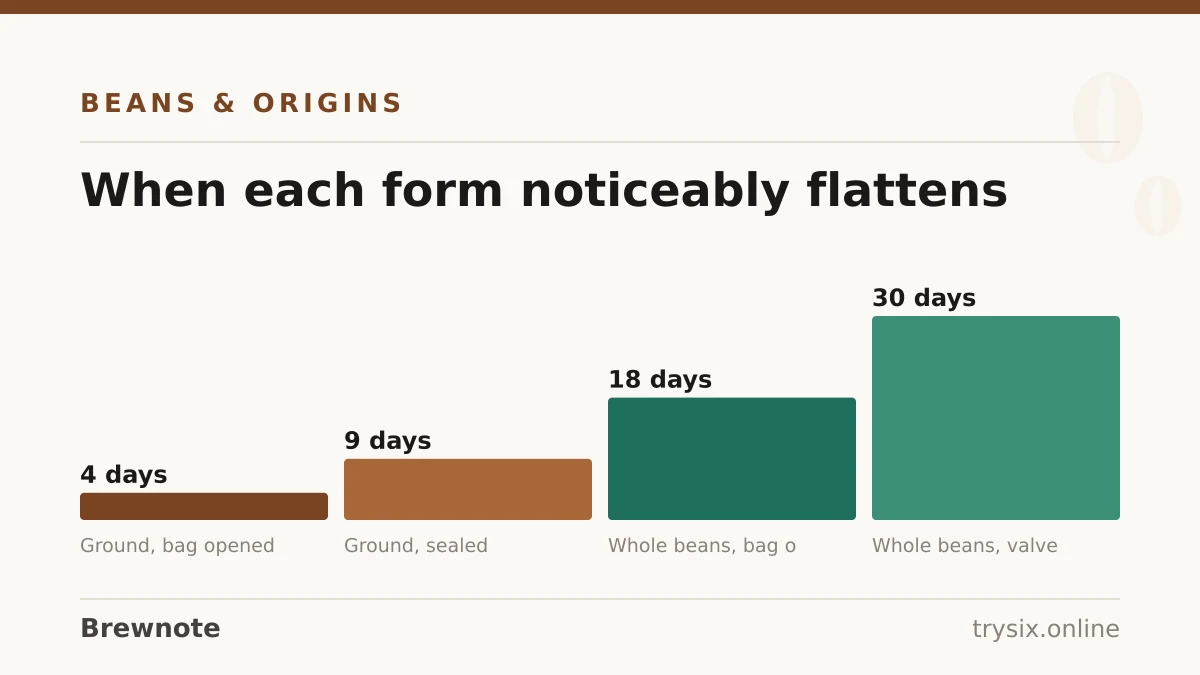
If a dark roast tastes thin, the problem is rarely the ratio. Check the roast date first — dark roasts go flat within weeks.
What dark roast is good for
- Milk drinks. The caramelised, roasty flavours carry through steamed milk where a delicate light roast disappears — which is why traditional espresso blends skew dark. See types of coffee drinks.
- Café au lait and other 1:1 coffee-and-milk preparations, for the same reason.
- Forgiving espresso. Higher solubility means a wider window in which the shot tastes acceptable.
- People who genuinely dislike acidity. This is a taste preference, and it is a legitimate one.
- Consistency across harvests. Roast character is more stable year to year than origin character, which is why large blends lean dark.
Where it is a poor choice is an expensive single-origin coffee bought for its distinctive character — roasting it dark removes most of what you paid for. What is a light roast coffee covers the other side of that trade.