Cold brew arrived with a lot of health claims attached: gentler on the stomach, less acidic, better for you. One of those has real measurement behind it and the others are thinner than they sound. Worth separating, especially if you switched to it for a specific reason.
What has actually been measured
The strongest evidence concerns acidity. A 2018 study in Scientific Reports compared cold brew and hot brew made from the same beans at several roast levels and found cold brew consistently lower in titratable acidity — the measure of how much acid is actually present and available to react, which is more relevant to taste and to stomach chemistry than pH alone.
The same work looked at antioxidant activity and found the picture mixed rather than one-sided: hot brew was higher in some measures at some roast levels. The popular claim that cold brew is 'higher in antioxidants' does not survive contact with the measurements.
| Claim | Evidence | Verdict |
|---|---|---|
| Lower in acid than hot coffee | Direct measurement, multiple roast levels | Supported |
| Easier on a sensitive stomach | Indirect; little clinical testing in people | Plausible, unproven |
| Higher in antioxidants | Measurements go both ways by roast level | Not supported |
| Less caffeine | Depends entirely on ratio; often the opposite | Usually false as sold |
| Less bitter | Direct measurement and sensory testing | Supported |
Caffeine is the variable that actually matters
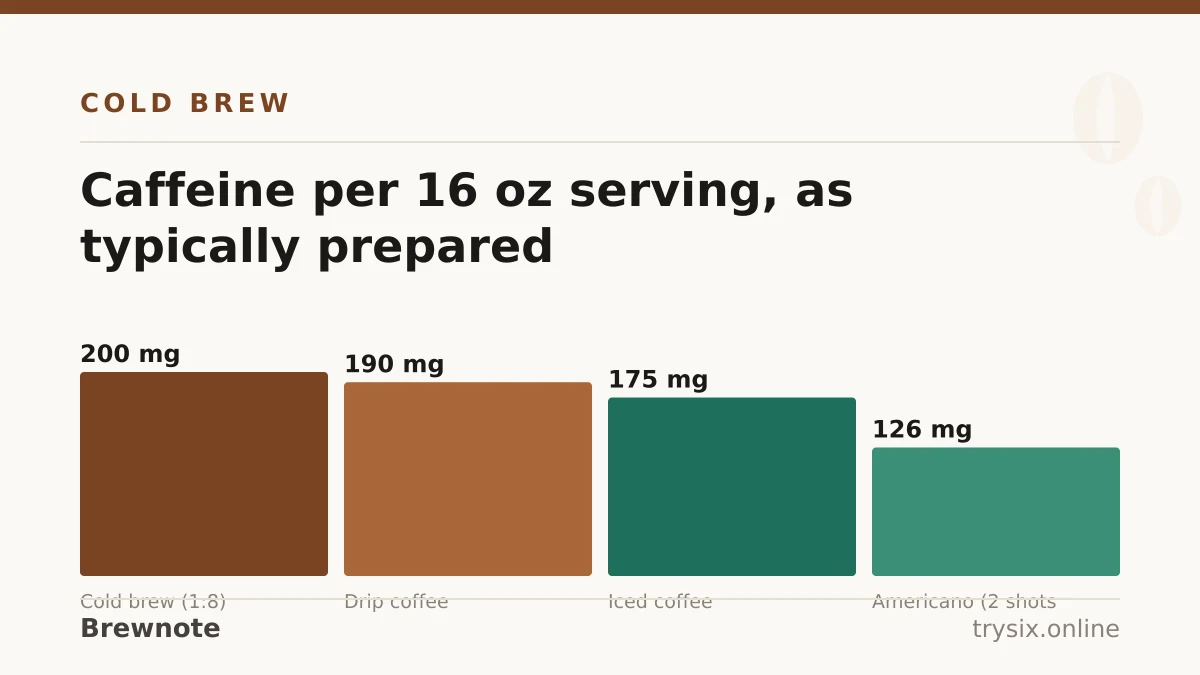
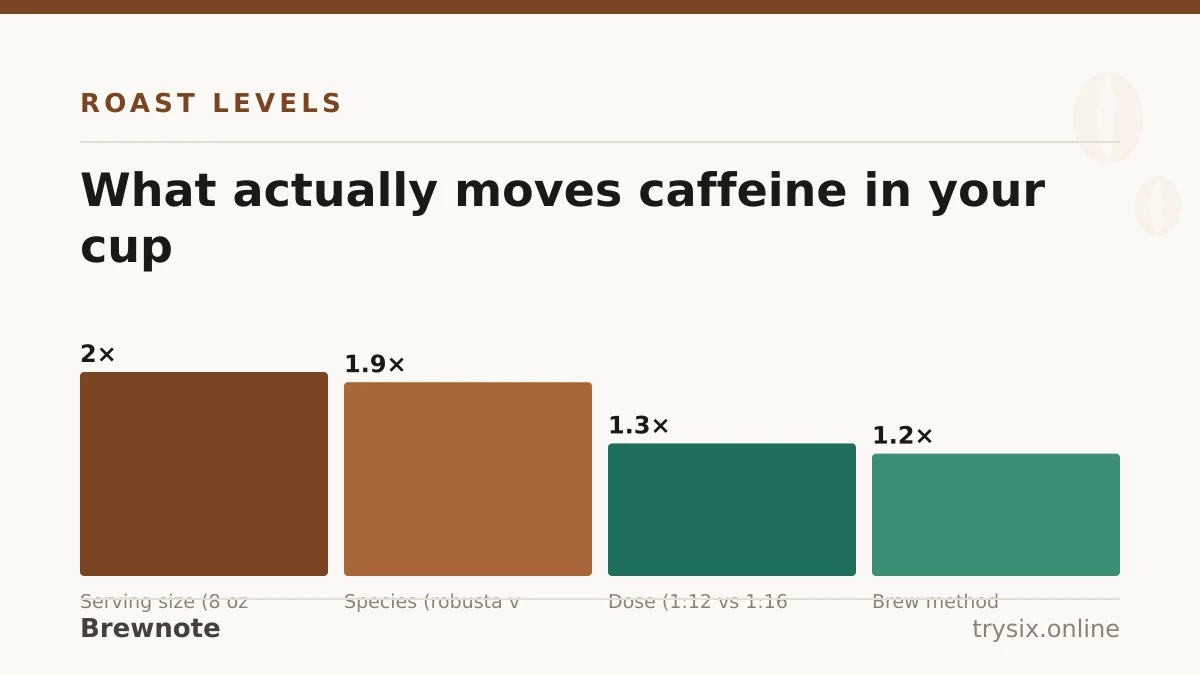
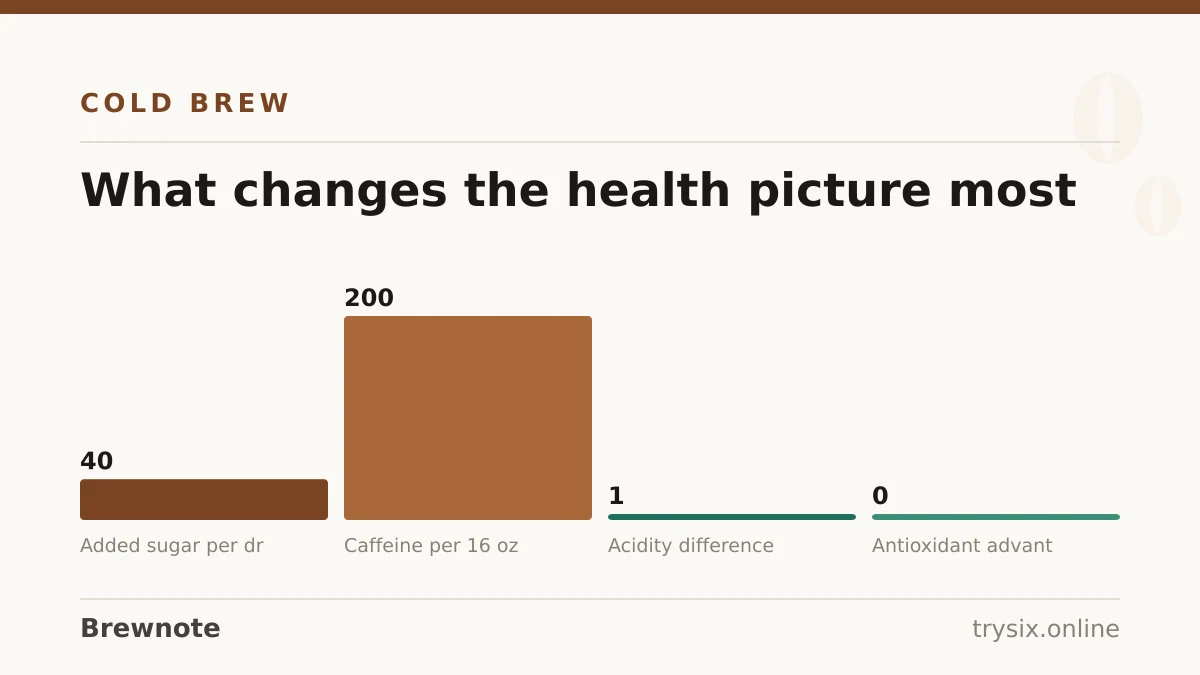
If you are drinking cold brew for health reasons, the dose is the thing to watch. Because it is brewed at a stronger ratio, a 16 oz cold brew commonly carries 150 to 240 mg of caffeine against roughly 190 mg for the same volume of drip. The full working is in is cold brew stronger.
The FDA cites 400 mg a day as not generally associated with negative effects for healthy adults. Two large cold brews can reach that on their own. That reference figure does not apply during pregnancy, to adolescents, to people taking interacting medications, or to anyone with a diagnosed arrhythmia or anxiety disorder.
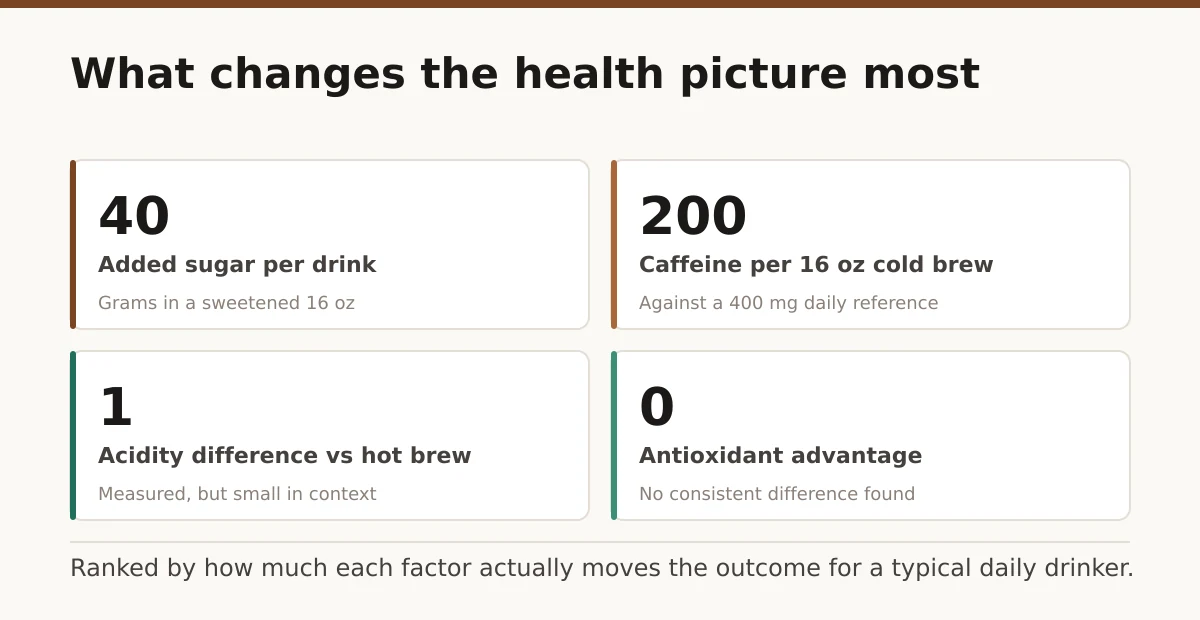
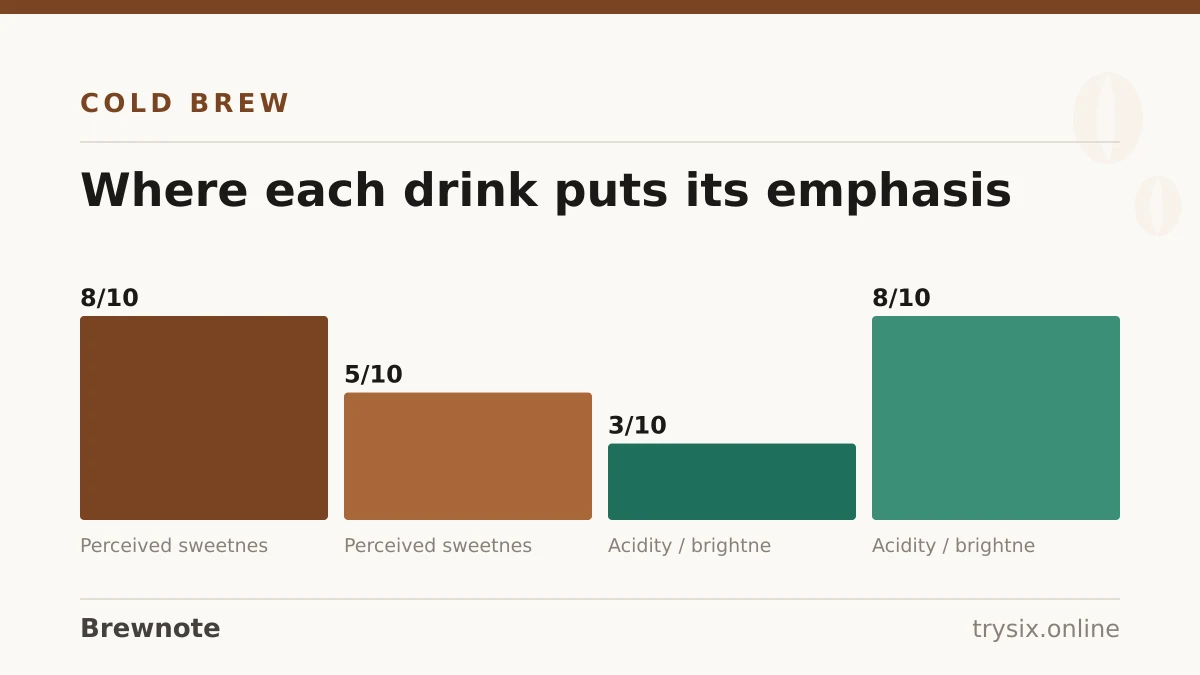
That first tile is the one people underestimate. A flavoured, sweetened cold brew from a café can carry 30 to 50 g of added sugar — comfortably past the daily added-sugar guidance in a single cup, and enough to make the acidity conversation beside the point.
If your stomach is the reason you are asking
The honest position: several people find cold brew easier to tolerate, the acidity measurement gives that a plausible mechanism, and there is no good clinical trial establishing it. That is not the same as it being false — it is the same as it being untested.
A sensible way to test it on yourself
Step 1: Change one thing
Switch brew method but keep the beans, the roast level and the serving size identical. Otherwise you are testing four variables at once.
Step 2: Drink it black
Milk and sugar both affect gastric emptying and reflux. If you are testing acidity, remove them from the test.
Step 3: Match the caffeine
Cold brew at 1:8 has more caffeine per millilitre than drip at 1:16. If you drink the same volume, you have increased the dose — and caffeine itself relaxes the lower oesophageal sphincter.
Step 4: Give it a fortnight
Digestive symptoms fluctuate for many reasons. A single morning proves nothing either way.
What black coffee generally does
None of this is specific to cold brew, but it is the context the question sits in. Coffee is one of the more studied things people consume daily, and moderate consumption is broadly associated with neutral-to-favourable outcomes in observational research. Observational is the key word: people who drink coffee differ from people who do not in many ways, and untangling that is hard.
Cold brew inherits all of it. Brewed without a paper filter — as most cold brew is, though not all — it also retains more diterpenes such as cafestol, which have been associated with modest increases in LDL cholesterol in unfiltered coffee. If you filter your cold brew through paper, as the method in how to make cold brew coffee does, that concern largely goes away.
For the underlying differences between the two drinks rather than their health claims, see cold brew vs iced coffee.