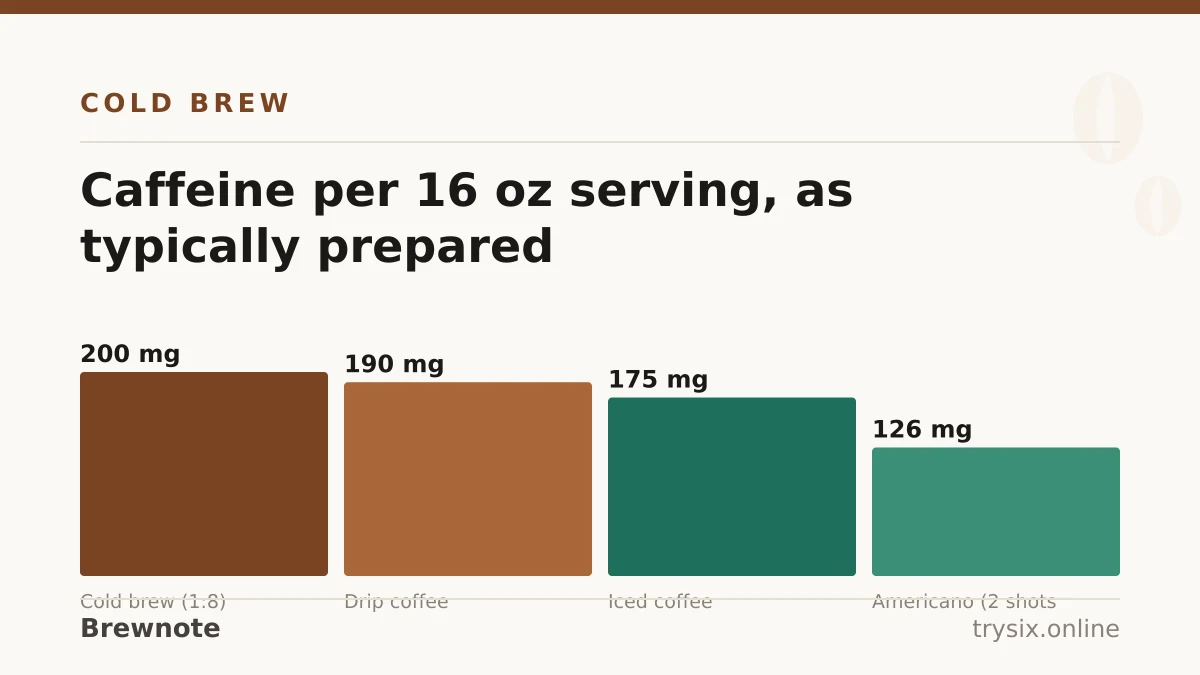
Cold brew tastes smooth and easy, which is exactly what makes it catch people out. It goes down like a mild drink and then delivers considerably more caffeine than the coffee it tastes gentler than. The reason is not the cold water, and knowing why lets you dial it wherever you want.
Three different questions hide in one word
When people ask whether cold brew is stronger they usually mean one of three things, and the answers differ. Caffeine per serving: usually yes. Caffeine per millilitre at the same ratio: no. Perceived intensity — bitterness, heaviness, punch: generally no, cold brew tastes milder.
That mismatch is why cold brew catches people out. It tastes gentle and delivers more caffeine than the drink it tastes gentler than.
What temperature actually does
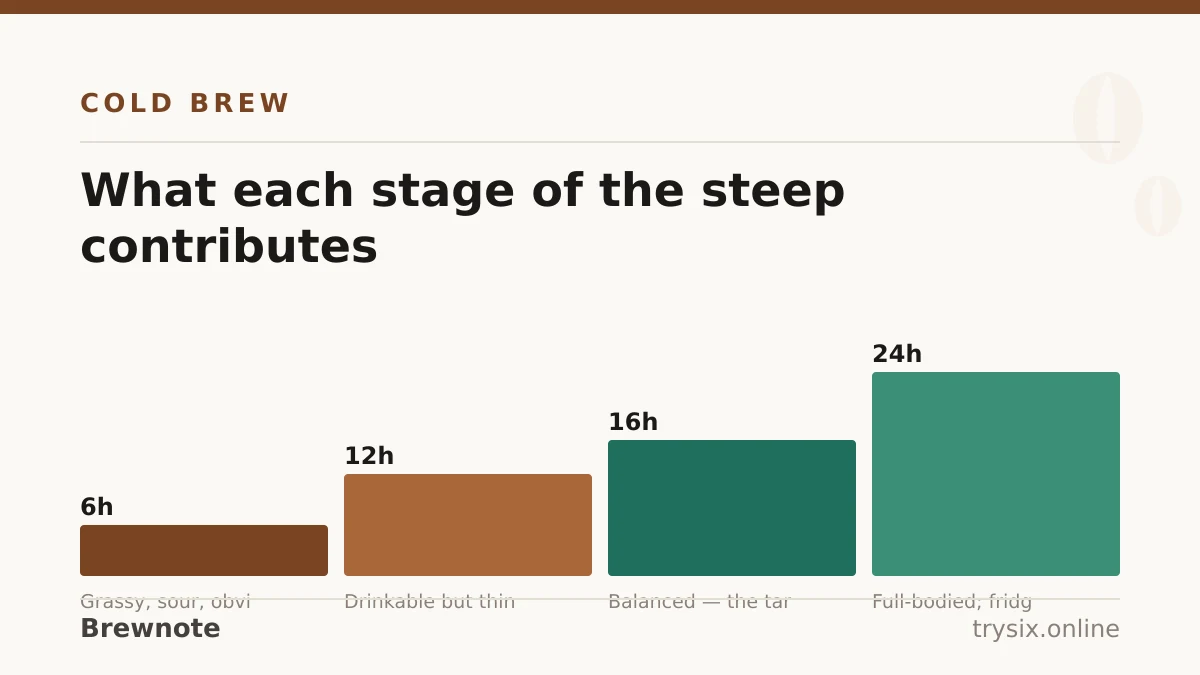
Caffeine solubility rises with temperature. In hot water it dissolves readily; in cold water it comes out slowly, which is why cold brew needs 12 to 24 hours to do what a drip machine does in four minutes. A 2017 study in Scientific Reports measured caffeine and chlorogenic acid concentrations in cold brew across roasting temperatures, grind sizes and steep times and found — unsurprisingly — that hotter roast and finer grind raised extraction, with time compensating for the missing heat.
The long steep closes most of the gap. It does not open a new one. There is no mechanism by which cold water extracts more caffeine from the same grounds than hot water does.
The numbers, at real serving sizes
| Drink | Size | Typical ratio | Caffeine |
|---|---|---|---|
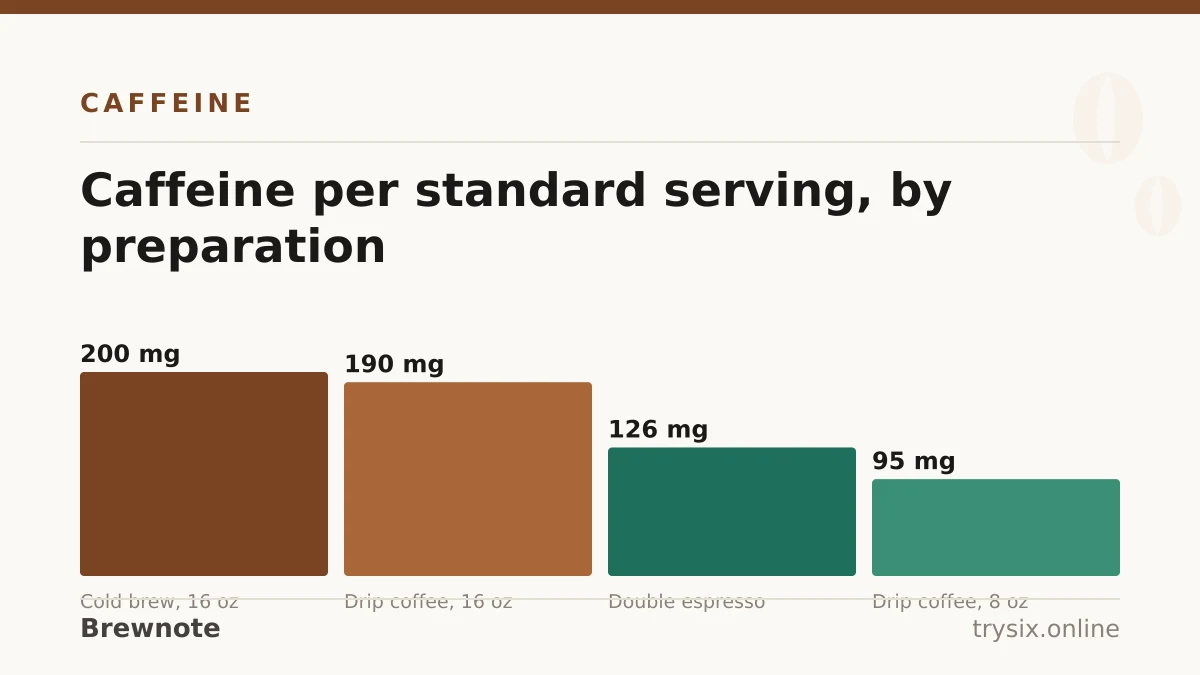
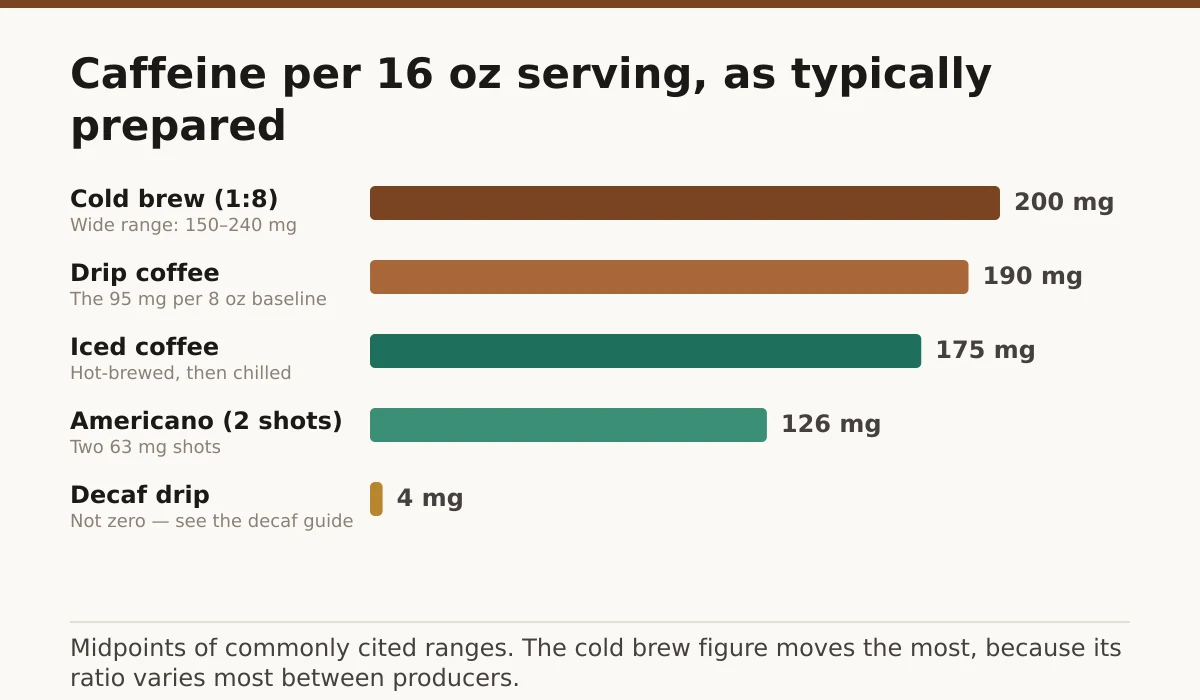
| Drip coffee | 8 oz / 240 ml | 1:16 | ~95 mg |
| Drip coffee | 16 oz / 475 ml | 1:16 | ~190 mg |
| Cold brew, ready to drink | 16 oz / 475 ml | 1:8 | ~150–240 mg |
| Cold brew concentrate, undiluted | 2 oz / 60 ml | 1:5 | ~100–160 mg |
| Espresso, single | 1 oz / 30 ml | 1:2 | ~63 mg |
| Iced coffee, hot-brewed then chilled | 16 oz / 475 ml | 1:16 | ~165–190 mg |
Two things stand out. The cold brew range is enormous — a café brewing at 1:5 and diluting lightly produces a very different drink from one brewing at 1:8 — and the top of that range comfortably exceeds a same-sized drip. Full per-method figures are in how much caffeine is in a cup of coffee.
Why concentrate confuses the issue
A bottle of cold brew concentrate is genuinely three times the strength of drip coffee, and quoting that number without the dilution is how the myth spreads. Concentrate is brewed at 1:5 and is meant to be cut 1:1 or 1:2 before drinking. Diluted 1:2, it lands close to ordinary drip strength.
Working out the strength of what is actually in your glass
Step 1: Find the brewing ratio
Coffee to water by weight. 1:8 is ready-to-drink; 1:5 is concentrate. A café that will not tell you is usually somewhere between 1:6 and 1:8.
Step 2: Apply the dilution
Concentrate cut 1:2 with water is effectively 1:15 — near drip. Cut 1:1, it is effectively 1:10, so about 60 percent stronger than drip.
Step 3: Subtract the ice
A tall glass of ice adds 30 to 60 ml of water as it melts, which is a real 10 to 20 percent dilution of a 300 ml drink.
Step 4: Multiply by the volume
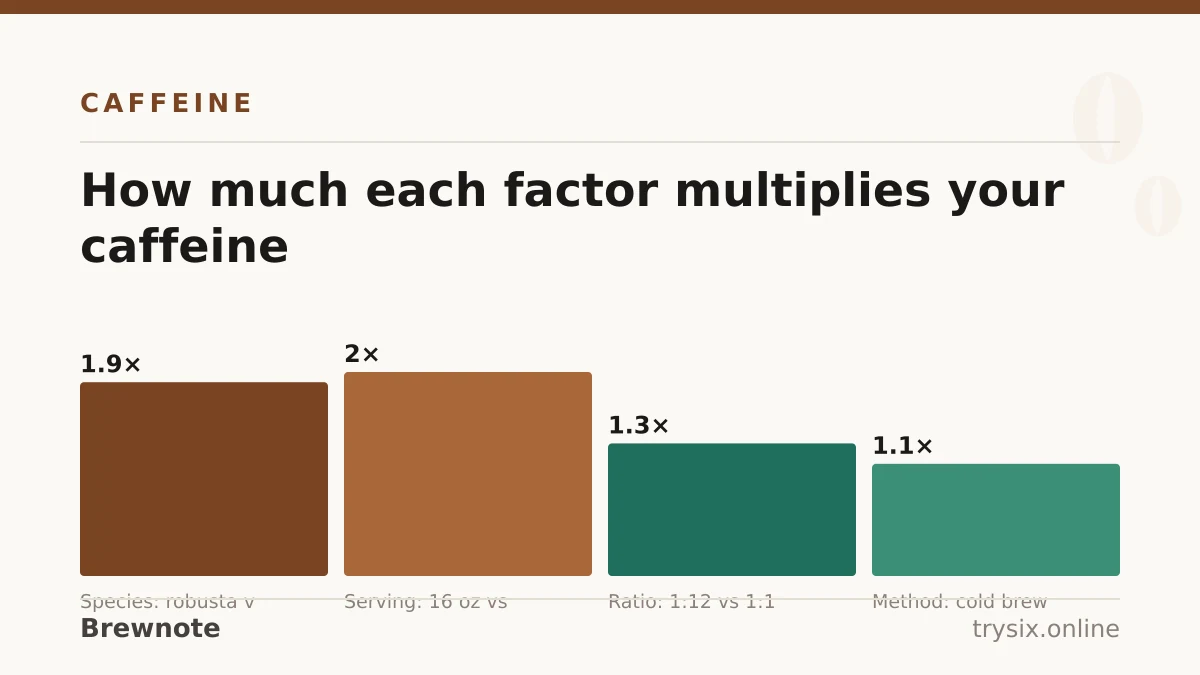
This is the step people skip. A 16 oz serving of anything has twice the caffeine of an 8 oz serving of the same thing. Serving size, not brew method, is the largest single variable in most people's daily intake.
Strong is not the same as bitter
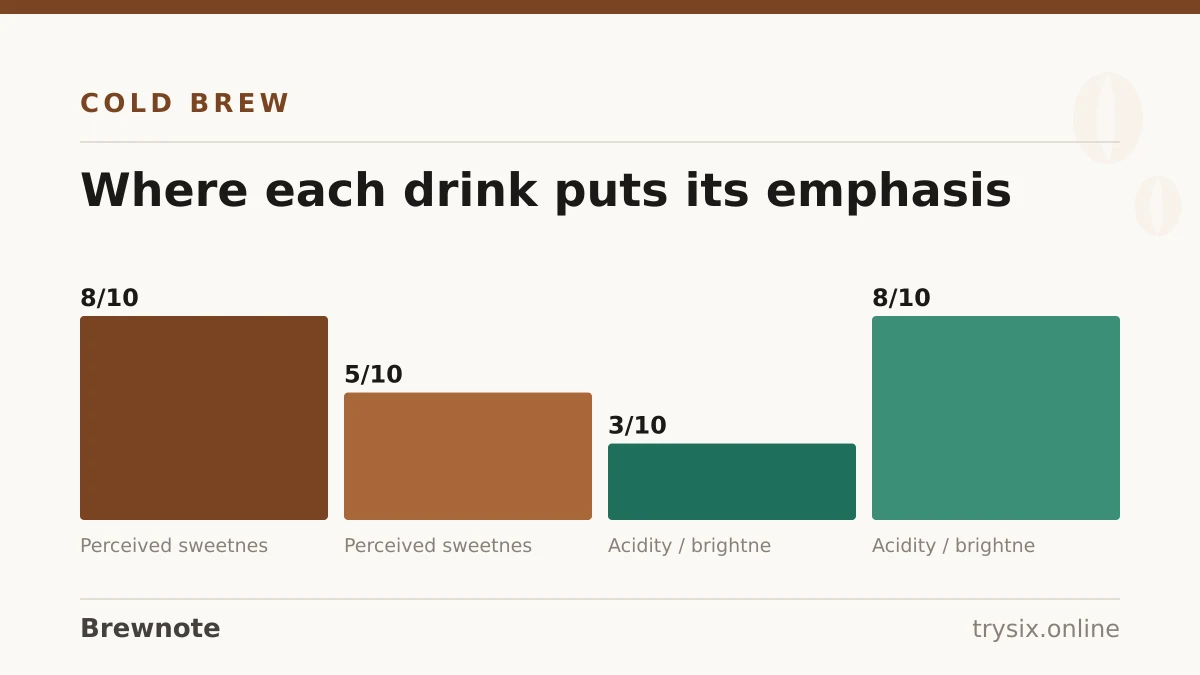
Cold brew measures lower in titratable acidity than hot-brewed coffee at matched roast levels, and cold water extracts fewer of the bitter compounds hot water pulls readily. So the drink tastes rounder and sweeter than a hot cup with the same caffeine in it.
Cold brew coffee samples showed significantly lower titratable acidity than hot brew samples at the same roast level.
— Rao & Fuller, Scientific Reports (2018)
That is genuinely useful if you find hot coffee harsh, and genuinely risky if you use taste as a caffeine gauge. A large iced cold brew mid-afternoon is an easy way to take 200-plus milligrams without noticing, which matters against the FDA's 400 mg per day reference point for healthy adults.
So which should you drink
- For more caffeine: a larger serving of anything beats switching brew method. Volume dominates.
- For less bitterness at the same caffeine: cold brew, or a lighter roast — see light vs dark roast.
- For predictability: drip coffee. Its ratio is standardised in a way cold brew's is not.
- For the difference in taste rather than strength: cold brew vs iced coffee covers what each method does to the cup.
- To control it exactly: make it yourself. How to make cold brew coffee fixes the ratio at a number you chose.