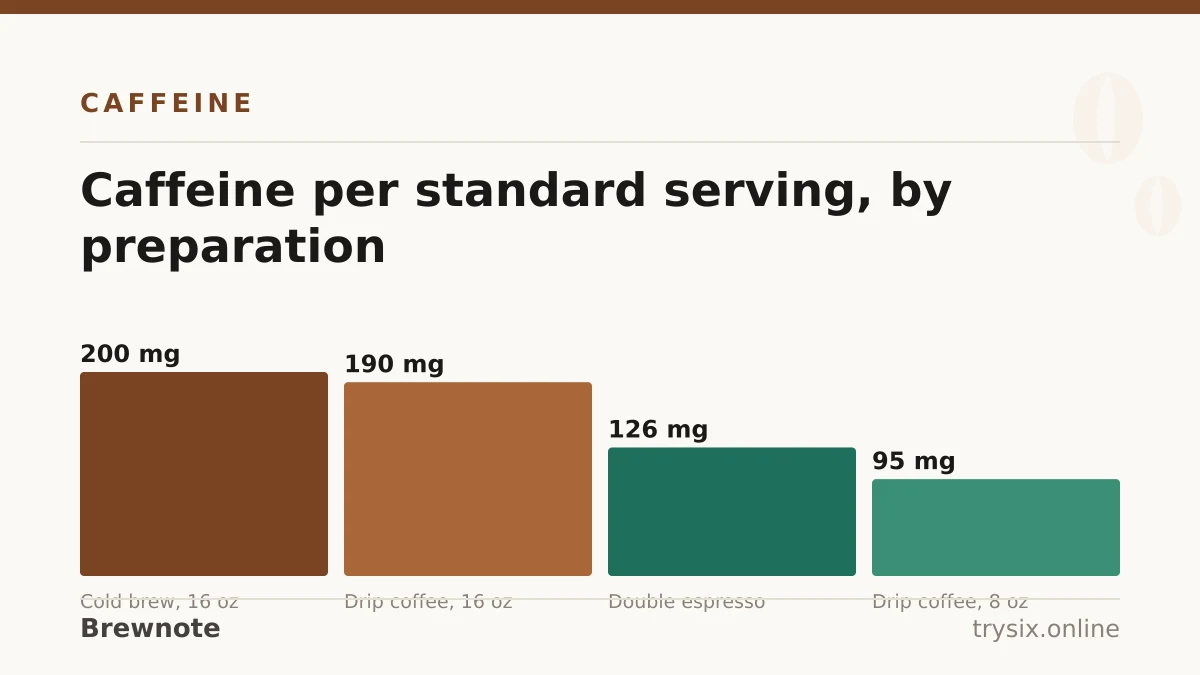
You will see 95 mg quoted everywhere, usually with no mention that your actual cup could hold half that or double it. If you are keeping an eye on your intake — for sleep, for pregnancy, or because you had a jittery afternoon and want to know why — the spread matters more than the average.
The headline number, and why it is soft
The commonly quoted figure is 95 mg of caffeine in an 8 oz cup of brewed coffee. It is a reasonable average and it is quoted everywhere, including by the FDA, which puts a typical cup in the 80 to 100 mg range.
What that hides is the spread. A 2003 study in the Journal of Analytical Toxicology measured caffeine in speciality coffees bought commercially and found substantial variation between outlets and between samples of the same drink from the same outlet on different days. A single figure describes the middle of a distribution, not what is in your cup.
By serving size
| Serving | Volume | Caffeine | Note |
|---|---|---|---|
| Small cup | 6 oz / 180 ml | ~70 mg | The 'cup' on a carafe |
| Standard cup | 8 oz / 240 ml | ~95 mg | The reference figure |
| Mug | 12 oz / 350 ml | ~140 mg | What most people drink |
| Large mug | 16 oz / 475 ml | ~190 mg | Half the daily guideline |
| Travel cup | 20 oz / 590 ml | ~235 mg | One drink |
| 12-cup pot | 60 oz / 1.8 L | ~1,000 mg | Across the whole carafe |
That last row is the one people misjudge. A 12-cup machine's markings use a 5 to 6 oz cup, so a full pot is about 1.8 litres and fills five or six mugs — see how to use a drip coffee maker. Drinking 'half the pot' is roughly 500 mg.
By brew method
| Drink | Per serving | Per 100 ml |
|---|---|---|
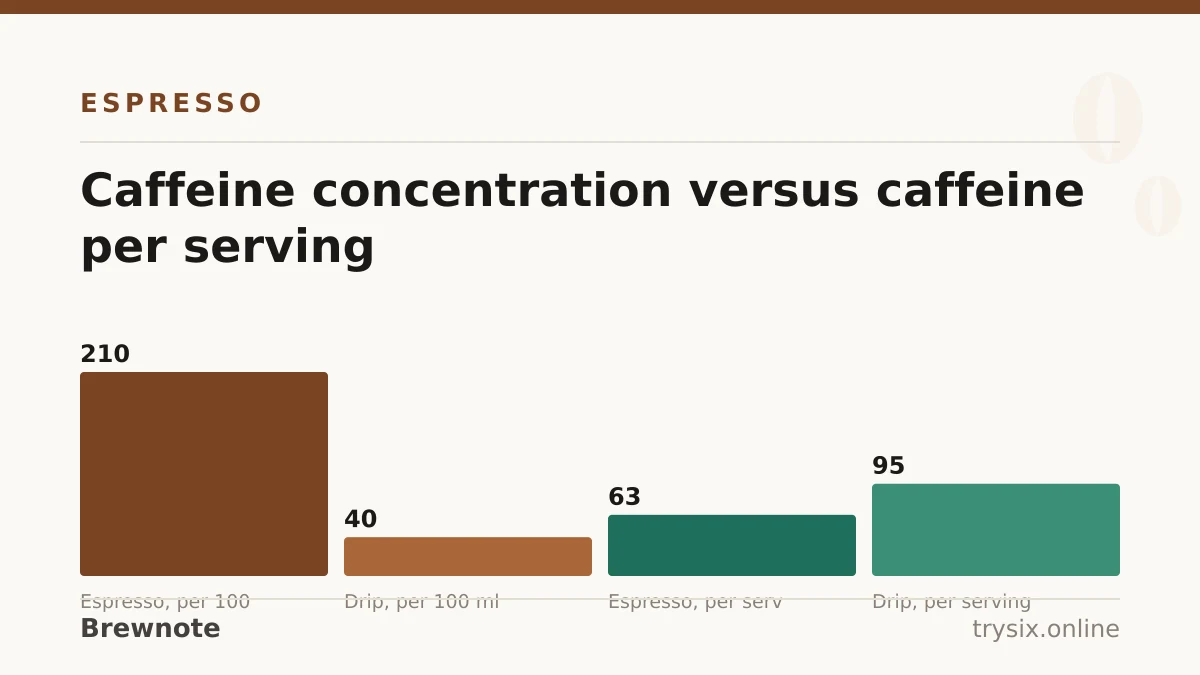
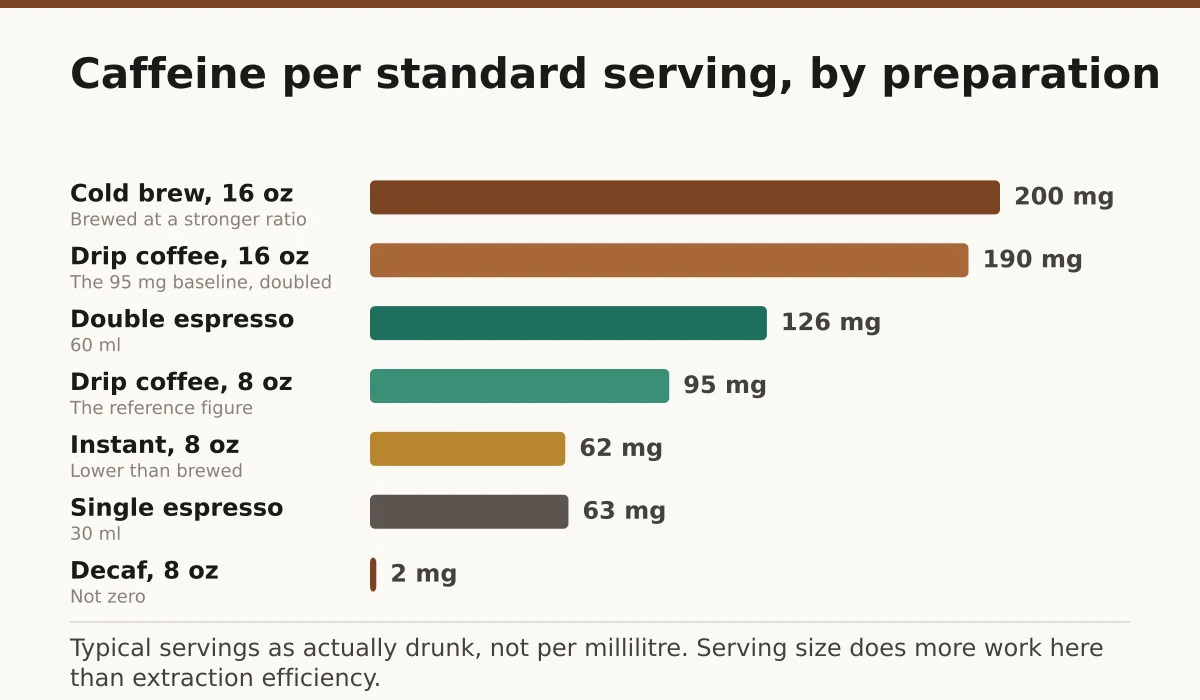
| Espresso | 63 mg | ~210 mg |
| Cold brew concentrate | varies | ~150 mg undiluted |
| Drip coffee | 95 mg / 8 oz | ~40 mg |
| Cold brew, ready to drink | 200 mg / 16 oz | ~42 mg |
| Instant | 62 mg / 8 oz | ~26 mg |
| Decaf | 2 mg / 8 oz | ~1 mg |
Espresso leads per millilitre and trails per serving, which is the source of most arguments about it. Espresso vs coffee works the comparison through properly.
What actually moves the number
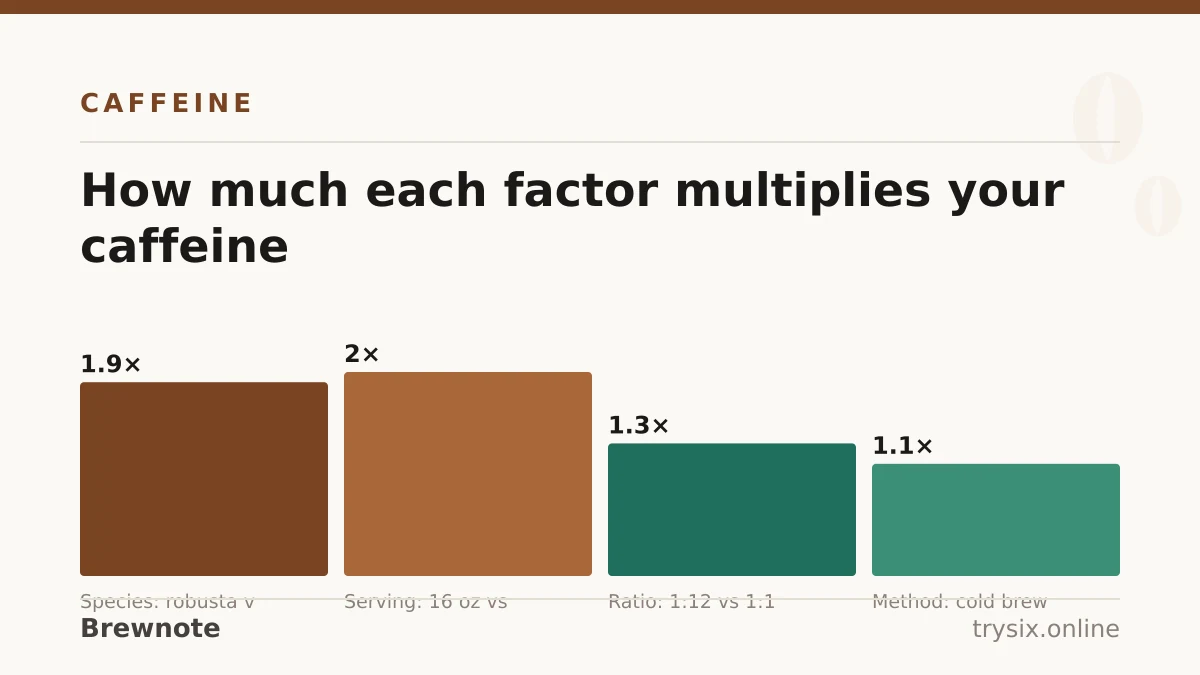
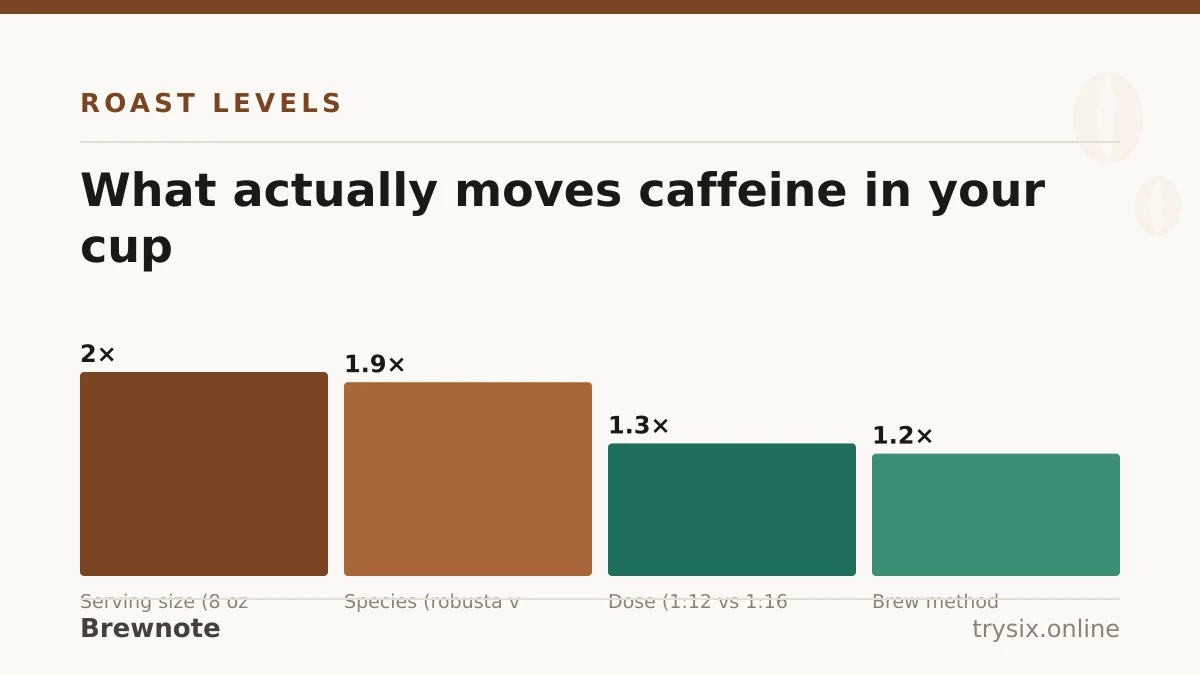
- Serving size. Doubling the cup doubles the caffeine, and no other variable is that clean.
- Bean species. Robusta carries roughly twice the caffeine of arabica — see types of coffee beans.
- Dose. Brewing at 1:12 rather than 1:16 puts about a third more coffee in the same water.
- Brew time and grind. Longer contact and finer grind extract more of what is there.
- Roast level. Real but small — a few percent, and the direction depends on whether you weigh or scoop. Light vs dark roast has the arithmetic.
Daily limits
The FDA cites 400 mg a day — about four 8 oz cups of brewed coffee — as an amount not generally associated with negative effects for healthy adults. That is a population-level reference, not a personal prescription, and the agency is explicit that people vary in sensitivity and in how quickly they metabolise caffeine.
It does not apply to everyone. Pregnancy guidance is considerably lower, typically around 200 mg. Children and adolescents, people taking medications that interact with caffeine, and anyone with a diagnosed arrhythmia or anxiety disorder are all outside the scope of that figure. Those questions belong with a clinician, not a coffee site.
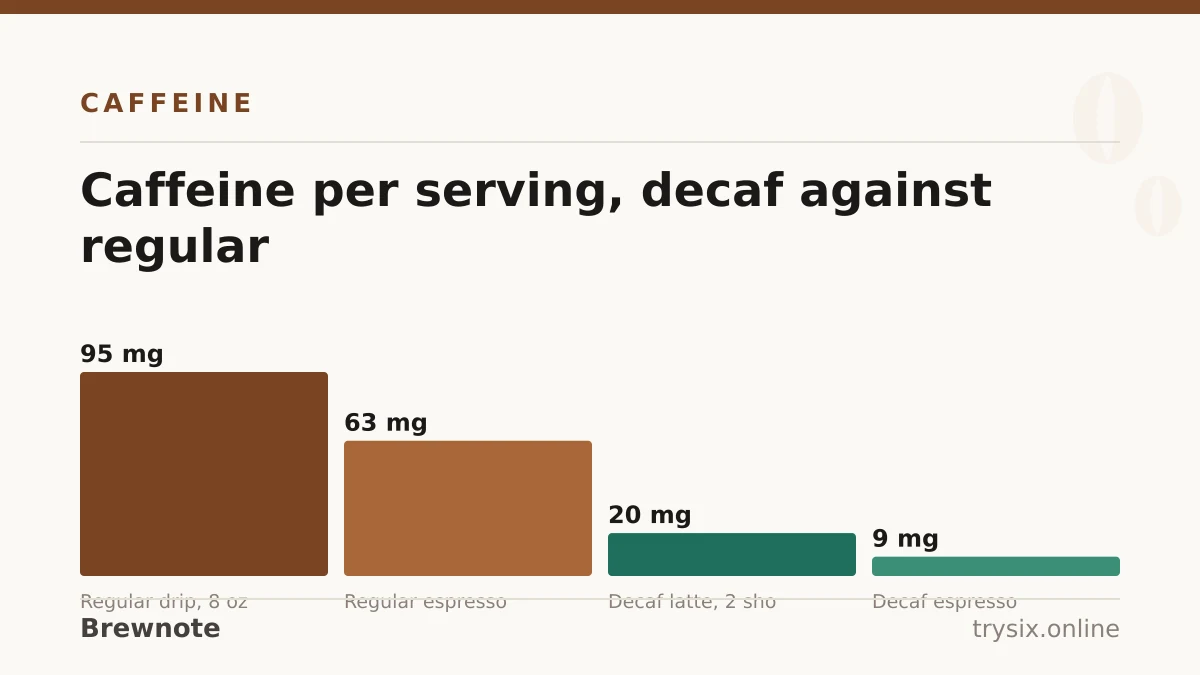
Decaf is not zero
An 8 oz cup of decaf holds roughly 2 mg of caffeine, and a decaf espresso shot 3 to 15 mg. US regulations require at least 97 percent of the caffeine to be removed, which leaves a small residue by design. For most people that is negligible; for someone extremely sensitive drinking several cups, it is not nothing. Does decaf coffee have caffeine has the detail.