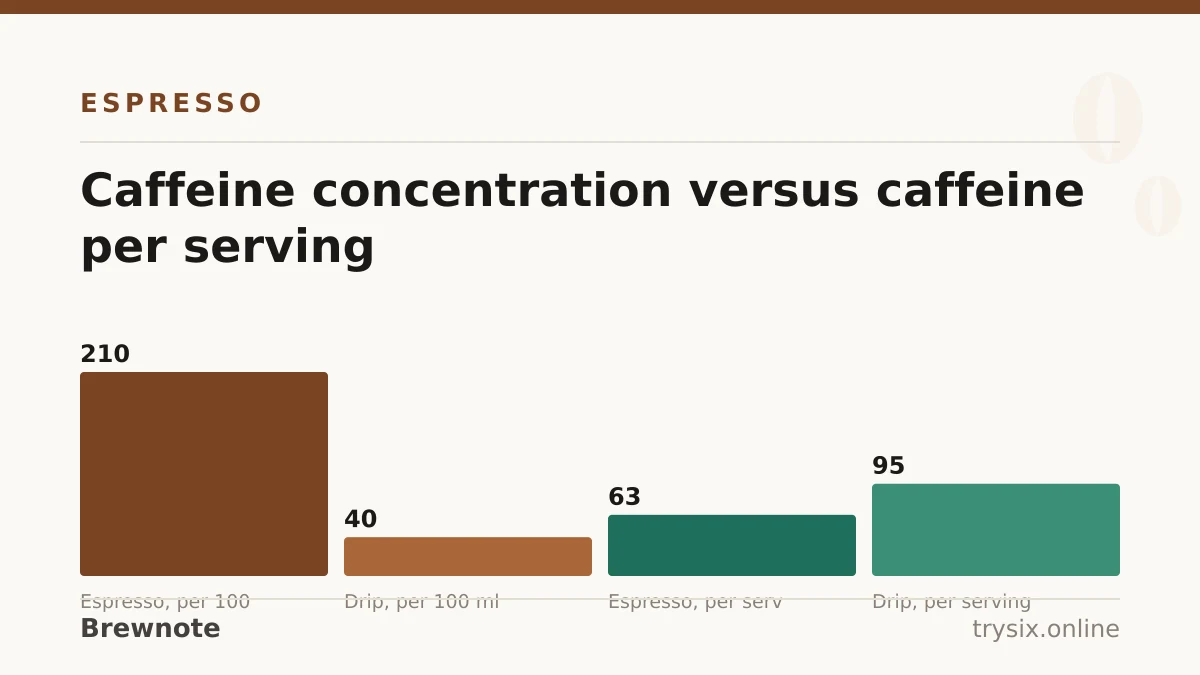
A shot of espresso tastes like it should knock you sideways, and a mug of drip coffee tastes mild by comparison. So it comes as a surprise to most people that the mug usually contains more caffeine. Both drinks come from the same beans — everything that separates them happens in the last few minutes.
One ingredient, two methods
Start with the thing that surprises people: there is no difference in the coffee. Both drinks are made from the roasted seeds of Coffea arabica or Coffea canephora, from the same farms, sold in the same bags. What differs is what you then do to them.
| Espresso | Drip coffee | |
|---|---|---|
| Pressure | About 9 bar | None — gravity only |
| Grind | Fine, like table salt | Medium, like coarse sand |
| Ratio | 1:2 — 18 g in, 36 g out | 1:16 — 60 g per litre |
| Contact time | 25–30 seconds | 4–6 minutes |
| Serving | 30 ml | 240 ml |
| Concentration | ~8–12% dissolved solids | ~1.2–1.5% dissolved solids |
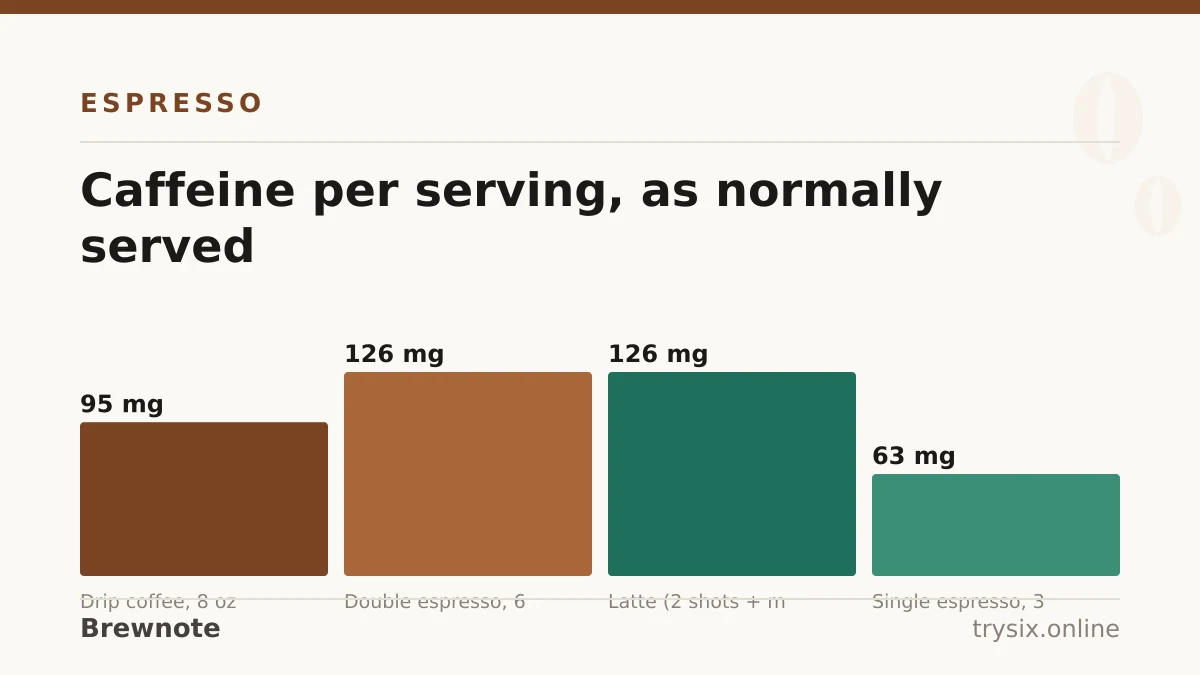
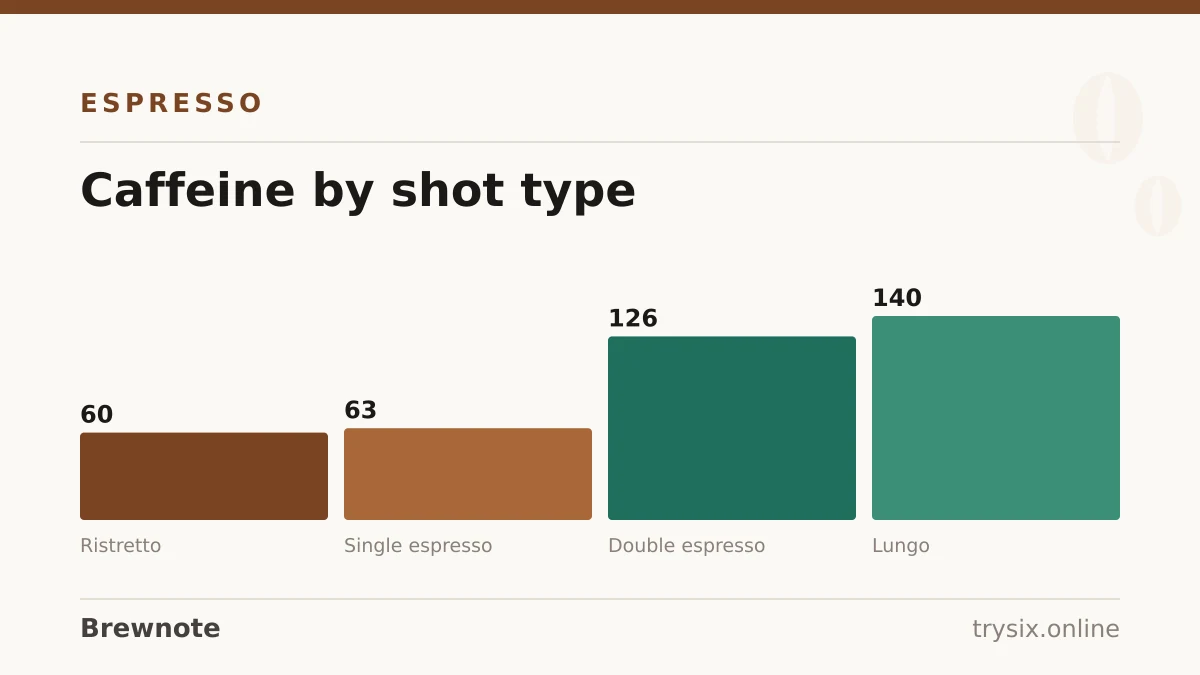
| Caffeine per serving | ~63 mg | ~95 mg |
| Caffeine per 100 ml | ~210 mg | ~40 mg |
Which has more caffeine
Both answers are correct and they answer different questions, which is why this argument never ends.
- Per millilitre: espresso, by roughly five times. It is a concentrate.
- Per serving as normally drunk: drip coffee, because an 8 oz cup is eight times the volume of a shot.
- Per gram of dry coffee used: broadly similar. Both methods extract most of the available caffeine.
- In a latte or cappuccino: the same as the espresso in it. Milk adds volume and no caffeine.
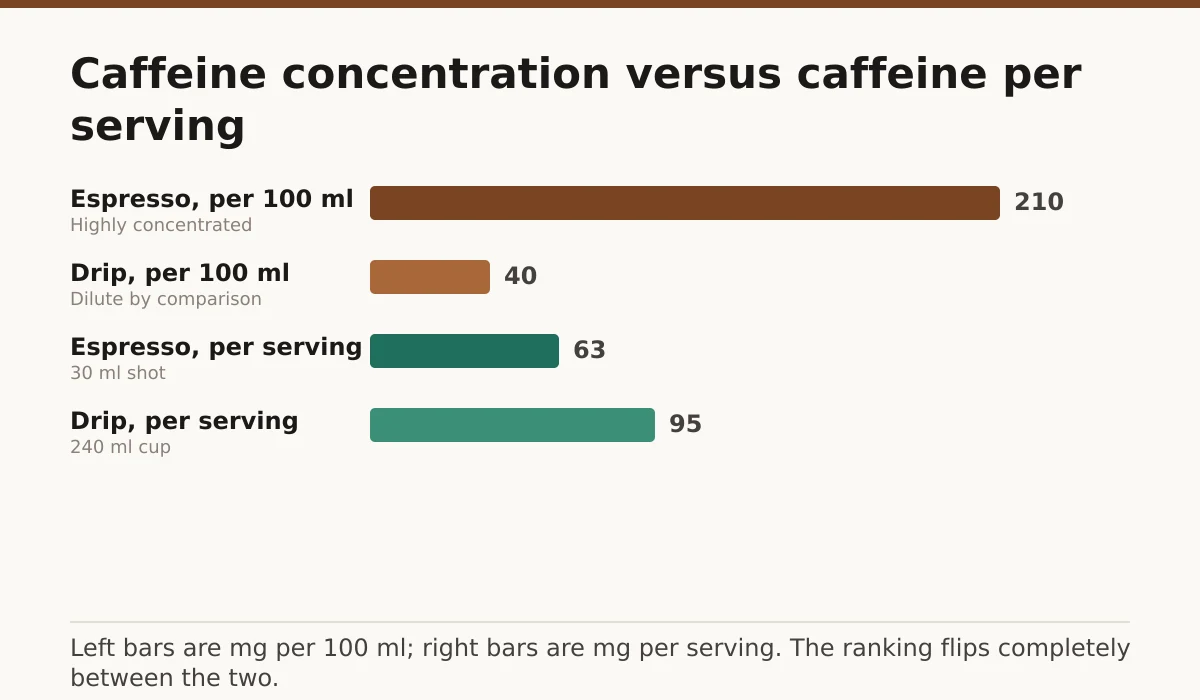
The practical consequence: switching from a mug of drip to a single espresso reduces your caffeine intake, even though the espresso tastes far stronger. Full figures by drink are in how much caffeine is in a cup of coffee.
What each tastes like, and why
Espresso concentrates everything — sweetness, acidity, bitterness and body all arrive at once and in a small volume. Because 8 to 12 percent of the liquid is dissolved coffee solids, the texture is syrupy in a way brewed coffee never is.
Drip coffee at 1.2 to 1.5 percent dissolved solids is a comparatively dilute solution, which lets individual flavours separate out. A fruity Ethiopian read as fruit rather than as intensity. It is why filter brewing is the standard for tasting coffee and espresso is the standard for drinking it with milk.
| Coffee | As espresso | As drip |
|---|---|---|
| Light-roast Ethiopian | Sharp, intense, often sour if under-extracted | Floral, tea-like, distinct fruit notes |
| Medium-roast Colombian | Balanced, caramel, forgiving | Rounded, nutty, easy |
| Dark-roast Italian blend | Heavy, bitter-sweet, thick crema | Smoky, flat, often ashy |
| Robusta-heavy blend | Rubber and grain; excellent crema | Harsh; rarely brewed this way |
The 'espresso roast' label
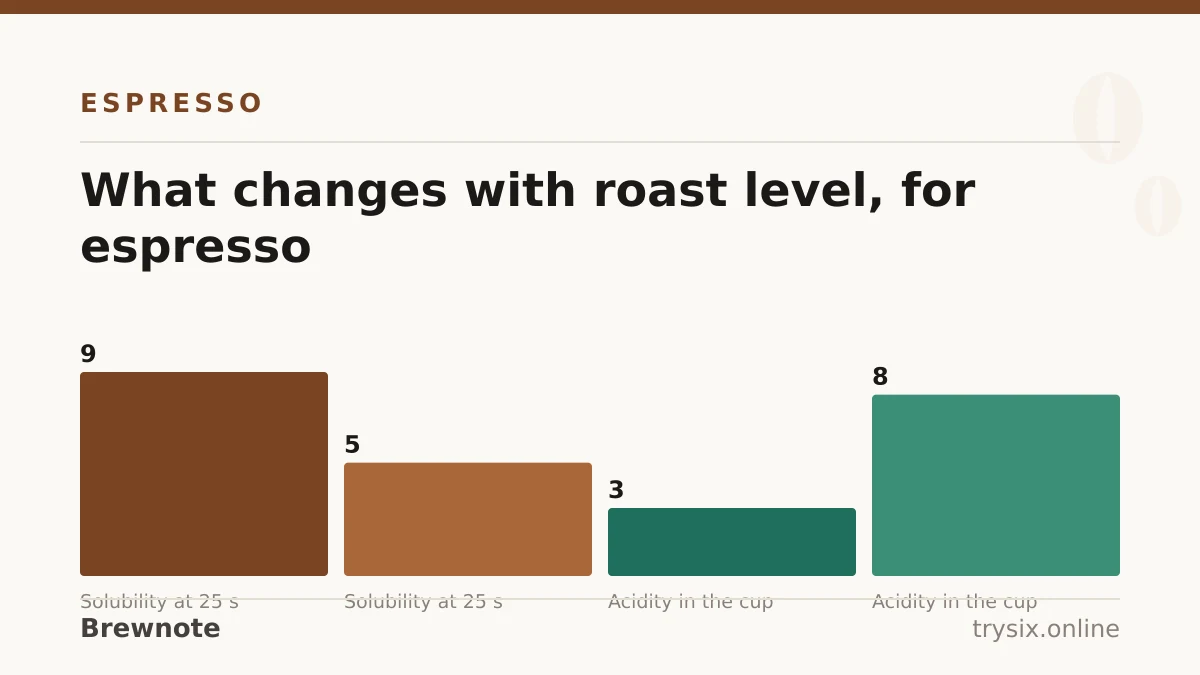
A bag marked 'espresso' has usually been roasted somewhat darker, because darker roasts are more soluble and more forgiving under pressure, and because the caramelised sugars stand up to milk. Sometimes it is ground finer. Neither makes it a different product.
You can pull espresso from a bag labelled 'filter' and brew filter coffee from a bag labelled 'espresso'. The label is a suggestion about use, not a specification — espresso beans vs coffee beans goes into what is actually in each bag.
Cost and equipment
What it takes to make each properly
Step 1: Drip coffee
A brewer that gets water to 195–205°F, a filter, and a grinder. Total outlay from about $40, and the technique is covered in how to use a drip coffee maker.
Step 2: Espresso
A pump machine capable of holding 9 bar and a grinder fine and consistent enough to control a 25-second shot. The grinder usually costs more than beginners expect and matters more than the machine.
Step 3: The near-espresso options
A moka pot reaches about 1.5 bar and an AeroPress rather less. Both make strong, concentrated coffee that works in milk drinks. Neither is espresso, and how to make espresso at home is honest about the gap.
Step 4: The cost per cup
Espresso uses 18–20 g of coffee for a 60 ml double; a 240 ml drip cup uses about 15 g. Per millilitre of drink, espresso is dramatically more expensive in beans.
Which should you drink
If you drink coffee with milk, espresso is the better base — it is concentrated enough not to vanish into dairy, which is exactly why every café milk drink is built on it. If you drink it black and care about tasting the origin, filter brewing shows more. If you want a large drink, an americano gets you espresso's character at drip's volume.
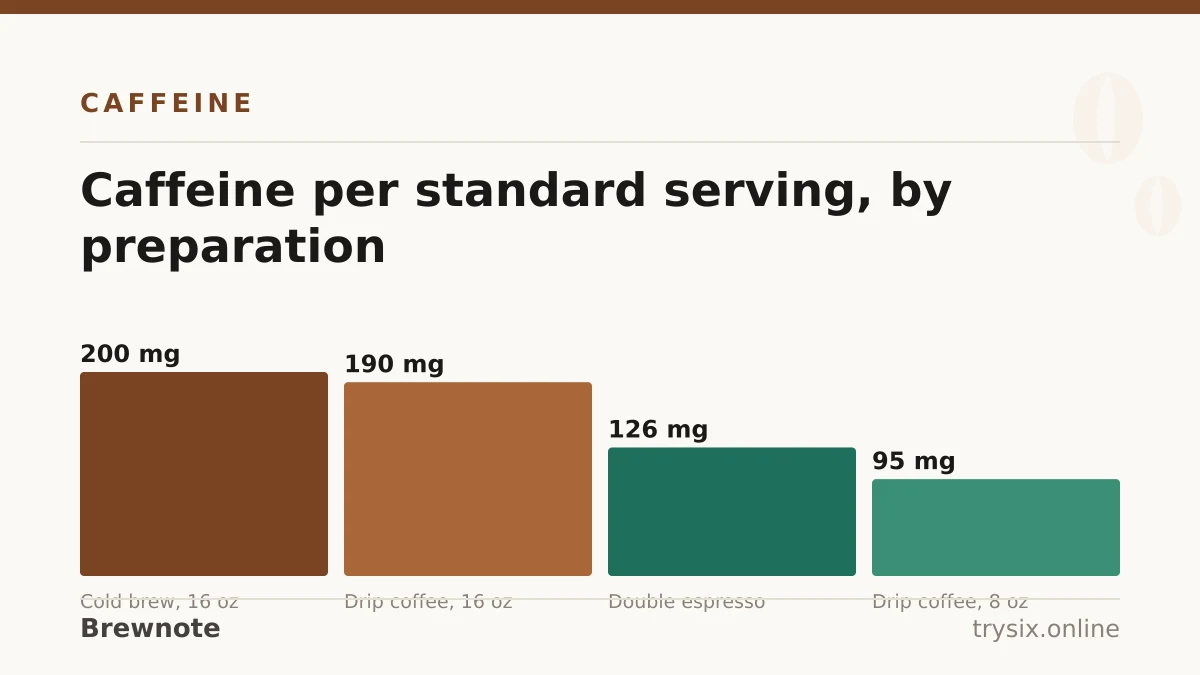
And if the question behind the question is about caffeine, neither method is the lever that matters. Serving size is. A 16 oz drip coffee has more caffeine than a double espresso, and what coffee has the most caffeine sets out the full ranking.