Roast Levels
How to Roast Coffee Beans at Home
Roast green beans in a pan, an oven or an air popper. First and second crack, timings, cooling, degassing — and the ventilation you will need.
Read
Light, medium and dark describe how far a bean went in the roaster — not its strength.
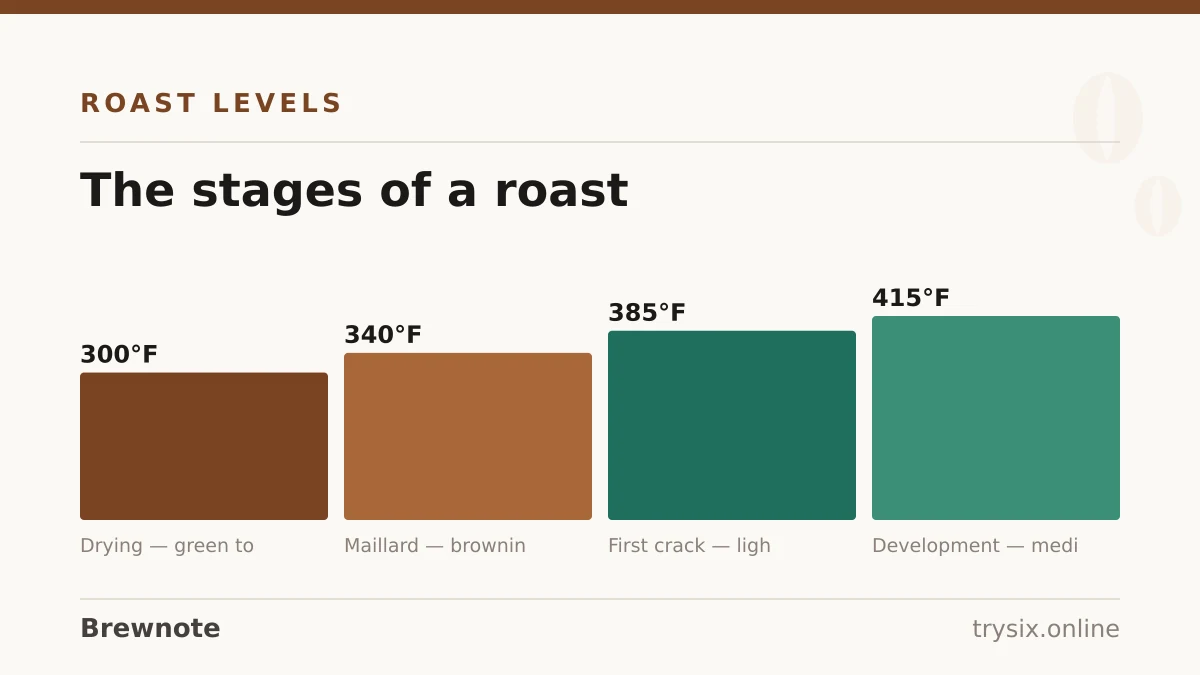
Roast level is a measure of applied heat and time, marked by two audible events. First crack, around 385°F, is when moisture inside the bean flashes to steam and the structure pops. Second crack, near 435°F, is the cell walls fracturing as oils migrate to the surface. Light roasts stop shortly after first crack; dark roasts run into or past second.
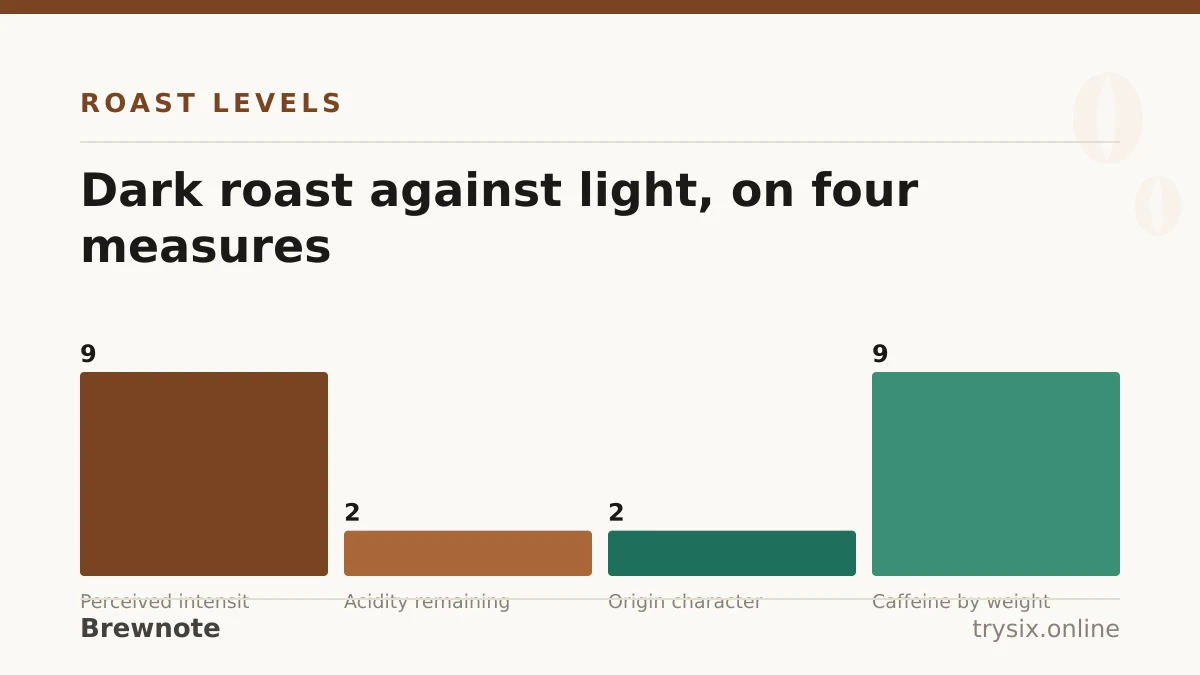
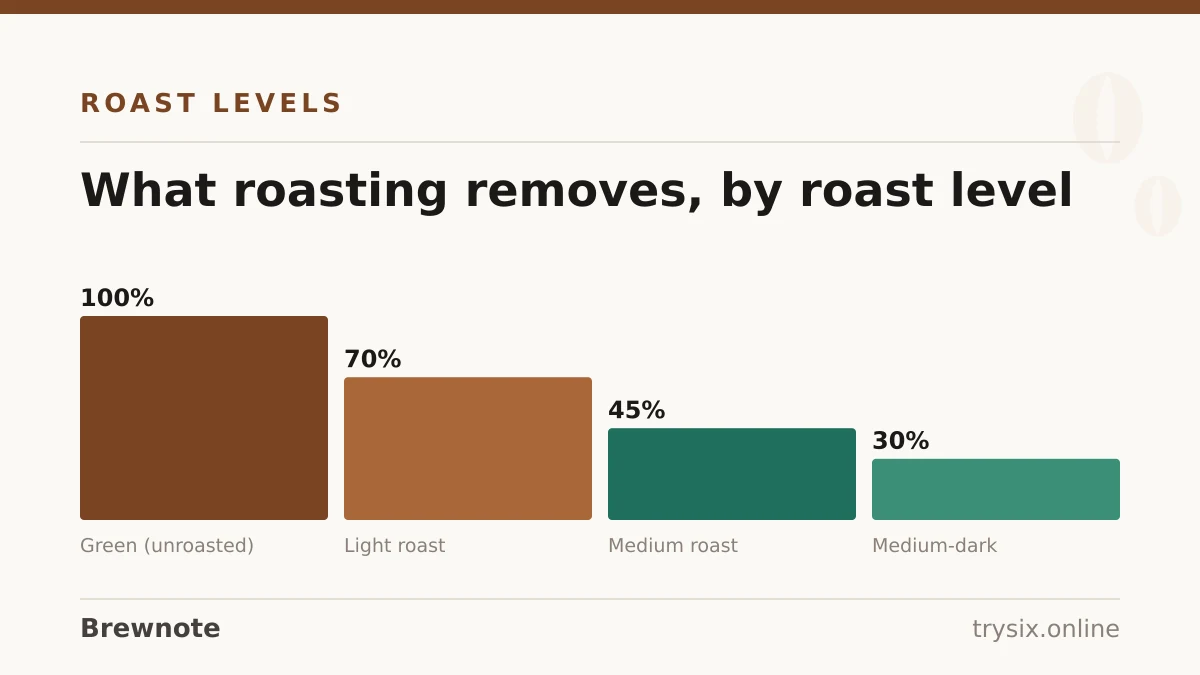
The persistent myth is that dark roast is stronger. It tastes more intense because roasting develops bitter, smoky compounds, but roasting also burns off a small amount of caffeine — so by weight, light roast holds marginally more.
Roast Levels
Roast green beans in a pan, an oven or an air popper. First and second crack, timings, cooling, degassing — and the ventilation you will need.
Read
Roast Levels
By weight light roast wins; by scoop dark roast often does. Both answers are correct — here is the arithmetic that makes them flip.
Read
Roast Levels
Dark roast runs into or past second crack, around 437–450°F. Why it tastes stronger, why it isn't more caffeinated, and why it's less acidic.
Read
Roast Levels
Light roast is coffee stopped shortly after first crack, around 356–401°F. What that does to acidity, body, caffeine and how you should brew it.
Read
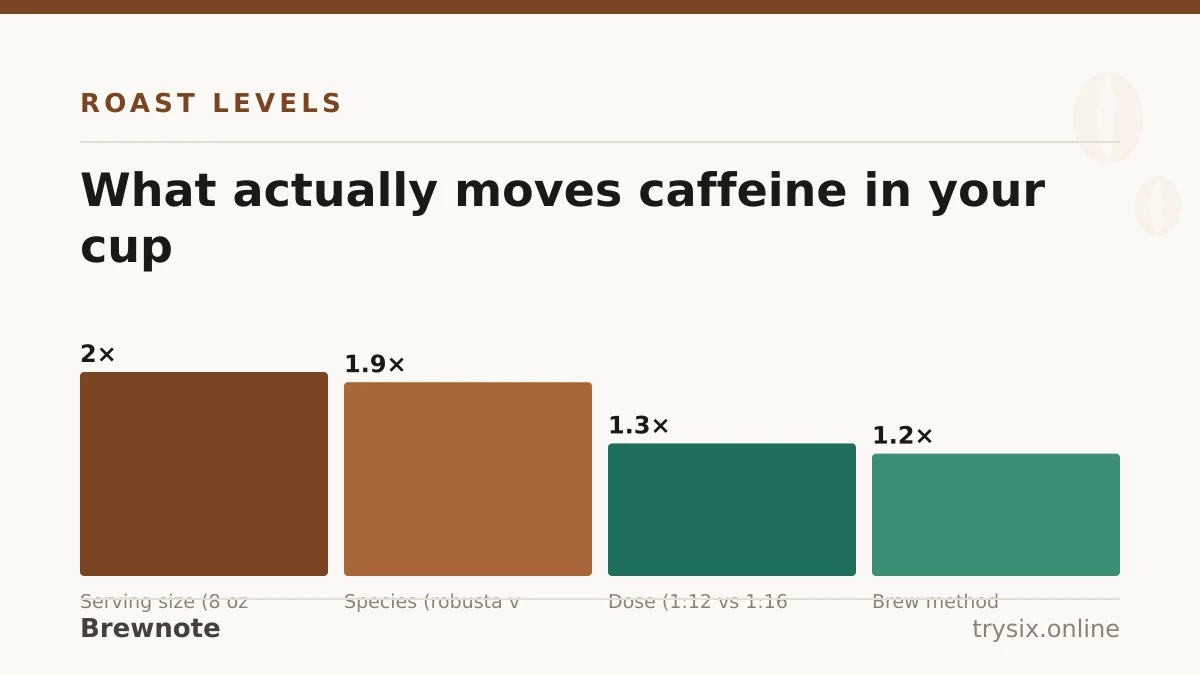
Measured by weight, light roast has slightly more, because roasting degrades a small fraction of the caffeine. Measured by scoop, dark roast often has more, because dark beans are less dense so a scoop holds more of them. Both statements are true; they answer different questions.
Yes, measurably. Longer roasting breaks down chlorogenic acids, and darker roasts test slightly higher on the pH scale. Whether that is gentler on a given person's stomach is much less well established.
It is a marketing term for a light roast, popularised by large coffee chains. There is no industry standard behind it, so blonde from one roaster may be lighter or darker than blonde from another.
Brewing
Ratios, grind, water and time — the four dials that decide how a cup tastes.
Espresso
What actually defines espresso, what a shot contains, and what you can do without a machine.
Cold Brew & Iced
Steeping cold for 12–24 hours makes a different drink from pouring hot coffee over ice.
Caffeine & Decaf
How much caffeine is actually in a cup, a shot, a pot — and in decaf.
Beans & Origins
Where coffee grows, how the cherry becomes a bean, and what to buy.