Light roast has a reputation for being weak, sour, or somehow unfinished. Usually what people have run into is not the roast at all — it is a light roast brewed the same way as a dark one, which genuinely does taste sour. A couple of adjustments change it completely.
What roasting actually does
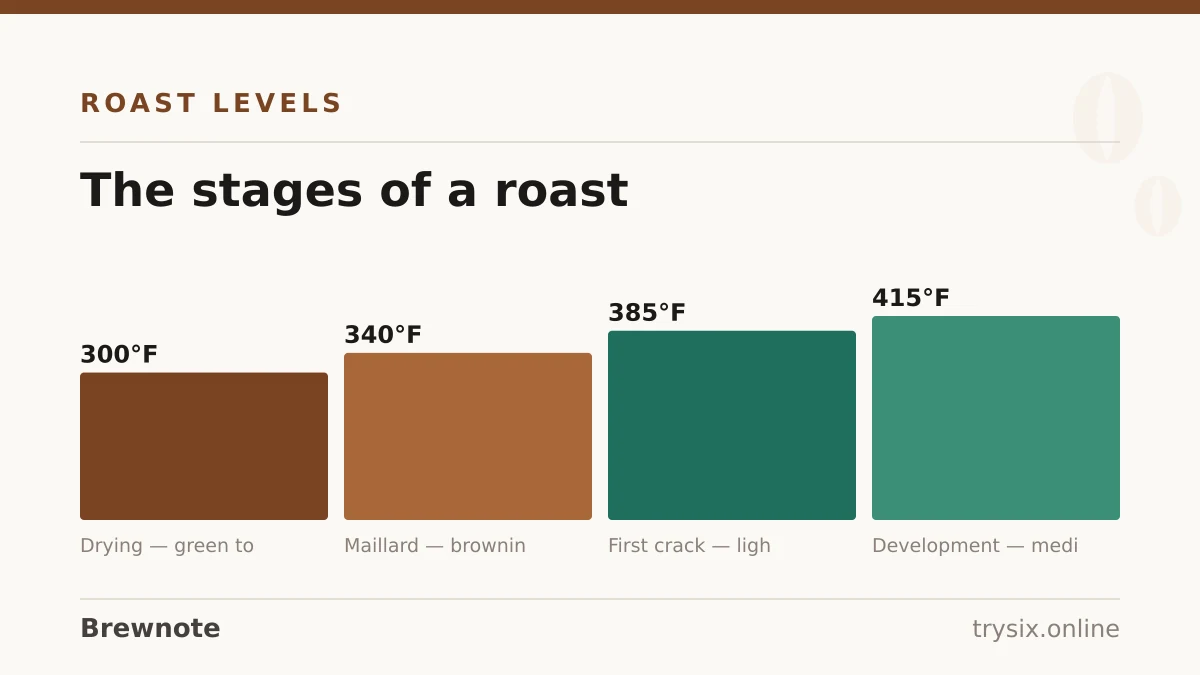
Green coffee beans are dense, grassy and essentially undrinkable. Roasting drives off moisture, triggers the Maillard reaction and caramelisation, and builds hundreds of aromatic compounds that were not there before. Roast level describes how far that process was allowed to run.
Two audible landmarks divide the scale. First crack, around 385°F, is the moment trapped moisture flashes to steam and the bean's structure pops audibly — like popcorn, but quieter. Second crack, near 435°F, is the cell walls fracturing as oils push to the surface. A light roast is pulled after first crack and well before second.
Where light sits on the scale
| Level | Drop temperature | Surface | Tastes of |
|---|---|---|---|
| Light / Cinnamon | 356–375°F | Dry, pale brown | Grain, bright acidity, tea-like |
| Light-medium / City | 375–401°F | Dry, light brown | Fruit, florals, origin character |
| Medium / City+ | 410–425°F | Dry to faint sheen | Balance, caramel, nuts |
| Medium-dark / Full City | 425–435°F | Faint oil patches | Chocolate, spice, some roast |
| Dark / French | 437–450°F | Visibly oily | Smoke, char, bittersweet |
Those temperature bands are approximate and vary between roasters, machines and beans — a roaster's own probes may read several degrees off another's. Colour and crack timing are what practitioners actually go by. What is dark roast coffee covers the other end.
What survives a light roast
The reason speciality roasters favour light roasts is that they preserve the differences between coffees. An Ethiopian Yirgacheffe roasted light tastes of bergamot and stone fruit; roasted dark, it tastes mostly of roast. Roasting is a flavour-adding process, and past a point the flavours it adds drown out the ones the farm produced.
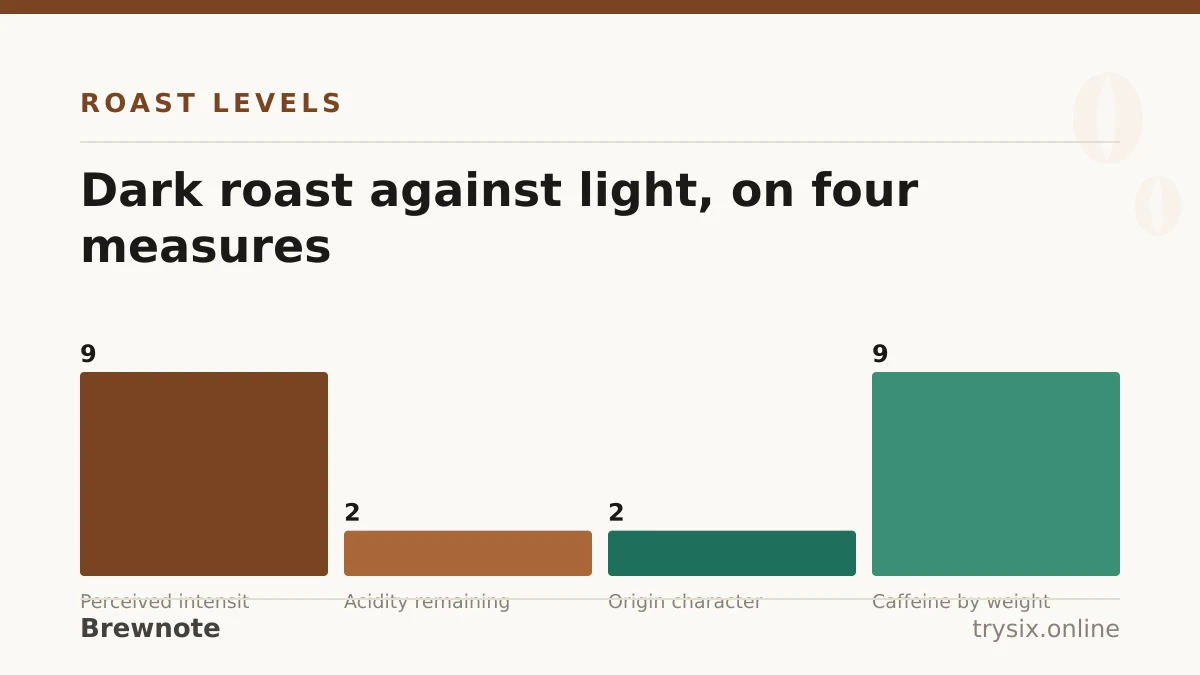
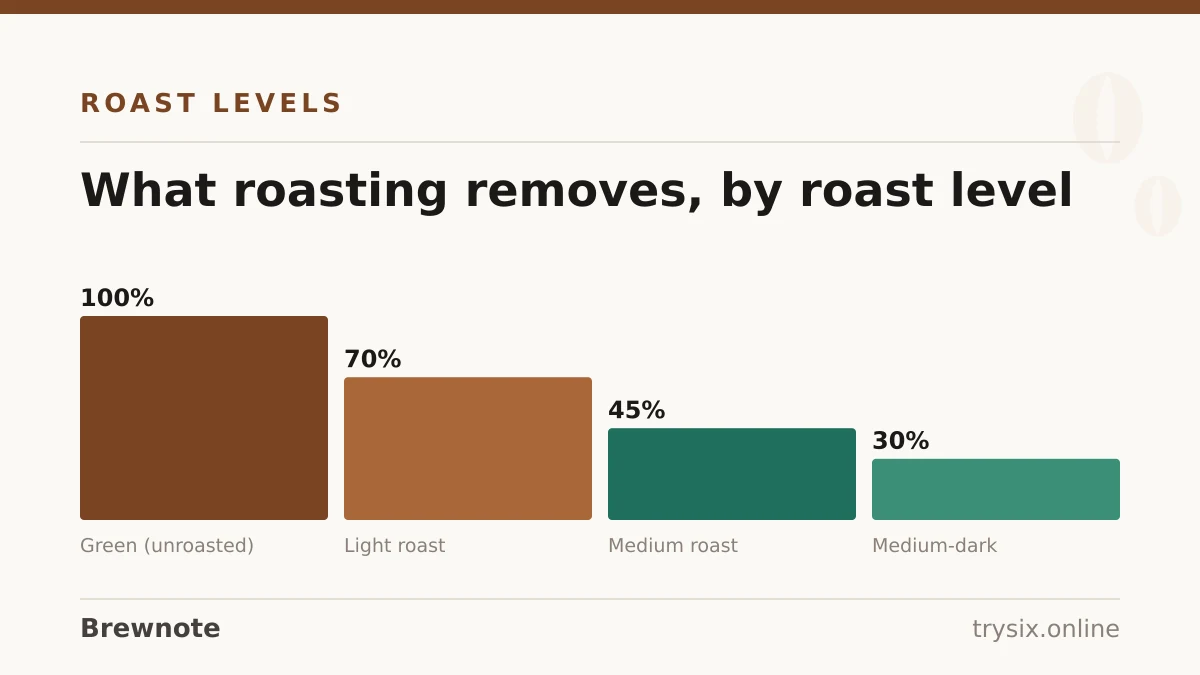
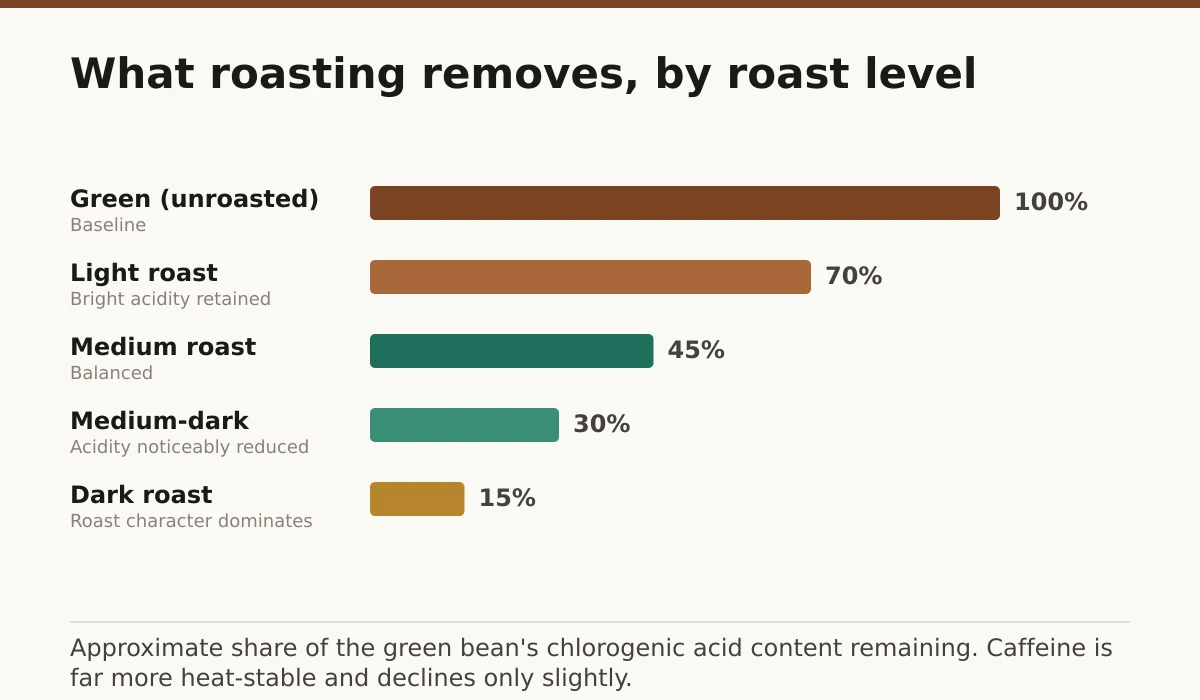
Chlorogenic acids are the clearest measurable case. They are abundant in green coffee, contribute perceived acidity and bitterness, and are progressively degraded by roasting. Measurements comparing green and roasted samples find substantial losses with increasing roast, while caffeine is comparatively heat-stable.
The caffeine question
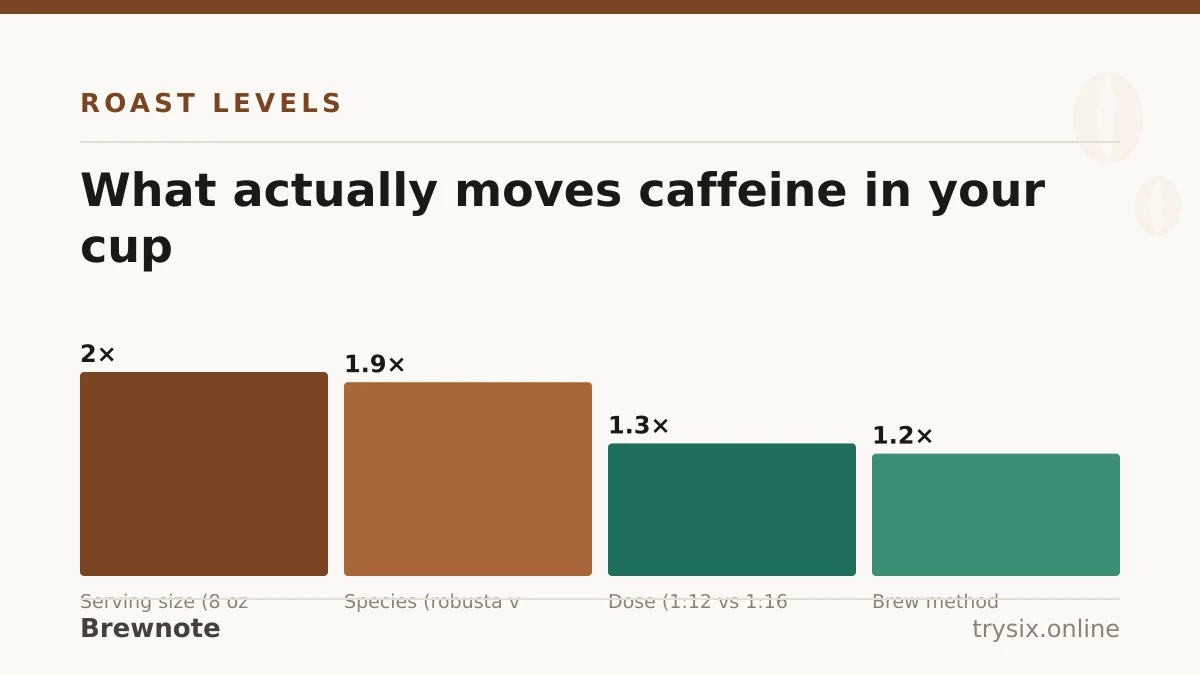
Light roast holds marginally more caffeine than dark roast by weight, because roasting degrades a small fraction of it. The difference is small — caffeine is much more heat-stable than the acids around it — and it is easily reversed by how you measure.
Roasting drives off moisture and expands the bean, so darker beans are less dense. A scoop holds more dark-roast beans than light-roast ones, which can put more caffeine in a scoop-measured dark cup. Both statements are true and they answer different questions; light vs dark roast works through the arithmetic, and what coffee has the most caffeine sets it against the bigger variables.
How to brew it
Light-roasted beans are denser and less soluble than dark ones, because less of the cellular structure has been broken down. That makes them harder to extract, and under-extraction is the usual reason people conclude they dislike light roast: the cup tastes sour, thin and grassy, which is what under-extracted coffee tastes like regardless of roast.
Getting a light roast to taste right
Step 1: Grind finer than you would for a dark roast
One or two steps finer on the same grinder. More surface area compensates for the lower solubility. See how to grind coffee beans for the baseline sizes.
Step 2: Use water at the top of the range
200–205°F rather than 195°F. Extraction rate rises with temperature, and a light roast needs the help.
Step 3: Extend the contact time slightly
An extra 30 seconds on an immersion brew, or a slower pour on a filter. Not longer than about five minutes, which starts pulling bitterness even from a light roast.
Step 4: Give it longer to rest after roasting
Light roasts degas more slowly than dark ones. A bag roasted three days ago may still taste closed; the same coffee at ten days often tastes noticeably better.
Step 5: Judge it as filter before judging it as espresso
Light-roast espresso is a genuinely difficult skill — 25 seconds is not long to extract a dense bean. If a light roast tastes sour as espresso, brew it as filter before blaming the coffee.
Blonde roast, and other marketing names
'Blonde' is a chain-coffee marketing term for a light roast. There is no industry standard behind it, so one company's blonde may be lighter or darker than another's. The same applies to 'cinnamon roast', 'half city', 'New England roast' and most other names — they are descriptive traditions rather than defined grades.
What is reasonably reliable is the physical evidence in the bag. A light roast has a dry, matte surface with no oil sheen; the beans are pale and uniform; and the bag should carry a roast date rather than only a best-before. Where to buy coffee beans covers reading a label properly.
| Look for | Light roast | Dark roast |
|---|---|---|
| Surface | Dry and matte | Visibly oily |
| Colour | Pale to light brown | Dark brown to near black |
| Aroma in the bag | Grain, fruit, faint acidity | Smoke, chocolate, char |
| Density | Higher — beans feel heavier | Lower — expanded by roasting |
| Grind behaviour | Harder, more resistant | Brittle, grinds easily |