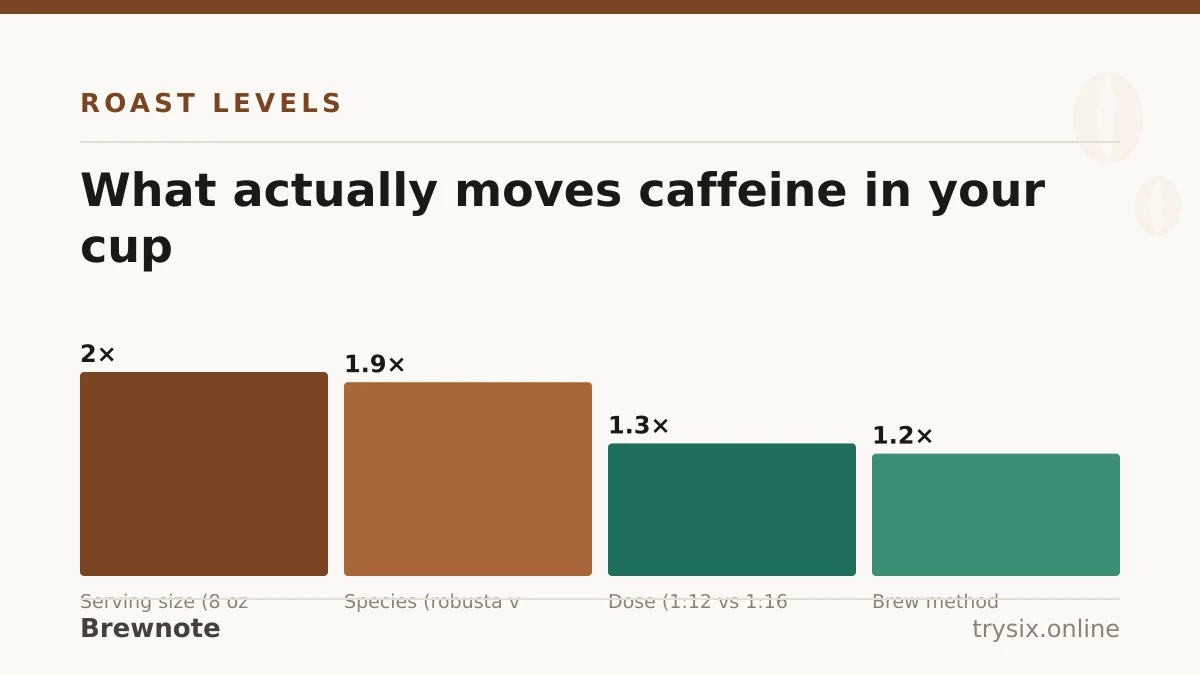
This is the coffee argument that never resolves, and the reason it never resolves is that both sides are right. They are answering different questions without realising it. Once you see which question each one is answering, the whole disagreement disappears in about a sentence.
Why the answer flips
This is one of the few coffee arguments where both sides are right and neither notices they are answering different questions. The confusion is entirely about the unit of measurement.
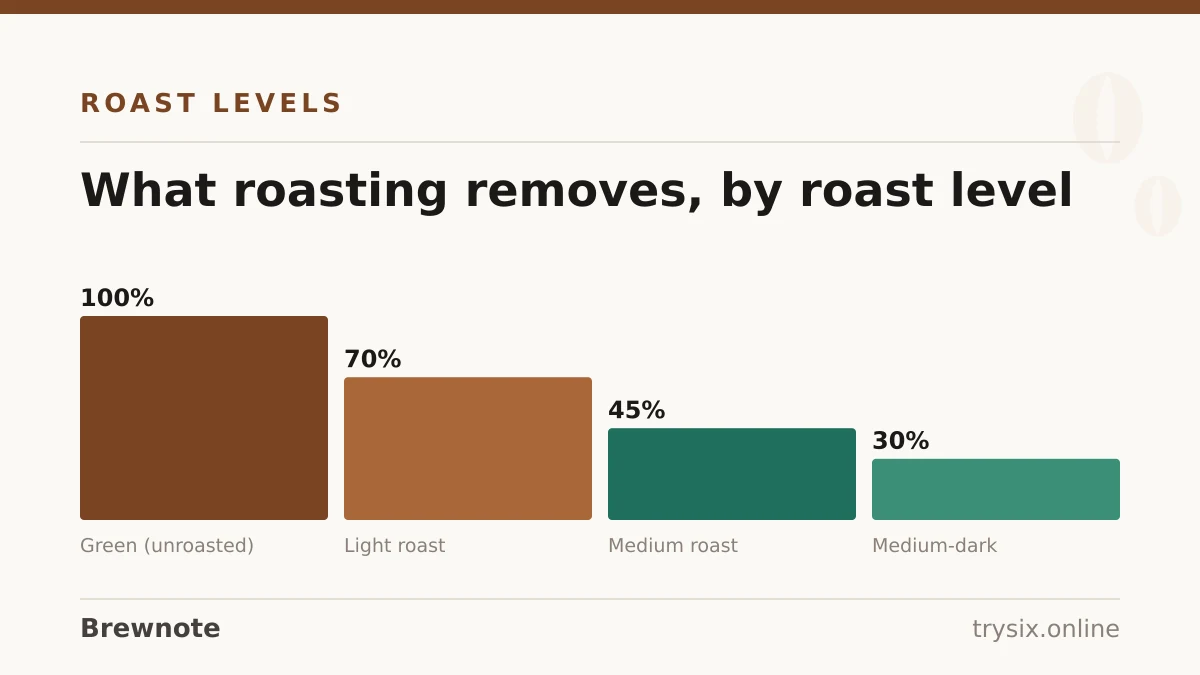
Roasting does two things relevant here. It degrades a small amount of caffeine — caffeine is fairly heat-stable, so this is a modest effect. And it drives off moisture while expanding the bean's structure, which makes darker beans substantially less dense.
| Light roast | Dark roast | |
|---|---|---|
| Weight of 100 beans | ~16.5 g | ~15.0 g |
| Caffeine per bean | Essentially unchanged | Fractionally lower |
| Caffeine per gram | Higher | Lower |
| Beans per level tablespoon | Fewer | More |
| Caffeine per tablespoon | Lower | Higher |
The size of the effect
Small. Measurements comparing green and roasted coffee find caffeine to be comparatively heat-stable — the compound survives roasting far better than the chlorogenic acids around it, which are degraded substantially. The by-weight difference between a light and dark roast of the same bean is on the order of a few percent.
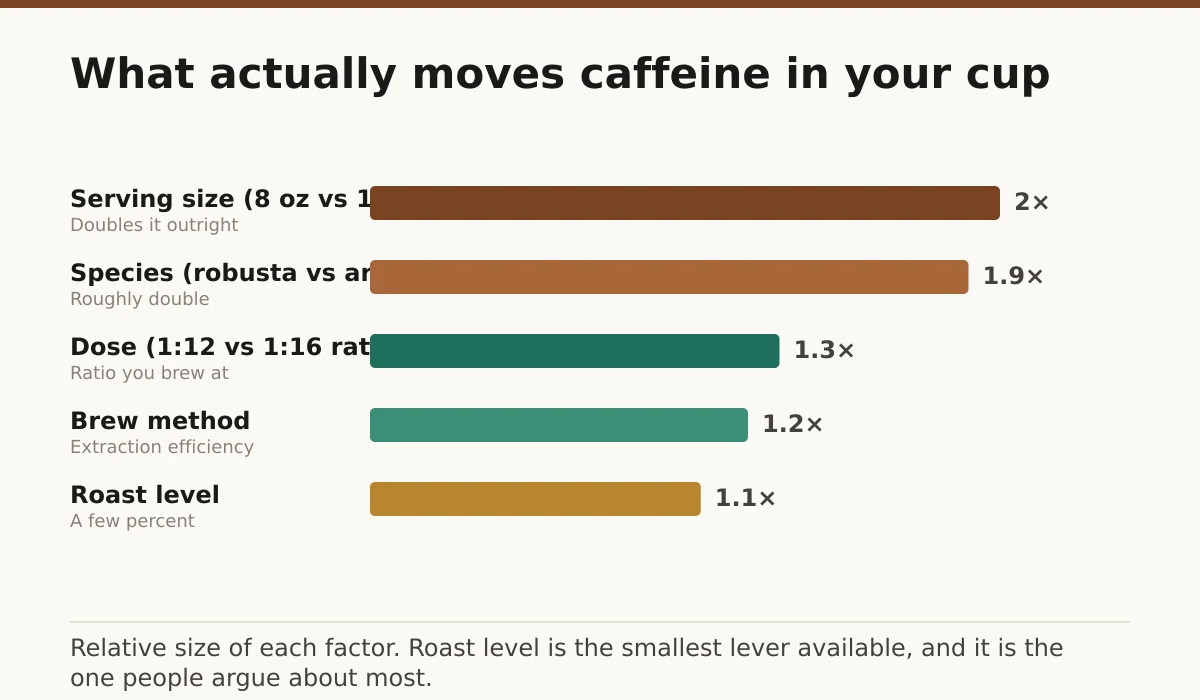
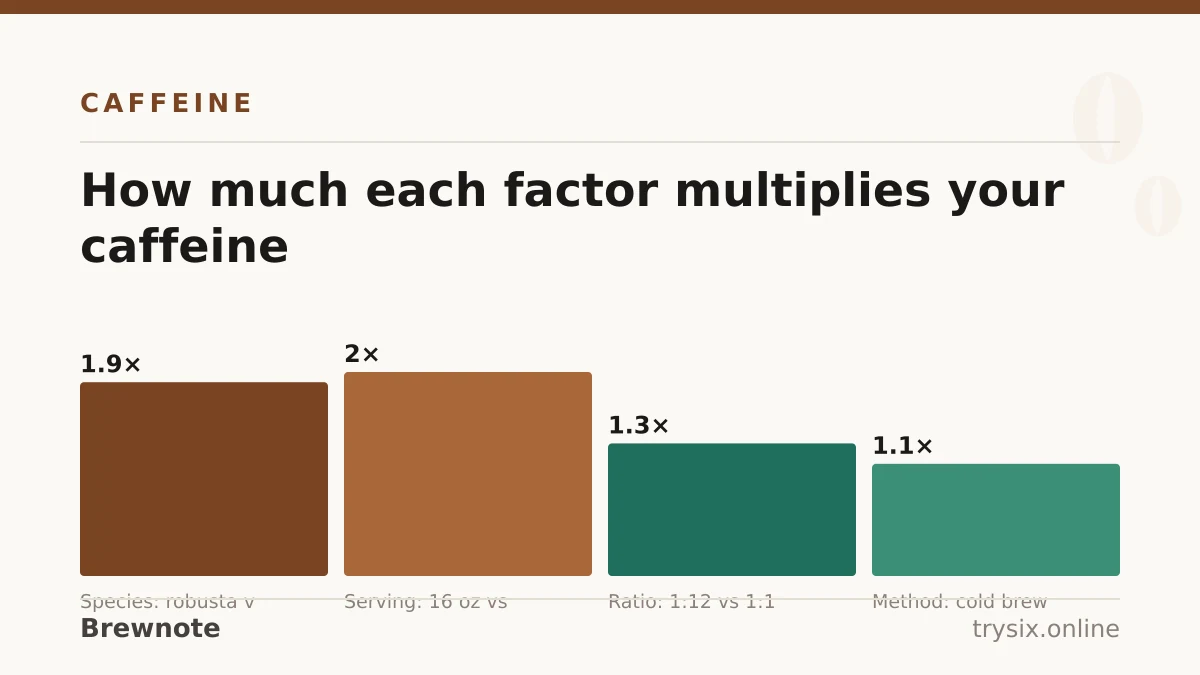
The practical reading: if you want more caffeine, use more coffee or a larger cup. If you want less, use less. Roast level is not the lever, and choosing a roast for caffeine reasons means giving up flavour control for a few percent. What coffee has the most caffeine ranks the actual variables.
Working it out for your own brewing
Which answer applies to you
Step 1: If you weigh your coffee
Light roast gives you fractionally more caffeine per gram. Fractionally — you will not notice it. Choose your roast on flavour and stop thinking about this.
Step 2: If you scoop
Switching from light to dark roast at the same number of scoops quietly increases your dose, because you are fitting more beans in the spoon. If your coffee suddenly feels stronger after changing bags, this may be why.
Step 3: If you buy pre-ground
Grind size affects density too, which adds a third variable. Ground dark roast is more compressible than ground light roast, so a packed scoop differs from a level one by more than you would expect.
Step 4: If you want consistency
Buy a scale. £12 removes this entire class of problem permanently, along with most of the inconsistency in home brewing generally — see how to make the perfect cup of coffee.
What actually differs between the two
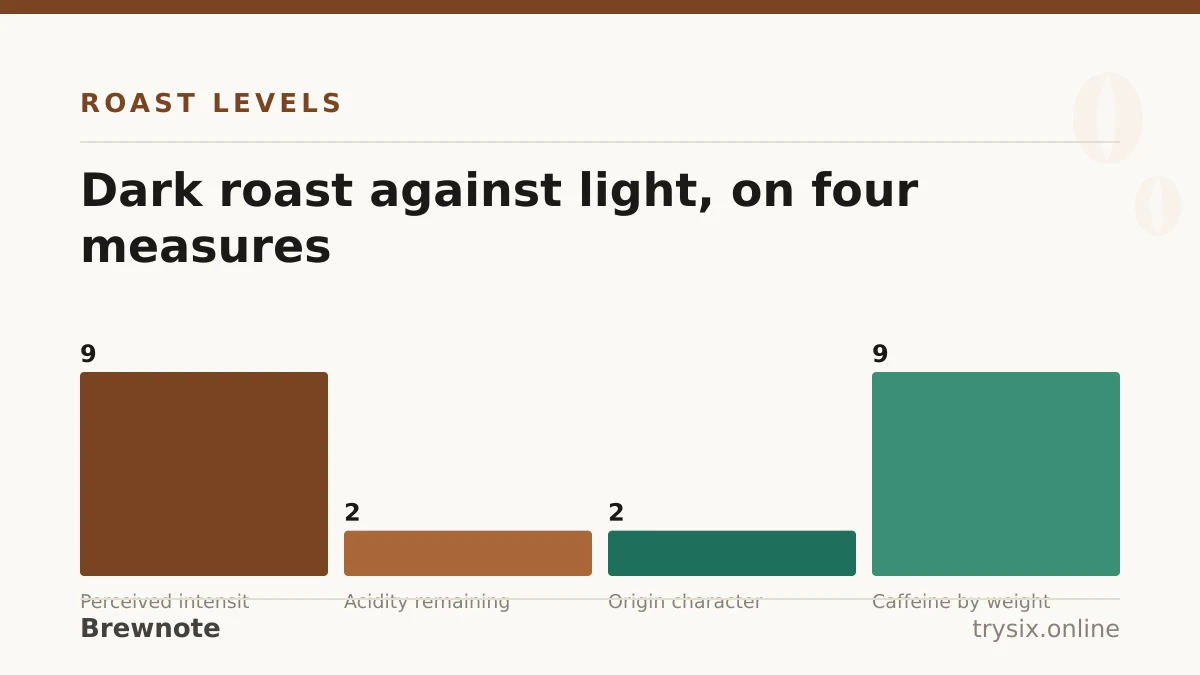
Caffeine is the least interesting difference between light and dark roast. The differences that show up in the cup are about acidity, aromatics and body.
| Light roast | Dark roast | |
|---|---|---|
| Drop temperature | 356–401°F | 437–450°F |
| Surface | Dry and matte | Visibly oily |
| Chlorogenic acids | Largely retained | Mostly degraded |
| Acidity in the cup | Bright, sometimes sharp | Low |
| Origin character | Prominent | Largely replaced by roast |
| Body | Lighter, tea-like | Heavier |
| Solubility | Lower — harder to extract | Higher — easy to over-extract |
| Shelf life once opened | Longer | Shorter; oils oxidise |
Those two solubility rows matter more day to day than any caffeine figure. A light roast that tastes sour is usually under-extracted, and a dark roast that tastes acrid is usually over-extracted — the fixes run in opposite directions. What is a light roast coffee and what is dark roast coffee cover the adjustments for each.
Medium roast, and why most people land there
Medium roast sits between first and second crack, around 410–425°F, with a dry surface and no oil. It keeps enough acidity to taste like something in particular while developing enough caramelisation to be forgiving about brewing.
That forgiveness is the real argument for it. A medium roast tolerates a grind that is slightly off, water that is slightly cool, and a brew that runs slightly long — which describes most home brewing most mornings. It is also why it is the usual recommendation for anyone starting out; see the best coffee for beginners.