Walking into a coffee shop to buy beans for the first time is genuinely intimidating. The bags all say things like washed Huila 1,750 masl, the person behind the counter clearly knows a great deal, and you just want something that tastes good tomorrow morning. Here is where to start, and why the usual advice to buy a fancy machine first is backwards.
What to buy first
The most common beginner mistake is spending on the brewer. An expensive machine fed stale supermarket coffee ground in a blade grinder makes worse coffee than a £15 cafetière fed fresh beans ground properly.
| Order | Buy | Roughly | Why it comes first |
|---|---|---|---|
| 1 | Fresh beans with a roast date | £8–12 a bag | Nothing downstream fixes stale coffee |
| 2 | Digital scale to 1 g | £10–15 | Removes the largest source of inconsistency |
| 3 | Burr grinder | £40–150 | Even particles; the biggest equipment jump |
| 4 | A decent brewer | £15–40 | A cafetière or V60 is plenty |
| 5 | Gooseneck kettle, thermometer | £30–50 | Real but marginal improvements |
Which coffee to start with
A medium-roast washed coffee from Colombia, Guatemala, Costa Rica or Brazil. There is a specific reason for each part of that.
- Medium roast is forgiving. It tolerates a grind that is slightly off and water that is slightly cool, where a light roast turns sour and a dark roast turns harsh.
- Washed processing gives a clean, legible cup, so you can tell what your brewing is doing without fruit flavours confusing the picture — see how coffee is made.
- Latin American origins tend toward caramel, nuts and mild acidity: pleasant, unchallenging and easy to compare against.
- Whole bean, because ground coffee flattens within about a week.
What to avoid at the start is not bad coffee — it is difficult coffee. A very light Ethiopian natural is a wonderful thing and a poor first purchase, because when it tastes sour you will not know whether that is the coffee or your grind. Types of coffee beans covers the categories once you want to branch out.
Which brewer
| Brewer | Cost | Difficulty | Forgiving? | Verdict |
|---|---|---|---|---|
| French press | £15 | Very low | Very | Best first brewer |
| Drip machine | £30+ | Very low | Very | Best if you want it automatic |
| AeroPress | £30 | Low | Yes | Excellent; slightly fiddly |
| Pour-over (V60) | £10 | Medium | No | Rewarding, but wait |
| Moka pot | £20 | Medium | Somewhat | Great value; strong coffee |
| Espresso machine | £300+ | High | No | Not a beginner purchase |
The French press is the strongest recommendation. It has almost no technique to it — coffee, water, wait, press — so it isolates the two variables that matter most, ratio and grind, and teaches them directly. It also needs no paper filters and produces a full-bodied cup that suits medium roasts well.
The starting recipe
French press, 500 ml
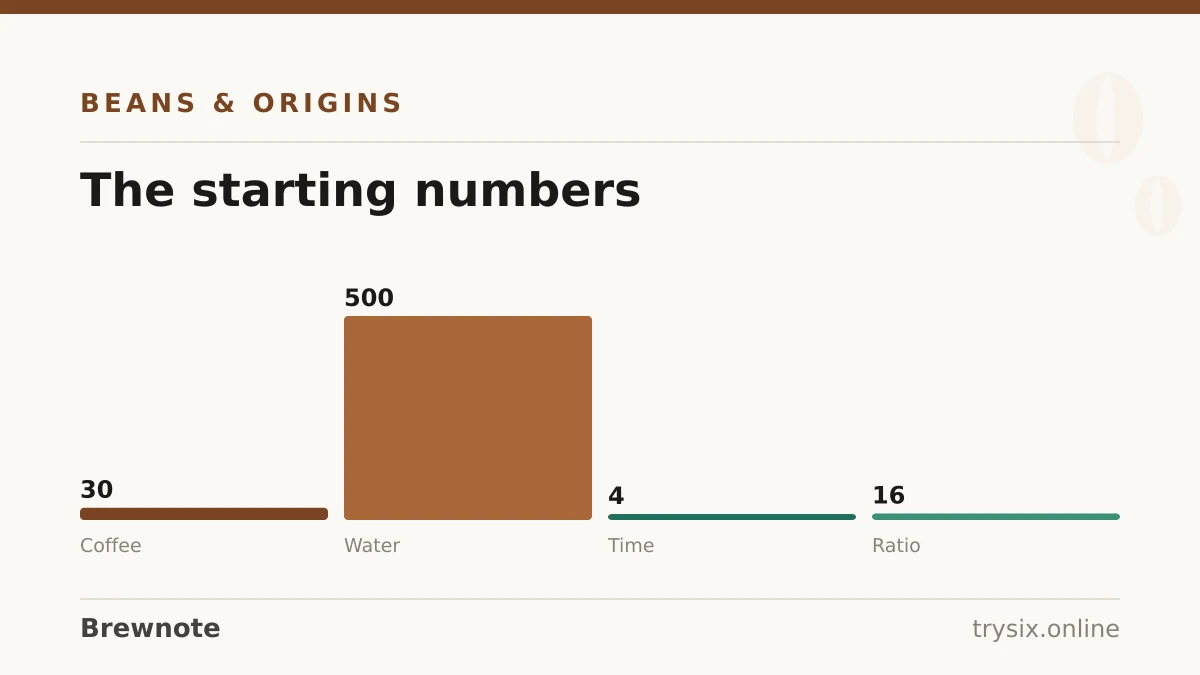
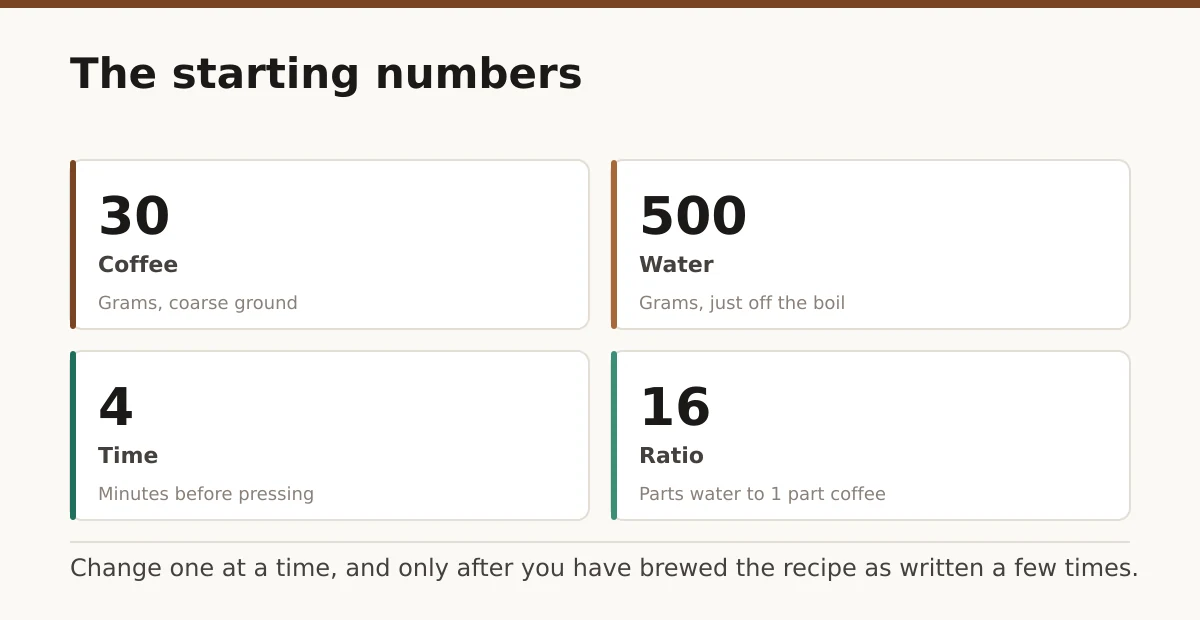
Step 1: Weigh 30 g of coffee
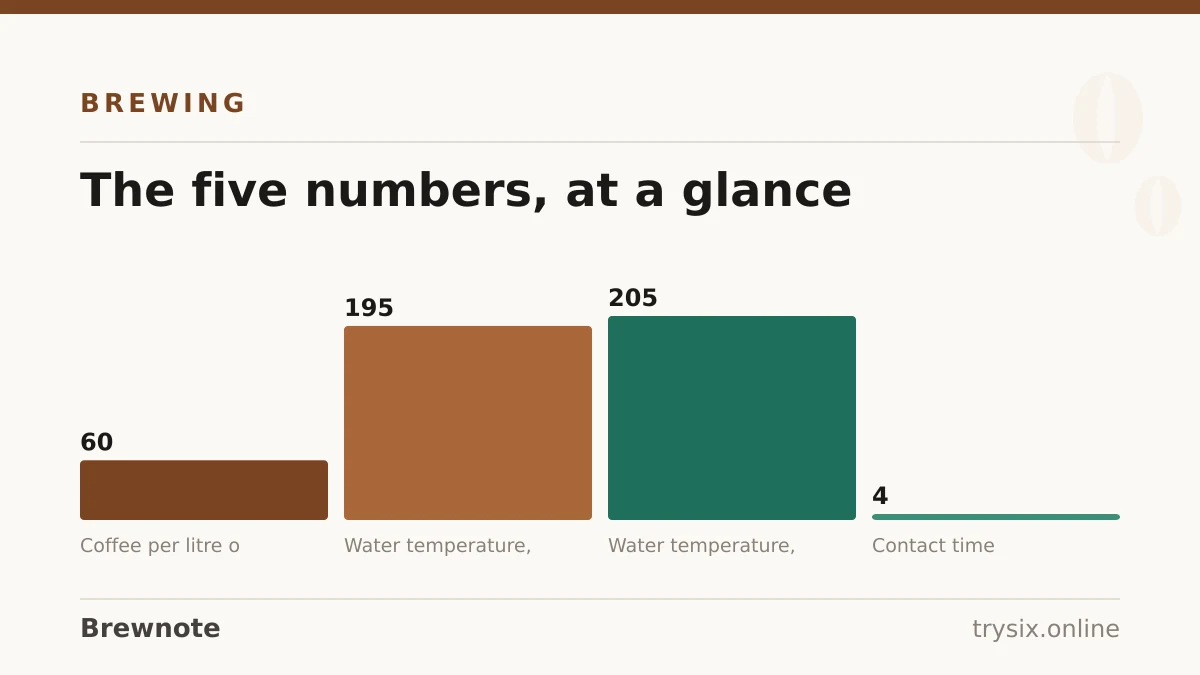
That is a 1:16 ratio with 500 g of water — the standard filter strength. Weigh it rather than scooping; scoops vary by 30 percent or more depending on grind and roast.
Step 2: Grind coarse
Like coarse sea salt. Too fine and the plunger is hard to press and the cup turns bitter and silty. How to grind coffee beans has the reference sizes.
Step 3: Boil, then wait 30 seconds
That lands you near 200°F without a thermometer. Boiling water poured straight on scorches the grounds.
Step 4: Pour, stir once, put the lid on
Stirring makes sure every ground is wet. The lid keeps the heat in; do not plunge yet.
Step 5: Wait four minutes, then press slowly
Time it. Four minutes is the standard and it is worth being exact while you are learning what it does.
Step 6: Decant immediately
Pour it all out, even what you are not drinking yet. Coffee left sitting on the grounds keeps extracting and turns bitter.
Adjusting from there
Brew the recipe above three or four times before changing anything. Then change exactly one variable at a time — otherwise you learn nothing about which change did what.
| The cup is | Change | Direction |
|---|---|---|
| Sour and thin | Grind | Finer |
| Bitter and harsh | Grind | Coarser |
| Weak but not sour | Ratio | More coffee — try 1:15 |
| Too strong | Ratio | Less coffee — try 1:17 |
| Flat and dull | The beans | Check the roast date |
| Sour and bitter at once | The grinder | A blade grinder is the usual cause |
That table is the whole of home brewing, really. How to make the perfect cup of coffee goes through the five variables in more depth, and what does coffee taste like covers describing what you are tasting.
What to skip
- Pods and capsules, if your aim is to learn. They are convenient and consistent, and they remove every variable you would be learning from.
- Flavoured coffee. Added flavourings mask the coffee, which defeats the purpose of buying good beans.
- Very dark or oily beans at the start. They are easy to over-extract and they hide what your brewing is doing.
- Blade grinders. They chop unevenly, producing dust and boulders in the same batch, which extracts sour and bitter simultaneously.
- A second brewing method, until the first one is reliable. Variables compound.
None of these are bad things in themselves — a dark roast in a milk drink is genuinely good, and pods are a reasonable choice for a busy morning. They are simply poor teaching tools. Where to buy coffee beans covers finding good starting beans, and how to store coffee beans covers keeping them that way.