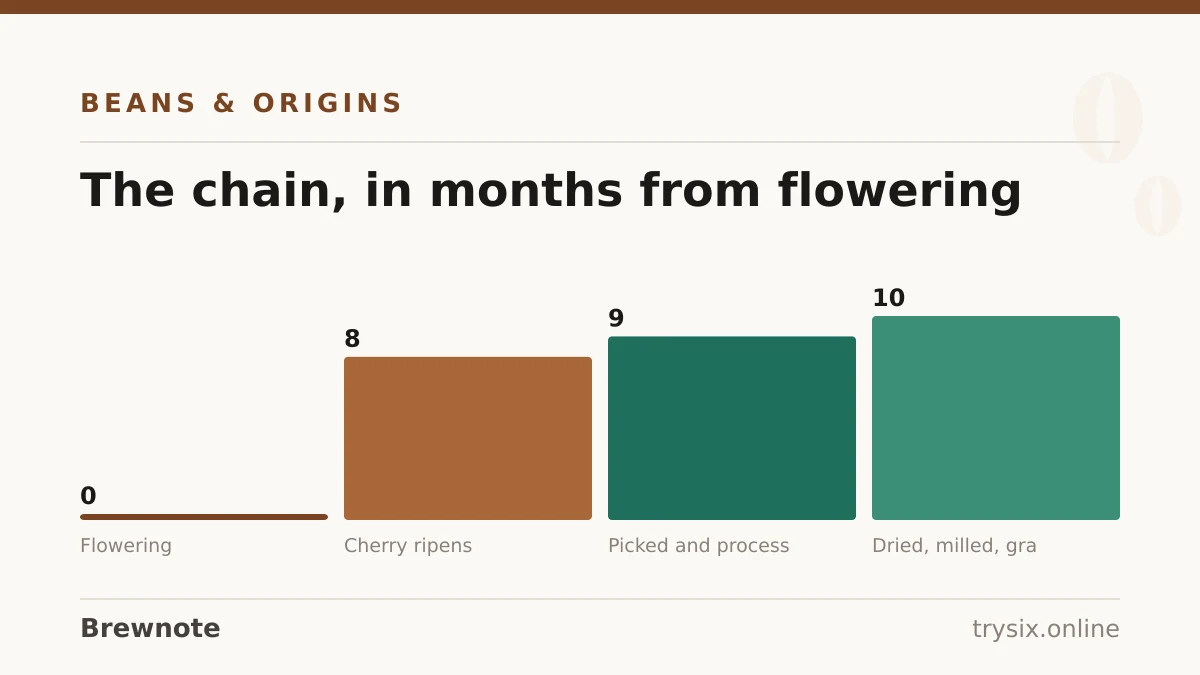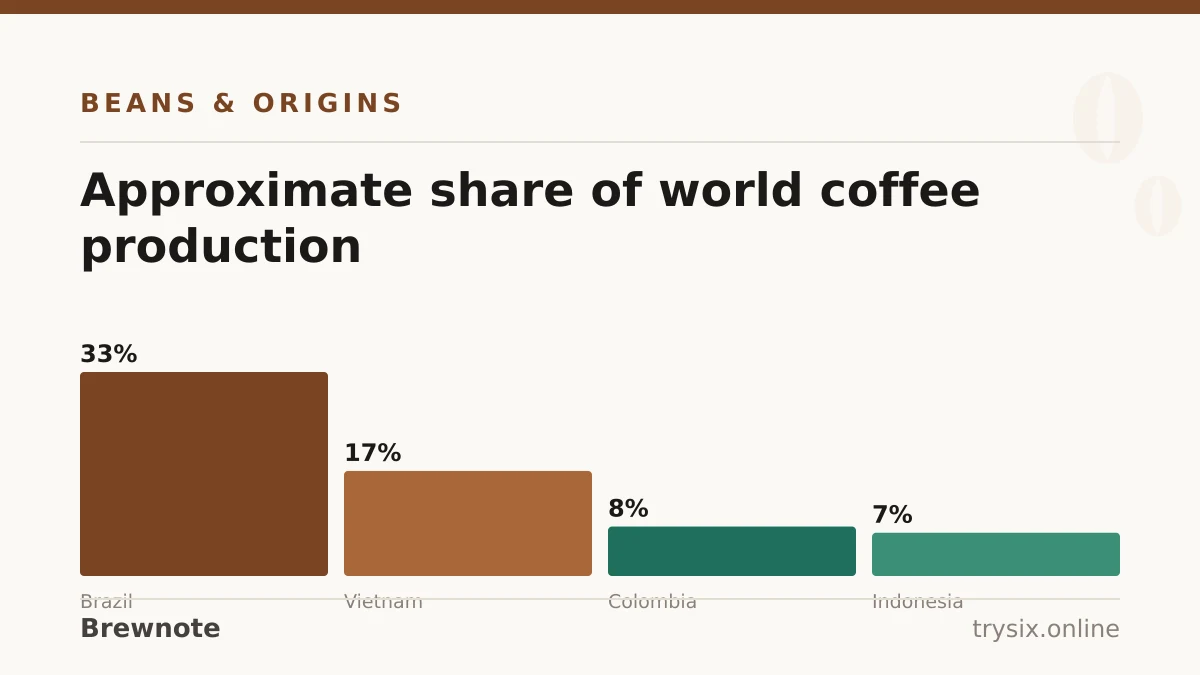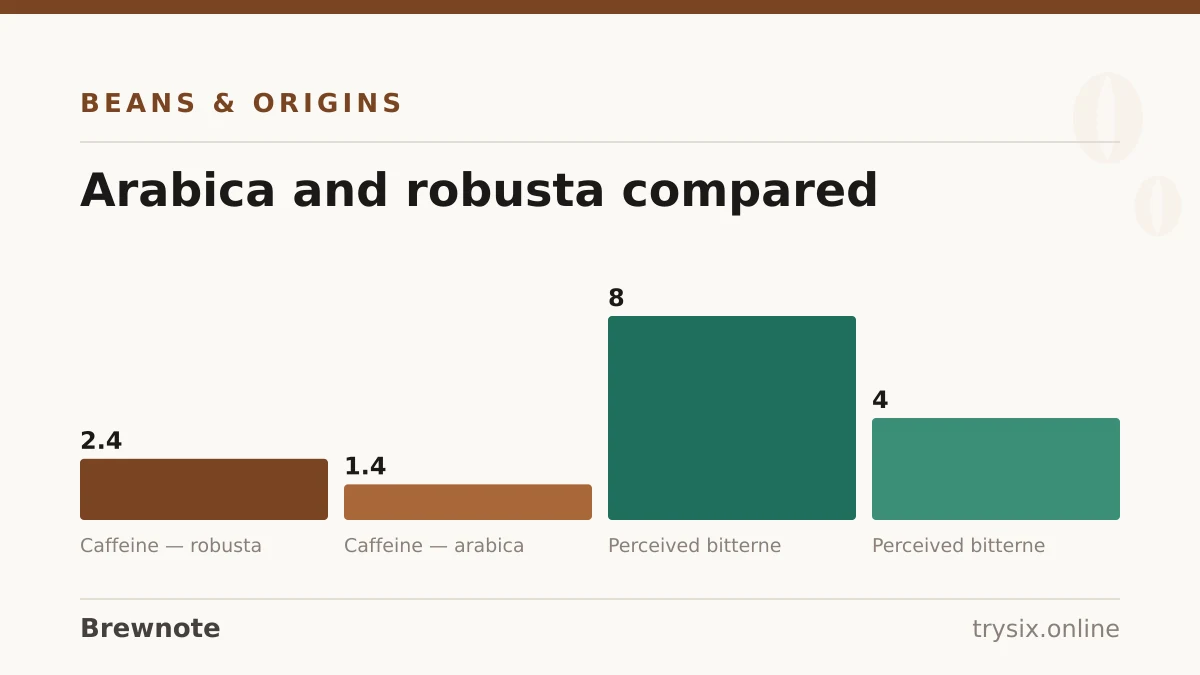
By the time coffee reaches your kitchen it has been through a year of work in at least three countries, and almost all of the flavour was decided before the bag was sealed. Knowing what happened to it is genuinely useful: it explains why one bag tastes like blackcurrant and another like cocoa.
Picking
Cherries on a single branch do not ripen together, which is the first problem in coffee production. There are two ways to deal with it.
| Method | How | Quality | Used for |
|---|---|---|---|
| Selective hand-picking | Pickers return repeatedly, taking only ripe fruit | High and consistent | Speciality coffee |
| Strip-picking | Whole branch stripped at once, ripe and unripe together | Variable | Commodity coffee |
| Mechanical | Machines shake the tree | Variable; depends on ripeness spread | Flat terrain, mainly Brazil |
Unripe cherries taste grassy and astringent, and a small proportion of them is enough to affect a whole lot. This is one of the concrete things you pay for in speciality coffee: passes through the same trees over several weeks.
Processing: the three methods
Once picked, the fruit has to come off the seed within hours before it ferments uncontrollably. How that is done is the single biggest flavour decision made at origin.
The three processing routes
Step 1: Washed (wet process)
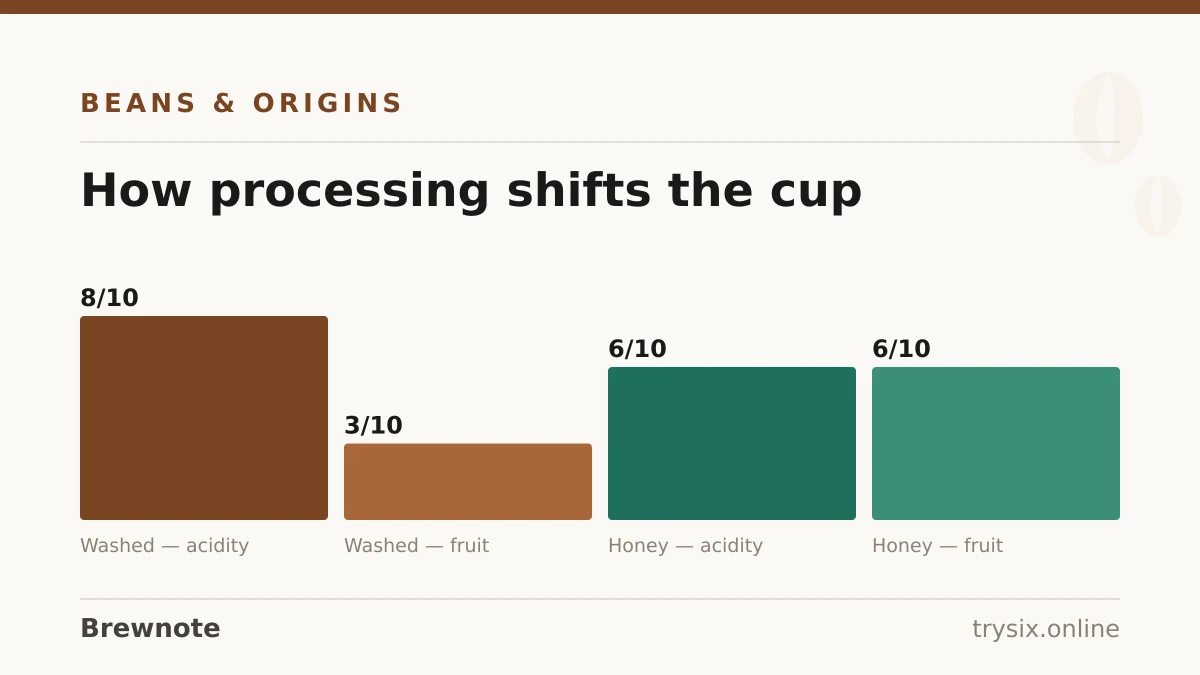
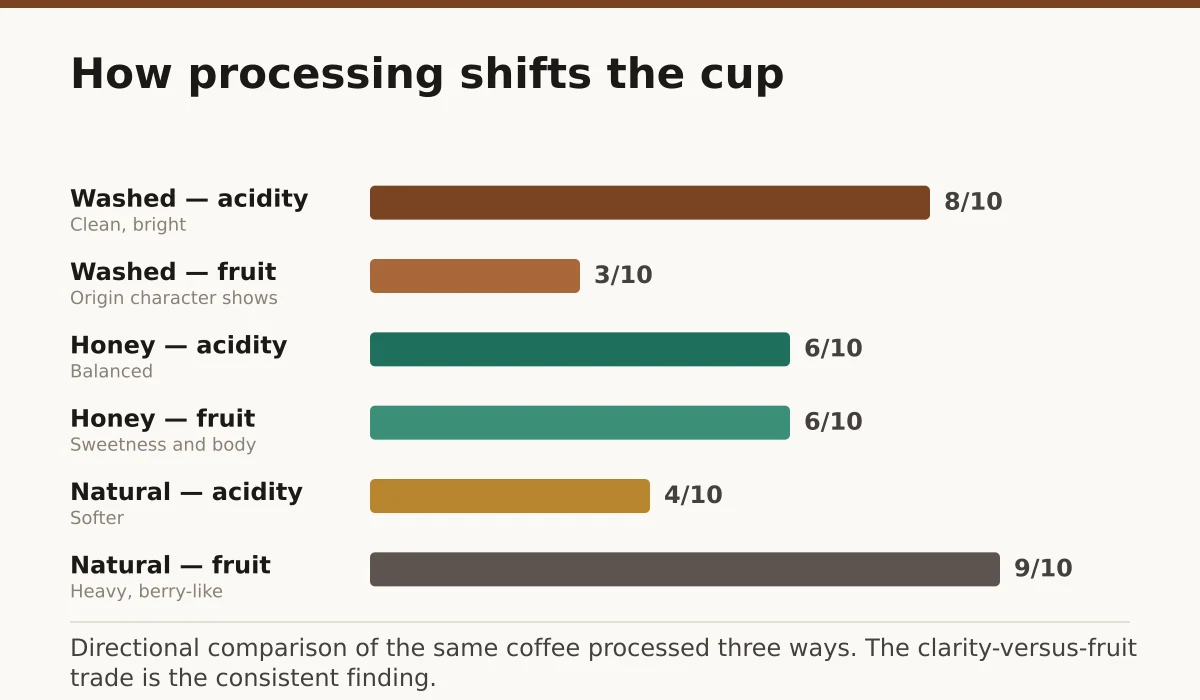
The skin and pulp are stripped mechanically, then the seeds are fermented in tanks for 12 to 48 hours to break down the sticky mucilage, then washed clean and dried. Produces the cleanest, most acidic cup, where origin character shows clearly. Uses a great deal of water.
Step 2: Natural (dry process)
Whole cherries are dried in the sun on patios or raised beds for two to four weeks, fruit still attached, then hulled. Sugars from the fruit migrate into the seed, giving heavy, fruity, sometimes winey flavours. Cheaper and water-efficient, but riskier — poorly managed naturals develop off-flavours.
Step 3: Honey (pulped natural)
The skin is removed but some mucilage is left on during drying. A middle path: more body and sweetness than washed, more clarity than natural. Named by how much mucilage stays — white, yellow, red or black honey, in ascending order.
Drying, hulling and grading
However it was processed, the coffee must be dried to roughly 10 to 12 percent moisture. Too wet and it moulds in transit; too dry and the beans become brittle and lose aromatic potential. Drying takes days on mechanical dryers or weeks in the sun, and is monitored with moisture meters.
The dried seeds are still inside a papery parchment layer, which is removed by hulling. Then the coffee is graded — by screen size, by density, by defect count — and often sorted optically or by hand to remove damaged beans. At this point it is green coffee, stable for a year or more.
| Step | What it does | Why it matters |
|---|---|---|
| Drying to ~11% moisture | Stabilises the seed | Prevents mould; preserves aroma |
| Resting in parchment | Lets moisture equalise | Improves consistency |
| Hulling | Removes the parchment layer | Produces green coffee |
| Grading by size and density | Sorts for uniformity | Uniform beans roast evenly |
| Defect sorting | Removes damaged beans | A few defects taint a whole batch |
| Shipping | Green coffee in sealed bags | Roasted coffee would stale in transit |
Roasting
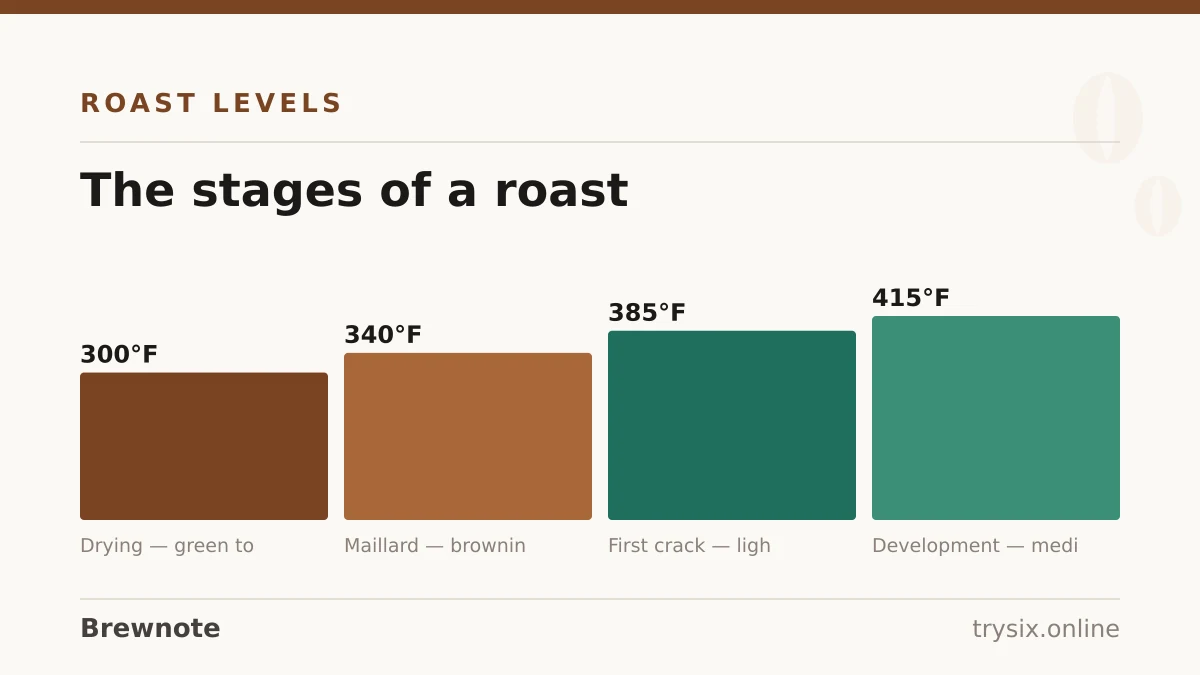
The roaster's job is to develop flavour without scorching. Beans go into a rotating drum or a bed of hot air, dry out, brown through the Maillard reaction, and pop audibly at first crack around 385°F. Whether the roaster stops there or continues to second crack near 435°F decides the roast level.
This is the one step in the chain that a determined person can do at home, and how to roast coffee beans at home covers how. What a commercial roaster brings is control: consistent heat application, repeatable profiles and the ability to taste and adjust across batches.
Grinding and brewing
The last two steps happen in your kitchen. Grinding creates the surface area that makes extraction possible; brewing dissolves 18 to 22 percent of the bean's mass into water. Both are covered in how to grind coffee beans and how to make the perfect cup of coffee.
Instant and other products
- Instant coffee is brewed coffee that has been dried, by freeze-drying or spray-drying. It dissolves completely because the extraction already happened — see what is ground coffee.
- Decaffeinated coffee has an extra step, applied to the green beans before roasting: how is decaf coffee made.
- Cascara is the dried cherry fruit, brewed as a tea. It is a by-product of processing that used to be discarded.
- Green coffee extract is made from unroasted beans and sold as a supplement. It is not coffee in any culinary sense.