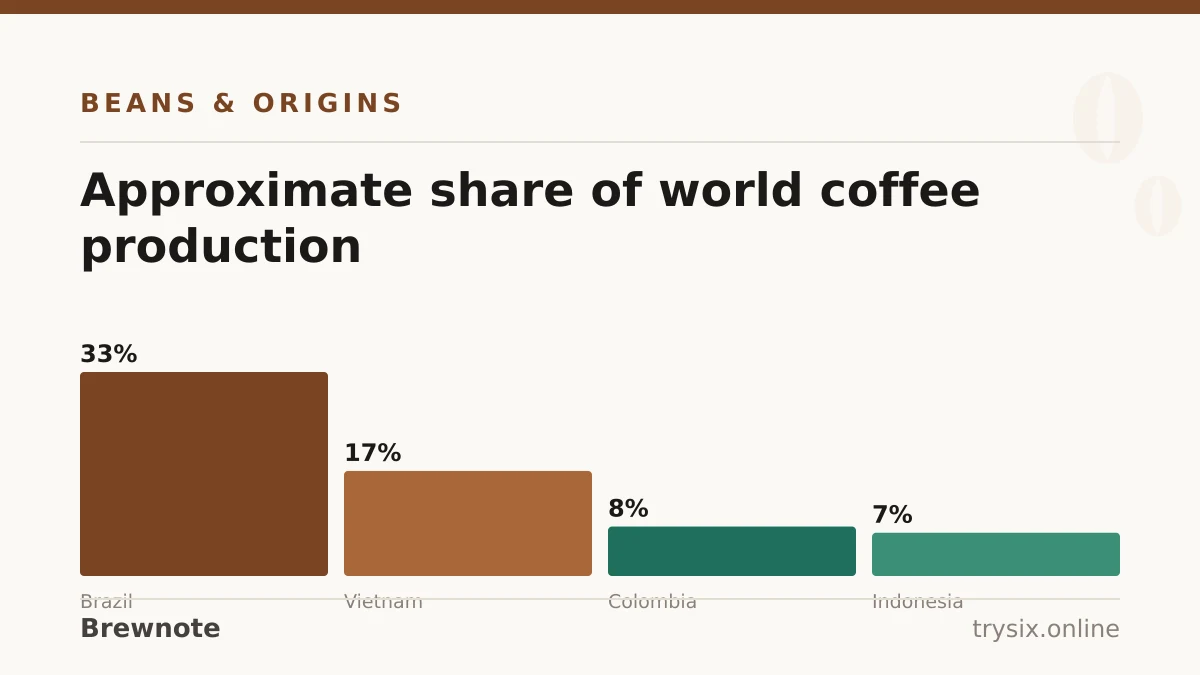
Every bag names a country, sometimes a region, sometimes a farm and an altitude. Those are not decoration — they are the closest thing coffee has to a weather report for how it will taste. Here is where coffee actually grows, and what each place tends to put in the cup.
The Bean Belt
Coffee is fussy about climate. It needs consistent warmth without frost, reliable rainfall with a dry period for harvesting, and well-drained soil. In practice that confines it to a band around the equator, roughly between the Tropic of Cancer at 25°N and 30°S — the Bean Belt.
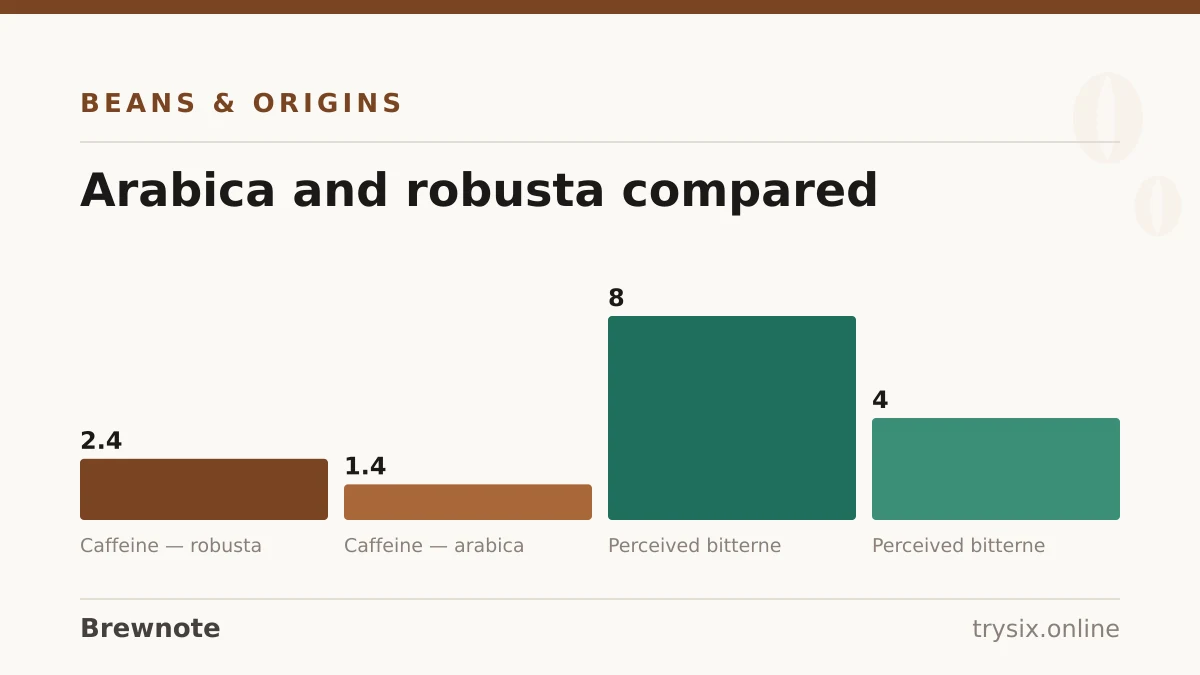
Within that band, altitude does most of the fine-tuning. Arabica prefers 900 to 2,000 metres, where cooler nights slow the cherry's development and let sugars and acids accumulate. Robusta tolerates hotter, lower ground down to sea level, which is a large part of why it is cheaper to grow.
Who grows it
| Country | Mainly | Known for |
|---|---|---|
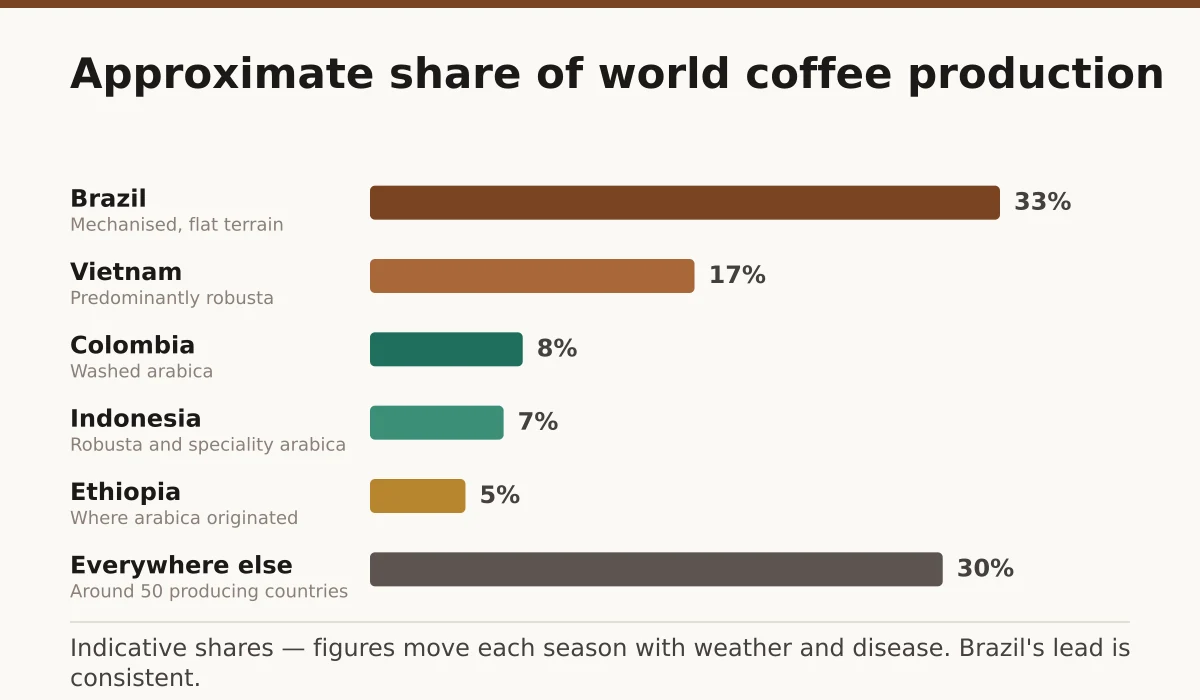
| Brazil | Arabica, some robusta | Around a third of world production; nutty, chocolatey naturals |
| Vietnam | Robusta | Second largest; instant and espresso blends |
| Colombia | Arabica | Washed, balanced, consistently well-processed |
| Indonesia | Robusta and arabica | Sumatran wet-hulled coffee; earthy and heavy |
| Ethiopia | Arabica | The genetic origin; floral, tea-like, citric |
| Honduras | Arabica | Large Central American volume |
| India | Robusta and arabica | Monsooned Malabar; shade-grown |
| Uganda | Robusta | Africa's largest robusta producer |
Rankings shift year to year with weather and disease, so treat the order beyond the top two as approximate. Brazil's dominance, though, is structural: flat terrain allows mechanical harvesting at a scale nowhere else can match.
Where it started
Coffea arabica originated in the montane forests of southwestern Ethiopia, where wild populations still grow. That region remains the centre of the species' genetic diversity, which matters practically: the narrow genetic base of cultivated arabica elsewhere makes it vulnerable to disease, and Ethiopian wild populations are where breeders look for resistance.
From Ethiopia, coffee cultivation spread to Yemen by around the fifteenth century, where it was traded through the port of Mocha — the origin of the name. Ottoman expansion carried it across the Middle East and into Europe by the seventeenth century, and European colonial powers established plantations in Java, the Caribbean and Brazil.
The familiar story about a goatherd named Kaldi noticing his goats becoming lively after eating coffee cherries is a legend recorded centuries after the fact, not a documented account. It is a good story and it is worth saying plainly that it is a story.
Is coffee grown in the United States?
Yes, in two places at commercial scale: Hawaii, principally the Kona district on the Big Island, and Puerto Rico. There is also a small and growing amount in southern California, which is genuinely marginal — coffee there sits at the edge of what the climate allows.
- Hawaii is the only US state growing coffee at meaningful commercial scale, and volumes are tiny by world standards.
- Kona coffee is expensive largely because of US labour costs, not because of any intrinsic superiority — though the volcanic soil and consistent conditions genuinely suit the plant.
- 'Kona blend' on a label may legally contain as little as 10 percent Kona coffee under Hawaii state law. Look for '100% Kona'.
- Puerto Rico has a long coffee history and produces mainly for local consumption.
How origin shows up in the cup
| Region | Typically tastes | Because |
|---|---|---|
| Ethiopia | Floral, citrus, tea-like | Heirloom varieties; high altitude |
| Kenya | Blackcurrant, sharp acidity | Varieties and meticulous washing |
| Colombia | Balanced, caramel, mild acidity | Consistent washed processing |
| Brazil | Nutty, chocolatey, low acidity | Lower altitude; often natural processed |
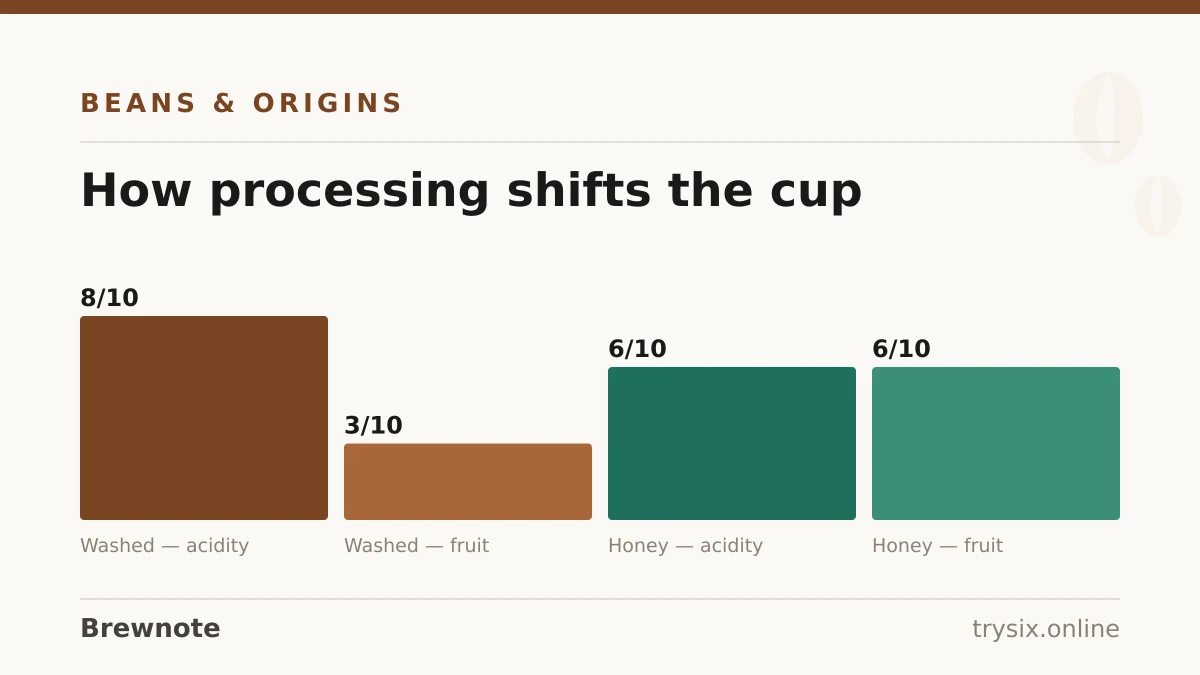
| Sumatra | Earthy, herbal, heavy body | Wet-hulled processing |
| Guatemala | Cocoa, spice, firm acidity | Volcanic soil at altitude |
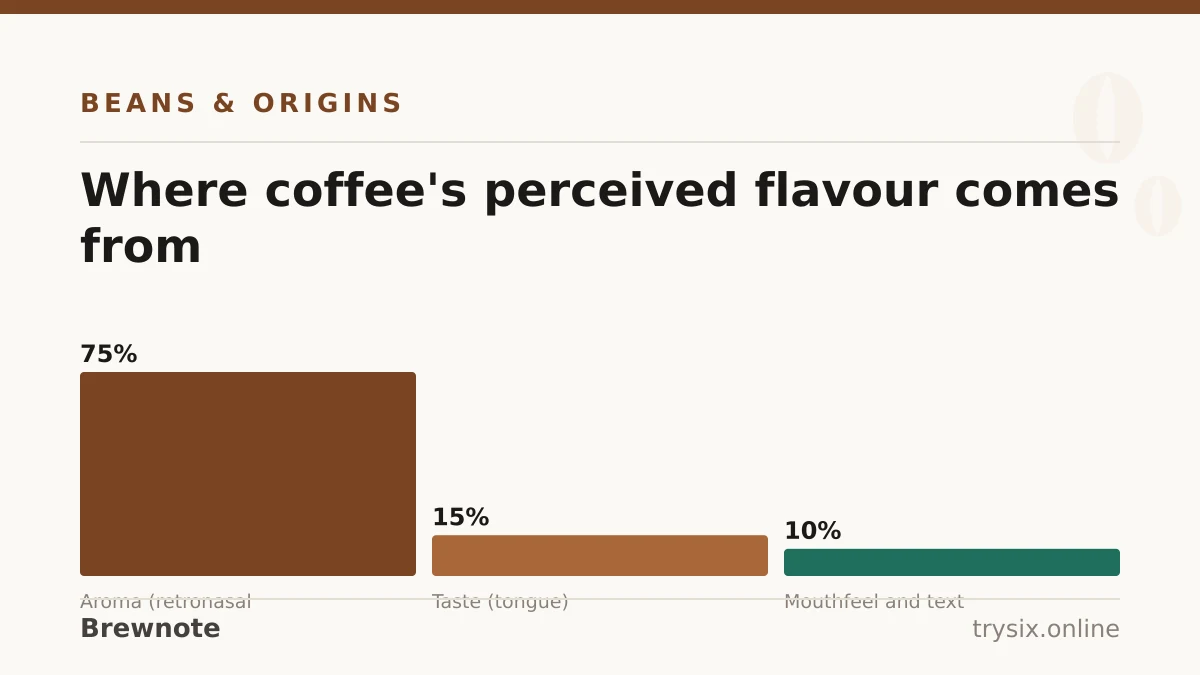
These are tendencies, not rules, and a dark roast will flatten most of them — see light vs dark roast. If you want to taste the difference between origins, brew light or medium roasts as filter coffee. What does coffee taste like covers the vocabulary, and types of coffee beans covers single origin versus blends.
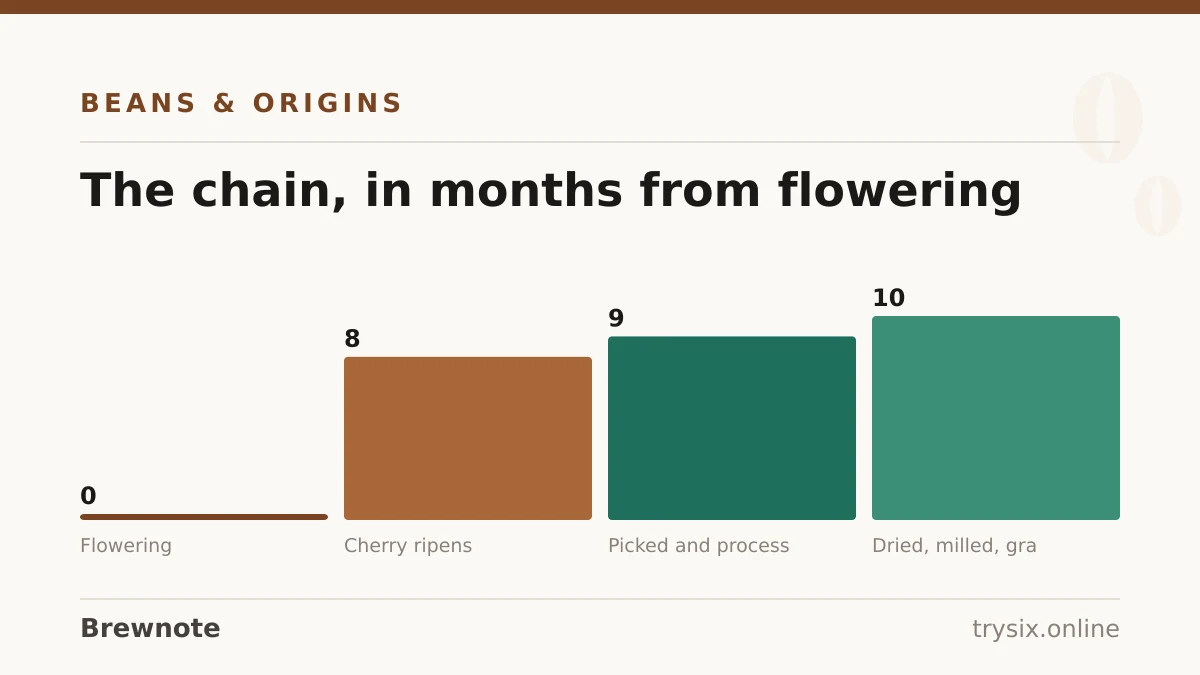
For the steps between the farm and your grinder, how coffee is made follows the whole chain.