Espresso
What Is Café au Lait?
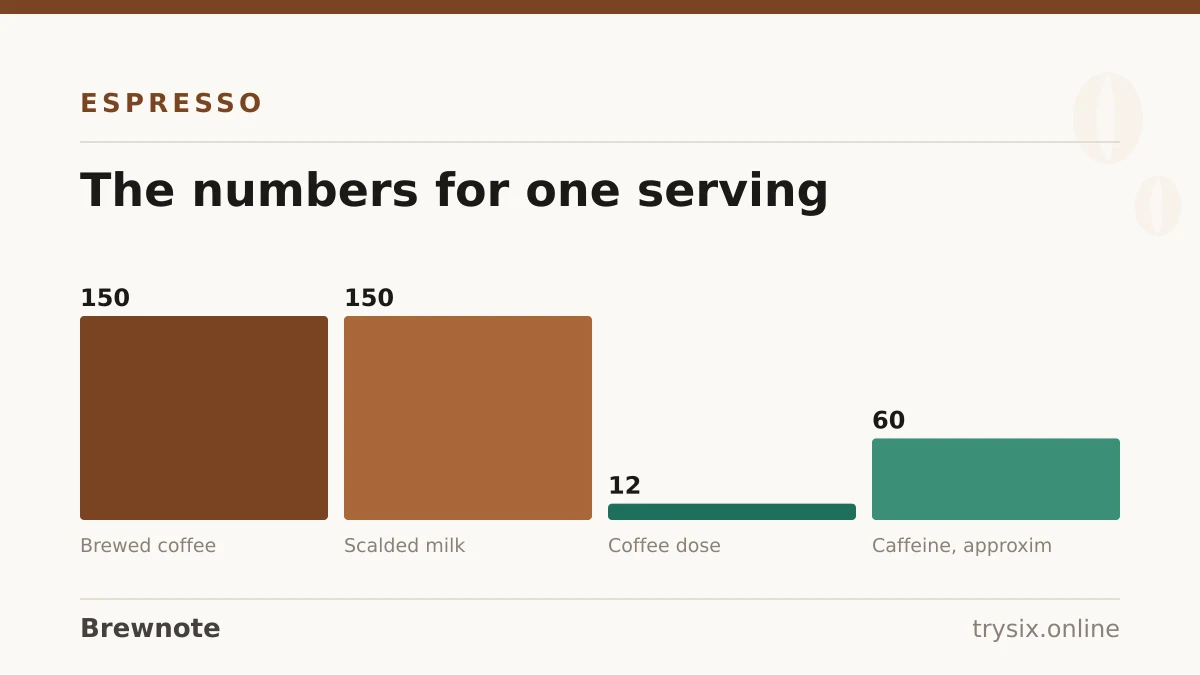
Brewed coffee and scalded milk in equal parts — not an espresso drink. How it differs from a latte, and the New Orleans chicory version.
Read
What actually defines espresso, what a shot contains, and what you can do without a machine.
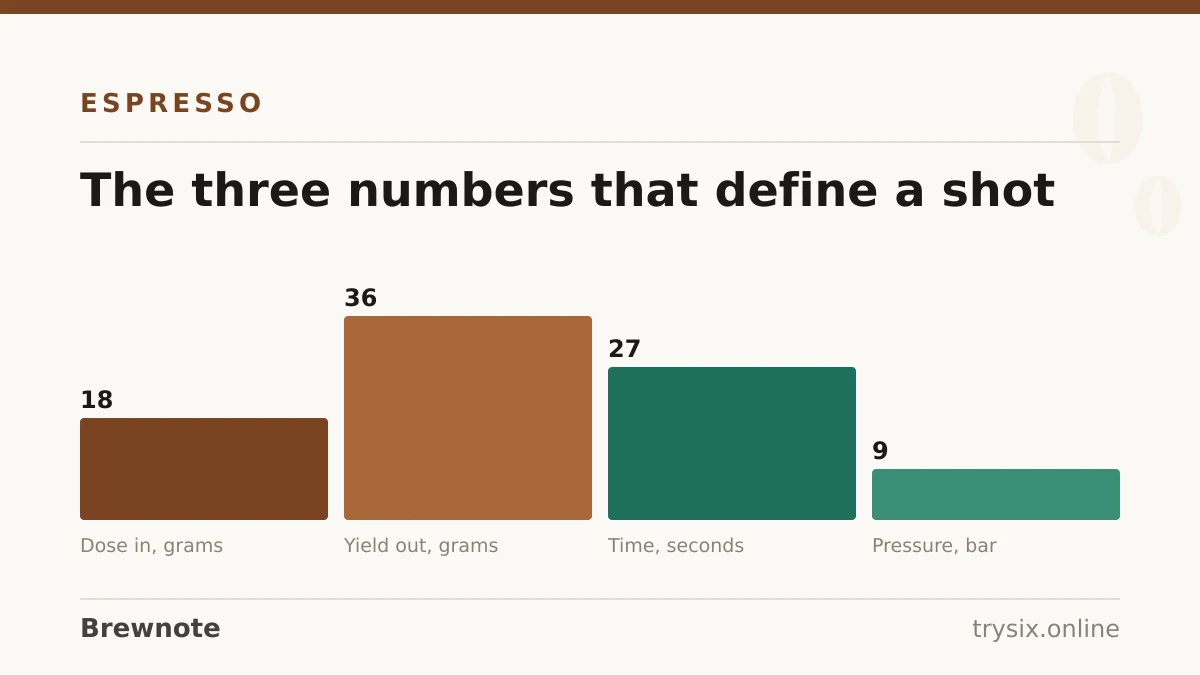
Espresso is not a bean, a roast level or a flavour. It is a brewing method defined by pressure: roughly 9 bar of water forced through a compacted bed of finely ground coffee for 25 to 30 seconds. Everything else — crema, the small cup, the intensity — follows from that.
These guides separate what is definitional from what is marketing. Bags labelled "espresso roast" contain ordinary coffee beans; the label describes an intended use, not a different plant.
Espresso
Brewed coffee and scalded milk in equal parts — not an espresso drink. How it differs from a latte, and the New Orleans chicory version.
Read
Espresso
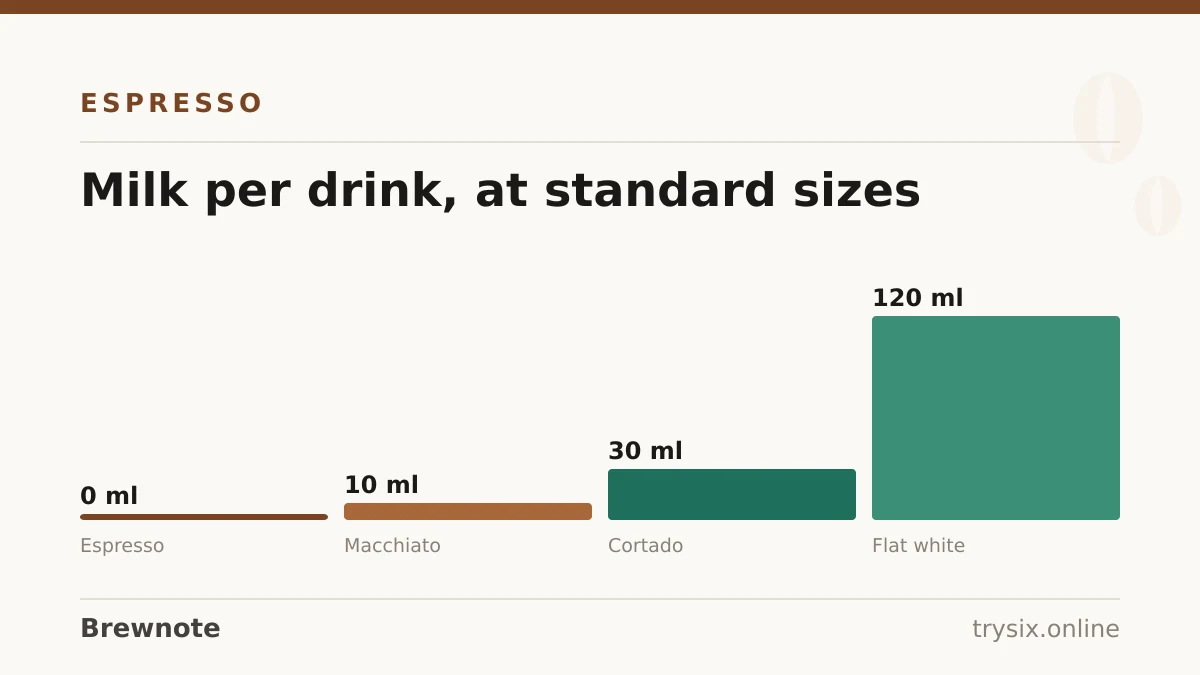
Latte, cappuccino, flat white, cortado, macchiato and the rest — separated by the one thing that actually differs: the ratio of milk to espresso.
Read
Espresso
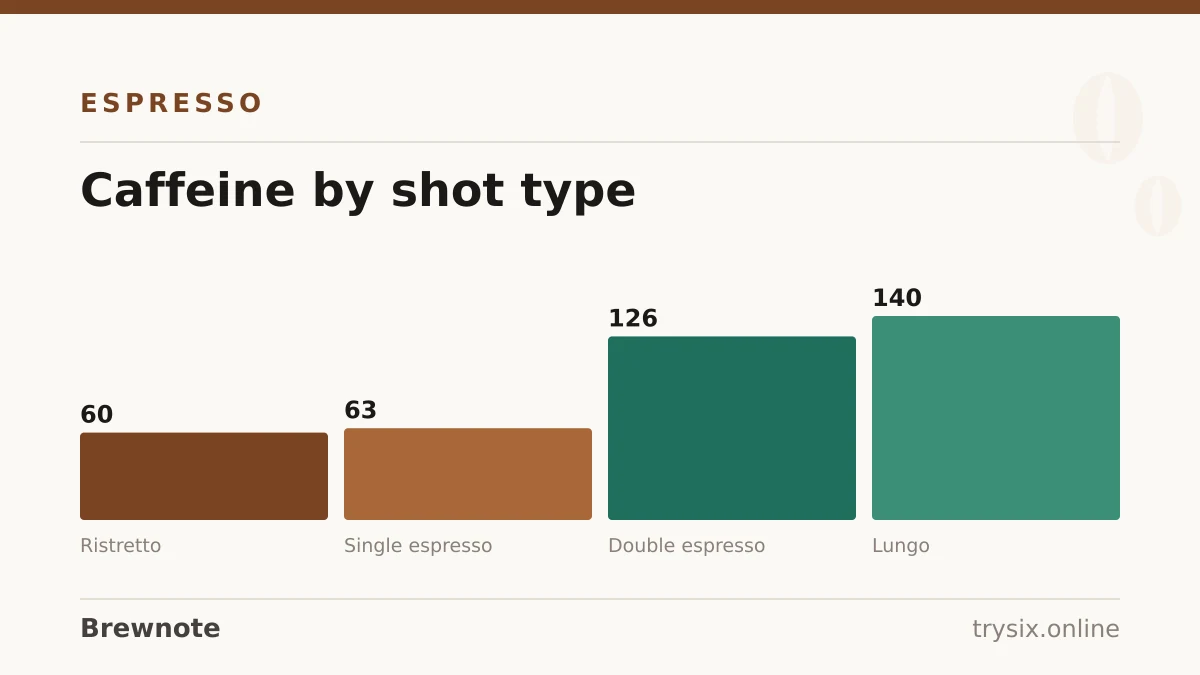
Single, double, ristretto and lungo explained by volume and ratio — plus how many shots are actually in a latte, cappuccino and americano.
Read
Espresso
Dose, grind, tamp and timing for a proper shot — plus an honest account of what a moka pot and an AeroPress can and cannot reproduce.
Read
Espresso
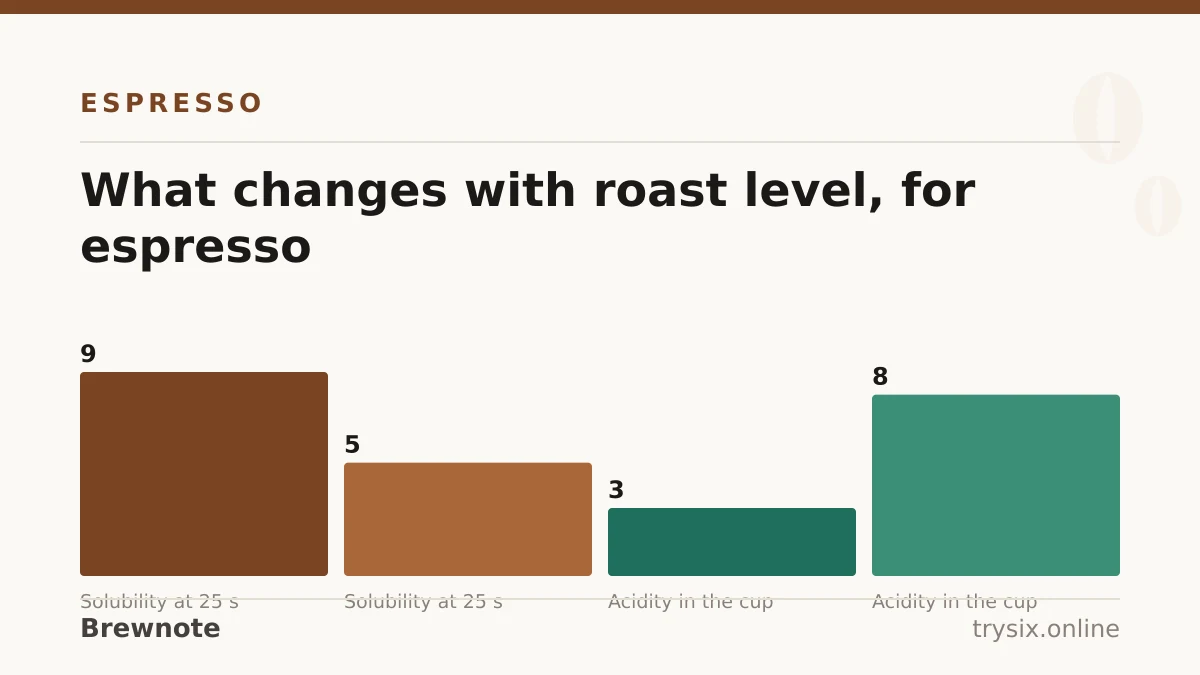
Yes — same species, same farms, same seeds. What the espresso label on a bag actually tells you, and when it matters for your brewer.
Read
Espresso
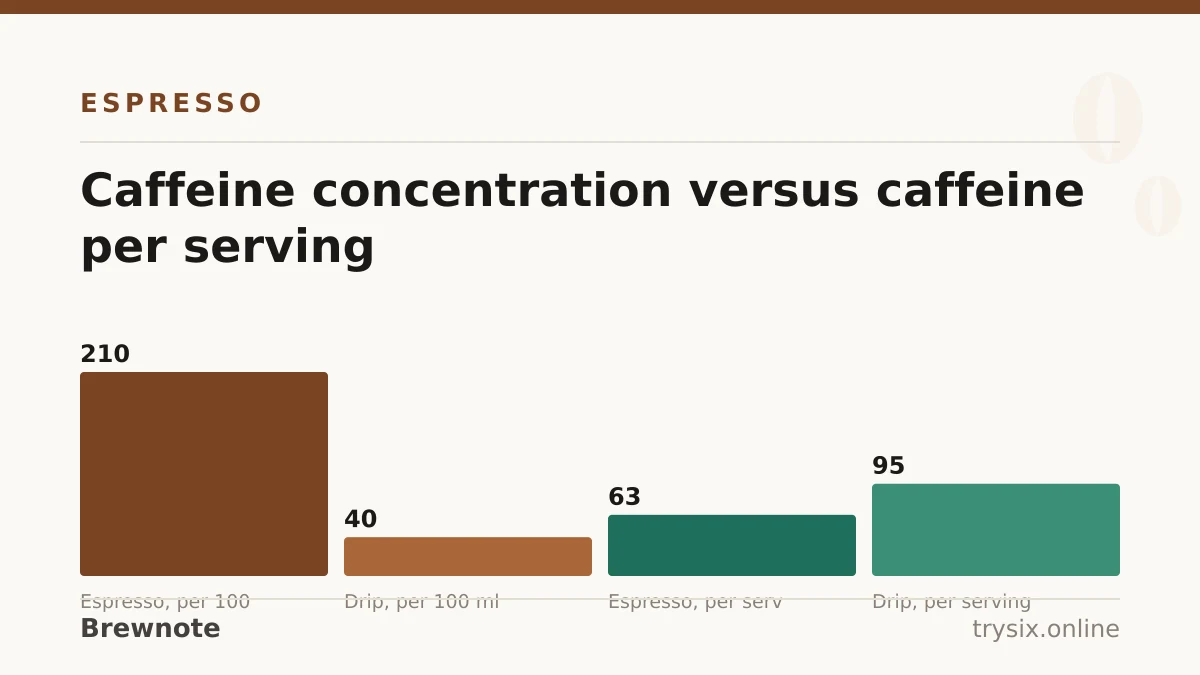
Same beans, different method. Pressure, grind, ratio and time set espresso apart from drip — and reverse the answer on which has more caffeine.
Read
Espresso
Espresso is a brewing method defined by pressure: about 9 bar through fine grounds for 25–30 seconds. Not a bean, not a roast, not a flavour.
Read
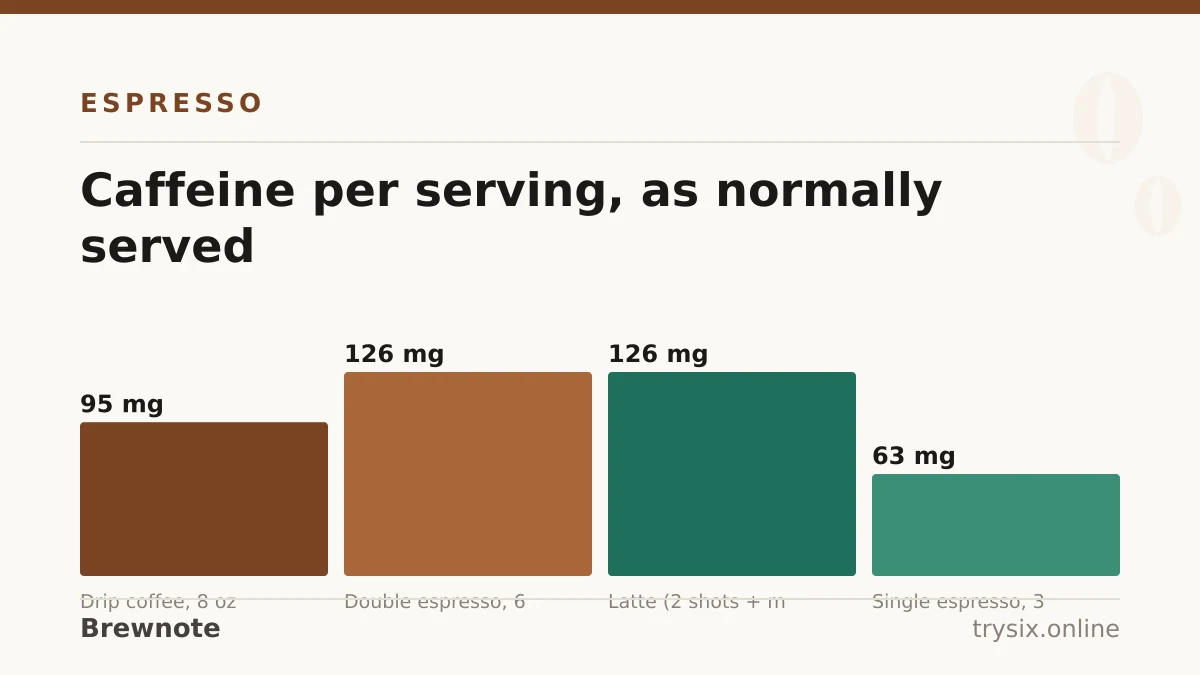
Per millilitre, yes — around three times as concentrated. Per serving, often not: a single 30 ml shot carries roughly 63 mg of caffeine while an 8 oz brewed coffee carries about 95 mg, because the brewed cup is eight times larger.
You can make strong, concentrated coffee on a moka pot or an AeroPress, and it works well in milk drinks. It is not espresso by definition, because neither reaches 9 bar — a moka pot runs at roughly 1.5 bar.
It is a recipe shorthand: 18 grams of dry ground coffee in the basket producing 36 grams of liquid espresso in the cup, a 1:2 ratio, typically over 25 to 30 seconds.
Brewing
Ratios, grind, water and time — the four dials that decide how a cup tastes.
Cold Brew & Iced
Steeping cold for 12–24 hours makes a different drink from pouring hot coffee over ice.
Roast Levels
Light, medium and dark describe how far a bean went in the roaster — not its strength.
Caffeine & Decaf
How much caffeine is actually in a cup, a shot, a pot — and in decaf.
Beans & Origins
Where coffee grows, how the cherry becomes a bean, and what to buy.