Espresso gets treated as a type of bean, a strength setting, or a small angry coffee. It is none of those. It is a method, defined by a specific amount of pressure — and once that clicks, most of the confusing things about café menus and bags labelled espresso resolve themselves.
The definition
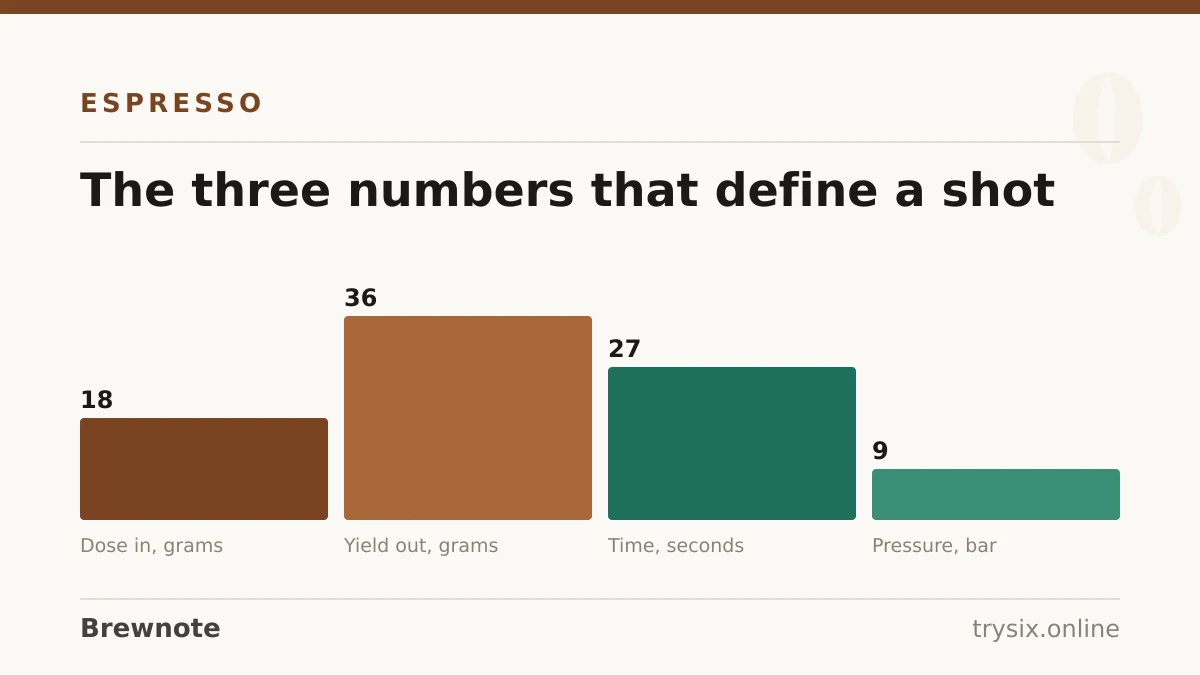
Espresso is defined by how it is made. Hot water at around 200°F is forced under roughly 9 bar of pressure through a compressed bed of finely ground coffee. The whole extraction takes 25 to 30 seconds and produces about 30 ml of liquid per single shot.
Everything people associate with espresso follows from that. The intensity comes from the ratio — about 1:2, against 1:16 for drip. The crema, that layer of reddish-brown foam, is carbon dioxide from the roasting process emulsified into the liquid under pressure. The small cup exists because 30 ml is what the method produces.
The four numbers
| Parameter | Standard | Too low | Too high |
|---|---|---|---|
| Pressure | About 9 bar | Weak, thin, no crema | Channelling; harsh, uneven |
| Dose | 18–20 g in a double basket | Water runs through fast; sour | Basket overfills; blocked |
| Yield | Double the dose — 36 g out | Concentrated, sharp | Watery, over-extracted, bitter |
| Time | 25–30 seconds | Under-extracted, sour | Over-extracted, bitter |
These interact. Grind finer and the water meets more resistance, so time goes up. Grind coarser and it drops. Baristas 'dial in' a coffee by holding dose and yield fixed and moving the grind until the time lands in range — the same logic as dialling in any brew, just faster and less forgiving.
Why 9 bar
Nine bar is not a law of physics; it is a convention that emerged from the spring-lever machines of the 1940s and 50s and stuck because it works. Research modelling espresso extraction has found that the parameters interact in ways that make the traditional recipe less optimal than assumed, and that finer grinds do not straightforwardly mean better extraction — beyond a point, the bed channels and extraction becomes uneven.
Reducing the mass of coffee and coarsening the grind can produce more reproducible shots at lower cost than the traditional recipe.
— Cameron et al., Matter (2020)
That is worth knowing because it undercuts a lot of confident advice. The traditional numbers are a good starting point and a poor law.
Espresso versus other coffee
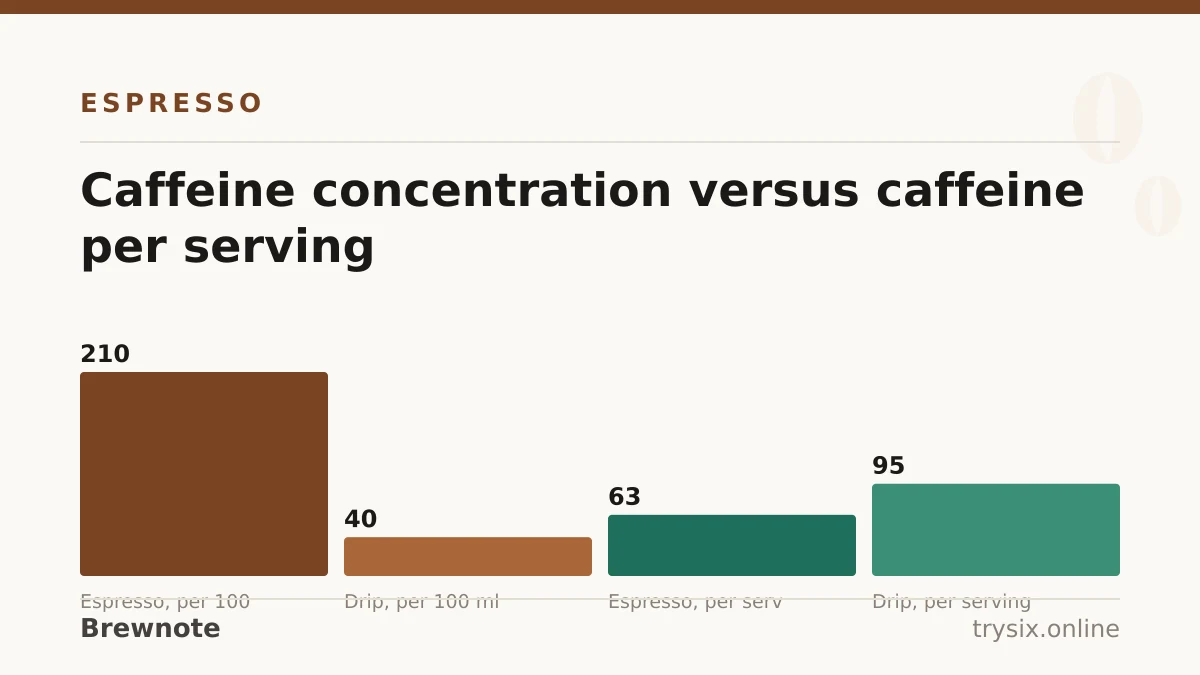
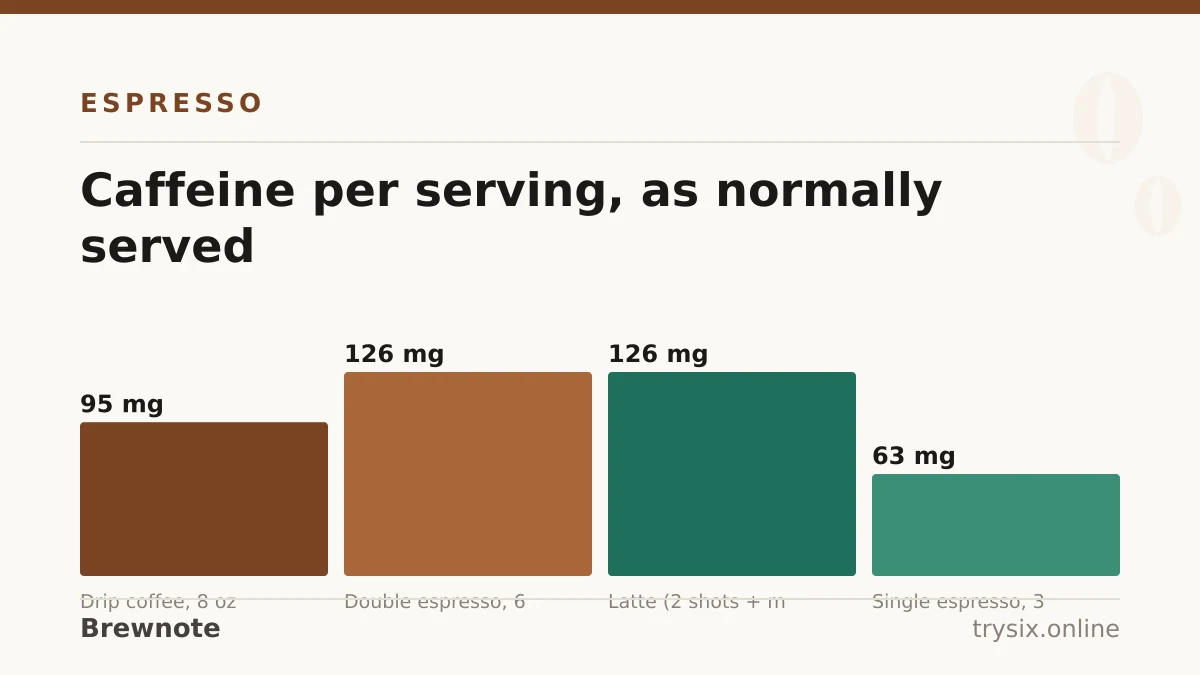
The comparison that matters is concentration versus dose. Espresso is about three times as concentrated as drip coffee per millilitre, and a single serving is about one-eighth the size — so a shot delivers less caffeine than a cup of coffee, while tasting far more intense.
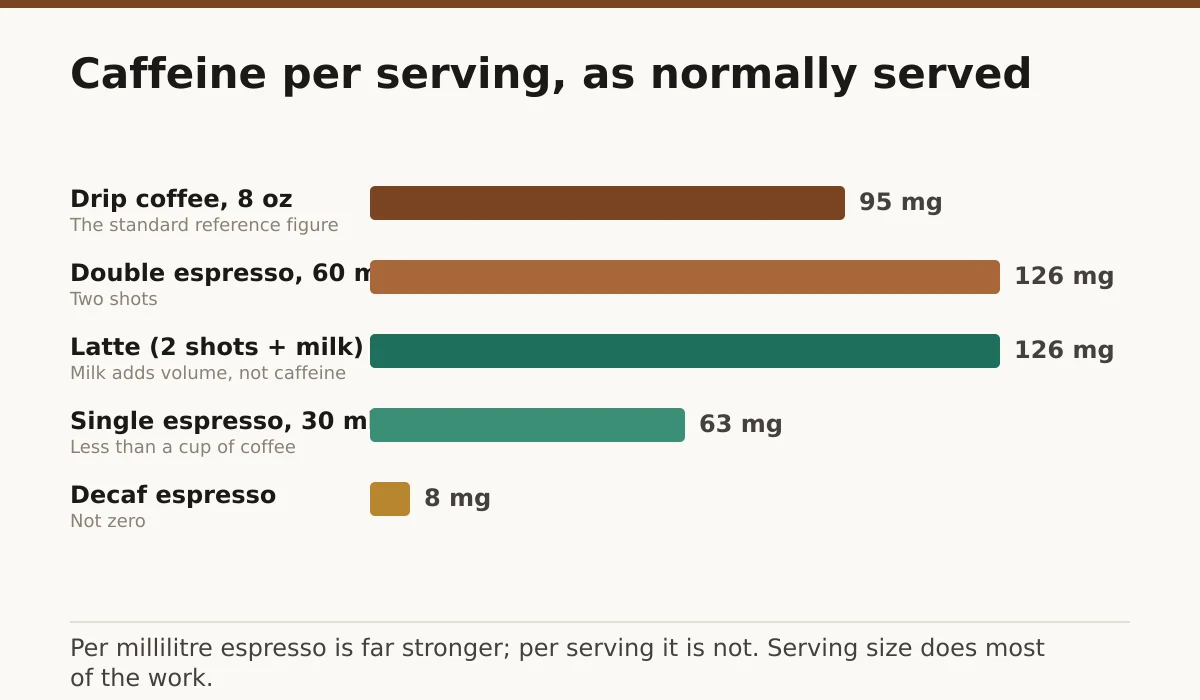
Espresso vs coffee works through the comparison in full, including where the 'espresso is stronger' claim is true and where it is not.
What crema is, and what it tells you
Crema is an emulsion: carbon dioxide trapped in the coffee during roasting, released and forced into suspension by the pressure of extraction, stabilised by coffee oils and melanoidins. It sits on top of the shot as a hazelnut-coloured foam and dissipates over a minute or two.
- Thick, persistent crema usually means fresh coffee — beans still holding CO₂ from roasting.
- Thin or absent crema usually means stale beans, too coarse a grind, or insufficient pressure.
- Robusta produces noticeably more crema than arabica, which is why traditional Italian espresso blends often include it. See types of coffee beans.
- Crema is not a quality measure. It indicates freshness and gas content, not whether the shot tastes good.
The drinks built on it
| Drink | Espresso | Added | Total volume |
|---|---|---|---|
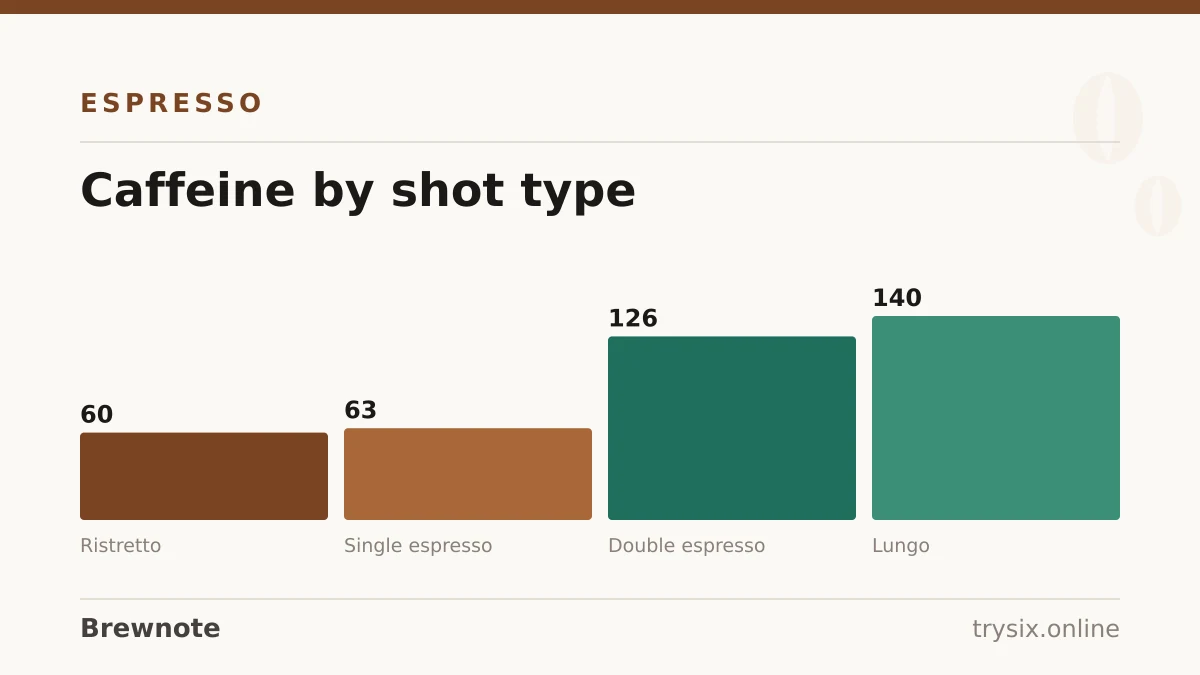
| Espresso | 1 shot | Nothing | 30 ml |
| Doppio | 2 shots | Nothing | 60 ml |
| Ristretto | 1 short shot | Nothing | 15–20 ml |
| Lungo | 1 long shot | Nothing | 50–60 ml |
| Americano | 1–2 shots | Hot water | 150–350 ml |
| Macchiato | 1 shot | A spoon of foam | 40 ml |
| Cortado | 1 shot | Equal steamed milk | 60–90 ml |
| Flat white | 2 shots | Steamed milk, thin foam | 150–180 ml |
| Cappuccino | 1–2 shots | Equal milk and foam | 150–180 ml |
| Latte | 1–2 shots | Steamed milk, light foam | 240–350 ml |
Note what does not change: the coffee. A latte and a cappuccino from the same machine contain the same espresso — the difference is entirely milk texture and volume. Types of coffee drinks goes through the whole menu.
Making it at home
Real espresso needs a pump capable of 9 bar, which is what separates an espresso machine from everything else in a kitchen. A moka pot reaches about 1.5 bar and an AeroPress well under that; both make excellent strong coffee and neither makes espresso. How to make espresso at home covers what each device can and cannot do, and what is an espresso shot goes deeper into shot volumes and ratios.