You are standing in the aisle holding two bags. One says espresso, one says coffee, and they cost about the same. If you do not own an espresso machine, is the espresso bag a mistake? And if you do, is the other one? The answer is simpler than the packaging suggests.
Same seed, same plant
Every coffee bean, whatever the bag says, is the seed of a coffee cherry — a small stone fruit growing on a tree of the genus Coffea. Two species account for essentially all commercial coffee: Coffea arabica, which makes up the large majority, and Coffea canephora, usually sold as robusta.
Nothing about espresso requires a different plant. The method was invented in Italy in the early twentieth century and applied to the coffee already being imported; there was never a moment where anyone bred an espresso bean, because there was no need to.
What the label usually does tell you
| Signal | Usually true | Why |
|---|---|---|
| Roast level | Medium-dark to dark | More soluble, extracts fully in 25 seconds |
| Grind, if pre-ground | Fine, like table salt | Needed to build resistance at 9 bar |
| Blend or single origin | More often a blend | Blends give consistency across harvests |
| Robusta content | Sometimes 10–20% | More crema, more body, more caffeine |
| Origin transparency | Often lower | Blends are marketed by profile, not farm |
Those are tendencies, not rules. Plenty of roasters sell light-roast single-origin espresso, and plenty sell dark-roast filter coffee. If you want to know what is in a bag, the roast level and origin on the label tell you far more than the word espresso does — see light vs dark roast.
Why darker roasts suit espresso
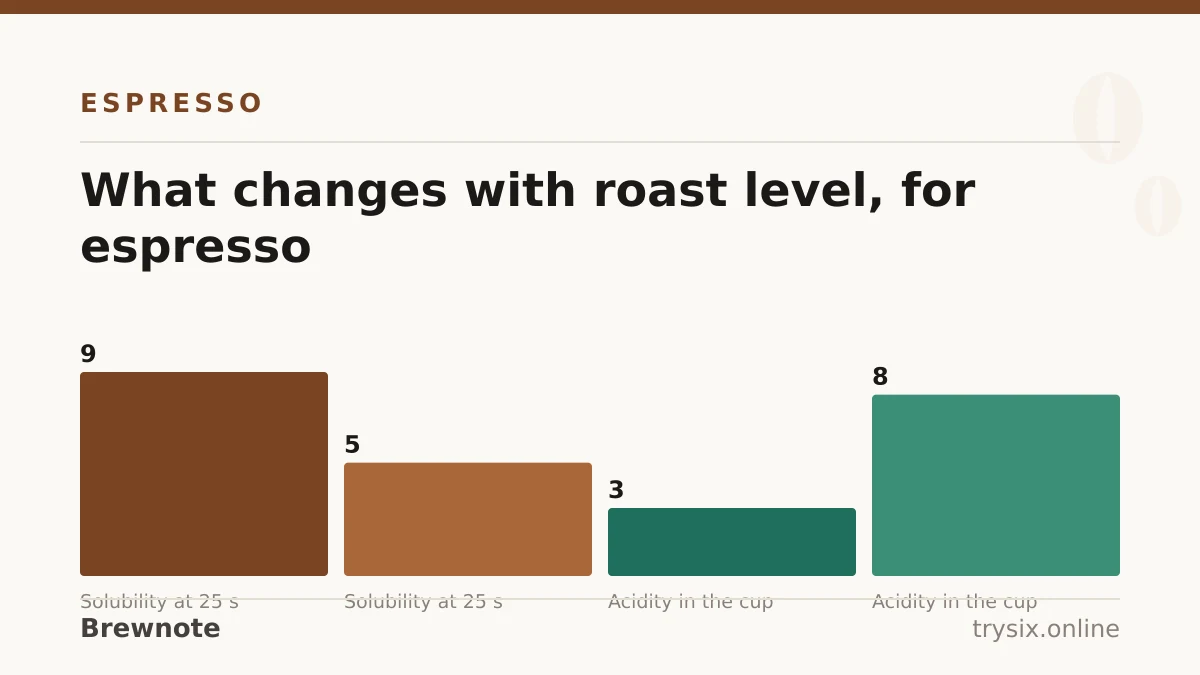
Roasting makes coffee more soluble. The cellular structure becomes more brittle and porous, and more of the material inside is available to dissolve. Espresso gives water 25 seconds to do its work — a tenth of the time a drip brew gets — so easier solubility genuinely helps.
The second reason is milk. Espresso is mostly drunk in milk drinks, and the caramelised, roasty flavours of a darker roast carry through dairy where a delicate floral light roast simply disappears.
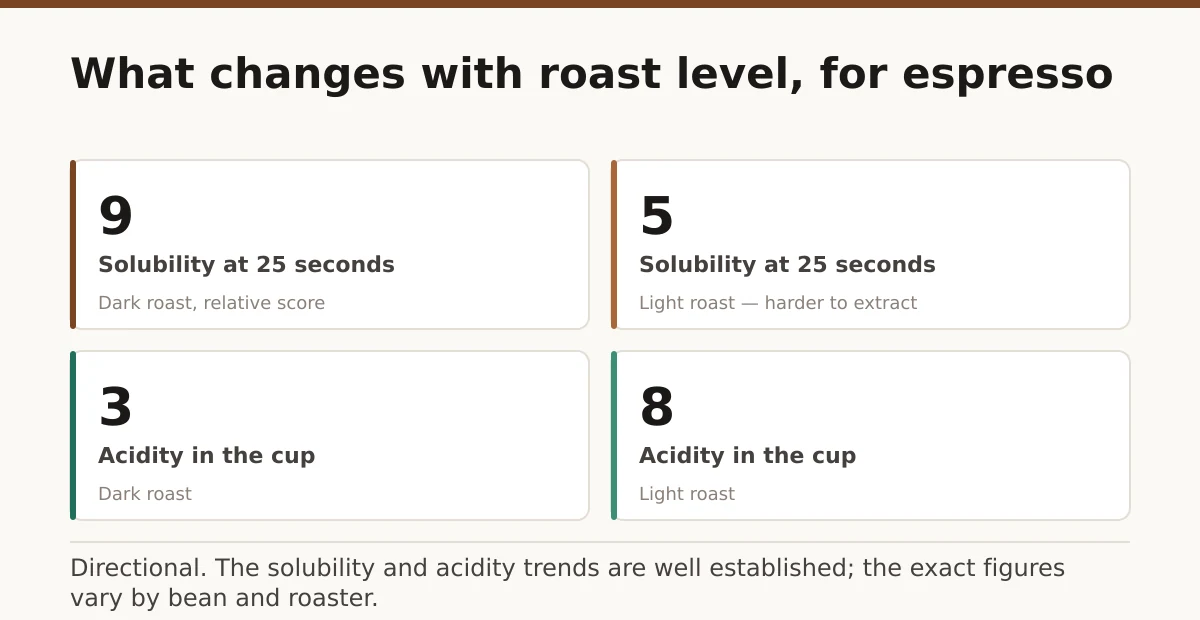
None of this means light roasts cannot be pulled as espresso. It means they are harder: they need a finer grind, often a higher brew temperature, and more patience dialling in. That is a skill question, not a bean-type question.
Can you use one for the other?
- Espresso beans in a drip machine: yes. Grind medium. Expect a heavier, roastier cup with less acidity — some people prefer this.
- Filter beans in an espresso machine: yes. Grind fine. If the coffee is very light and dense you may struggle to extract it fully in 25 seconds.
- Espresso-labelled pre-ground in a French press: it will be far too fine, giving muddy, over-extracted coffee. Grind size matters more than the label.
- Any bean in a cold brew jar: yes, ground coarse. See how to make cold brew coffee.
Caffeine: does the label change it?
Not meaningfully. Roasting degrades a small fraction of caffeine, so a dark espresso roast has slightly less caffeine by weight than a light filter roast of the same bean. The effect is small — measurements of green versus roasted coffee show caffeine to be relatively heat-stable compared with chlorogenic acids, which are degraded substantially.
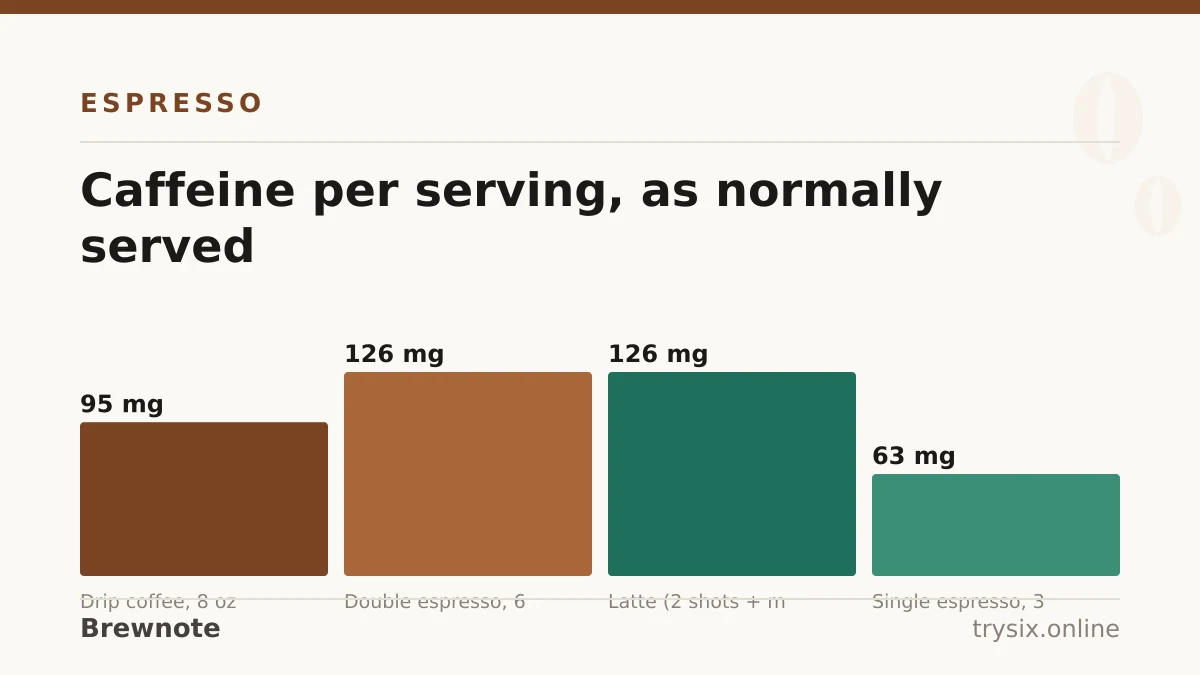
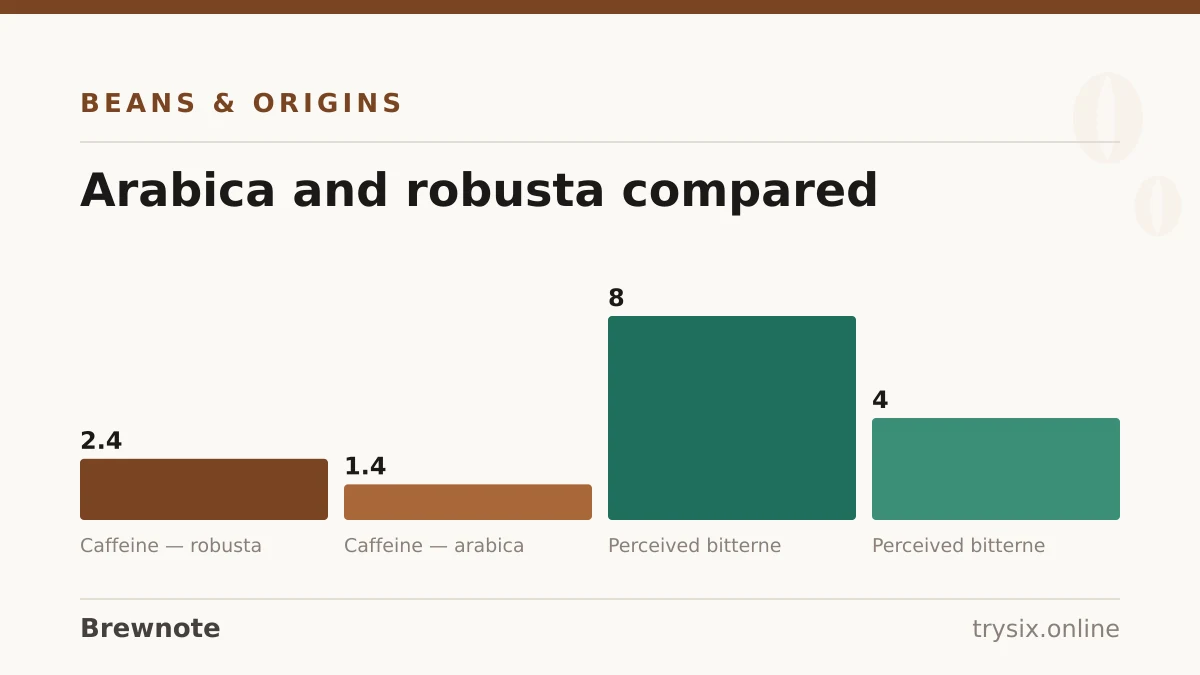
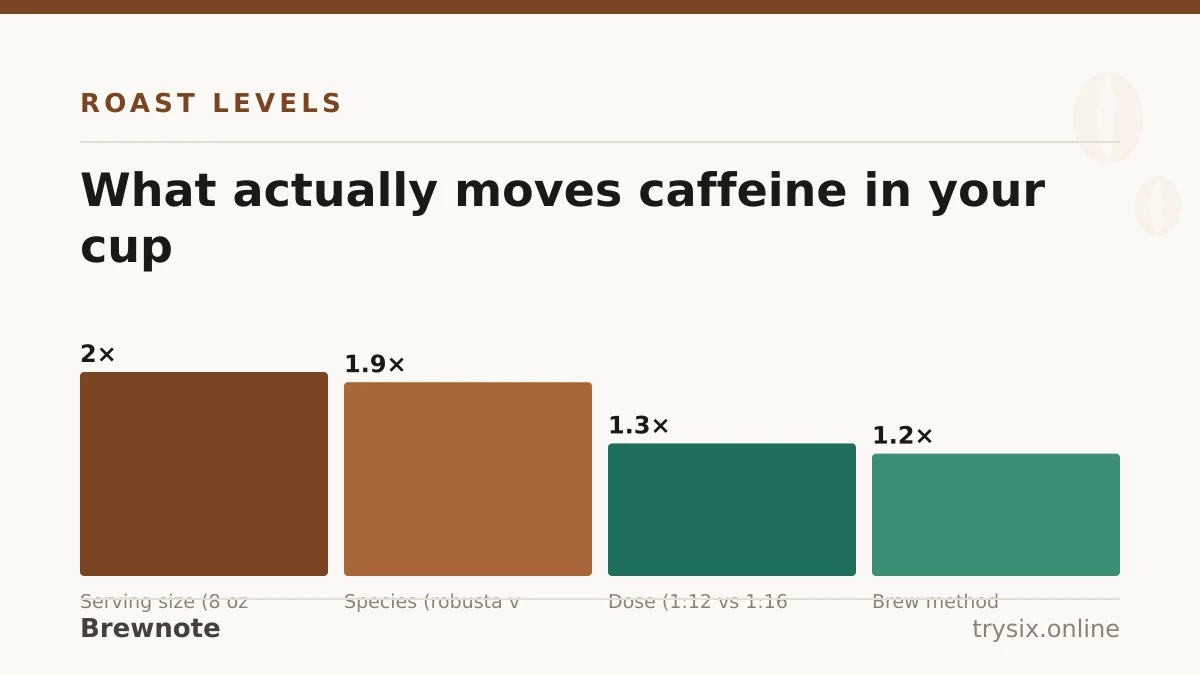
What does change caffeine is species. Robusta contains roughly twice the caffeine of arabica, so an espresso blend with 20 percent robusta carries measurably more than a pure arabica one. What coffee has the most caffeine has the full picture.
| Factor | Effect on caffeine | Size of effect |
|---|---|---|
| Species (arabica vs robusta) | Robusta roughly double | Large |
| Dose used per drink | Directly proportional | Large |
| Roast level, by weight | Dark slightly lower | Small |
| Roast level, by scoop | Dark slightly higher | Small; density effect |
| 'Espresso' on the label | None in itself | None |
Chocolate-covered espresso beans
These are whole roasted coffee beans coated in chocolate — ordinary beans, usually a darker roast because it tastes better with chocolate. They are not a distinct product botanically, and they do carry real caffeine: roughly 6 to 12 mg per bean, so a small handful is comparable to a cup of coffee before you count the chocolate's own caffeine.
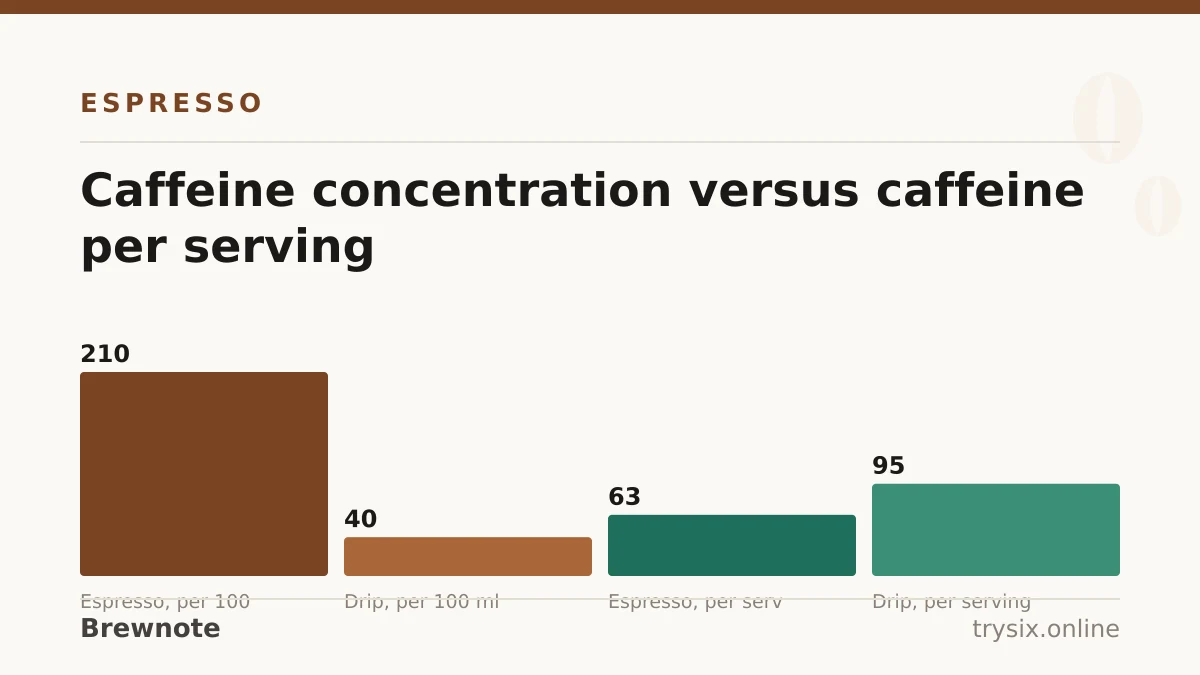
Eating whole beans is not harmful in moderation, though it is a much less predictable way to take caffeine than drinking it — the mass is small and the dose per bean varies. If you want the number for a normal drink instead, what is an espresso shot covers shot volumes and their caffeine content.