Single, double, ristretto, lungo, doppio. It is a lot of vocabulary for what is fundamentally one thing measured out in different amounts. Knowing which is which is genuinely useful at the counter, particularly if you are trying to drink less caffeine without drinking less coffee.
The definition
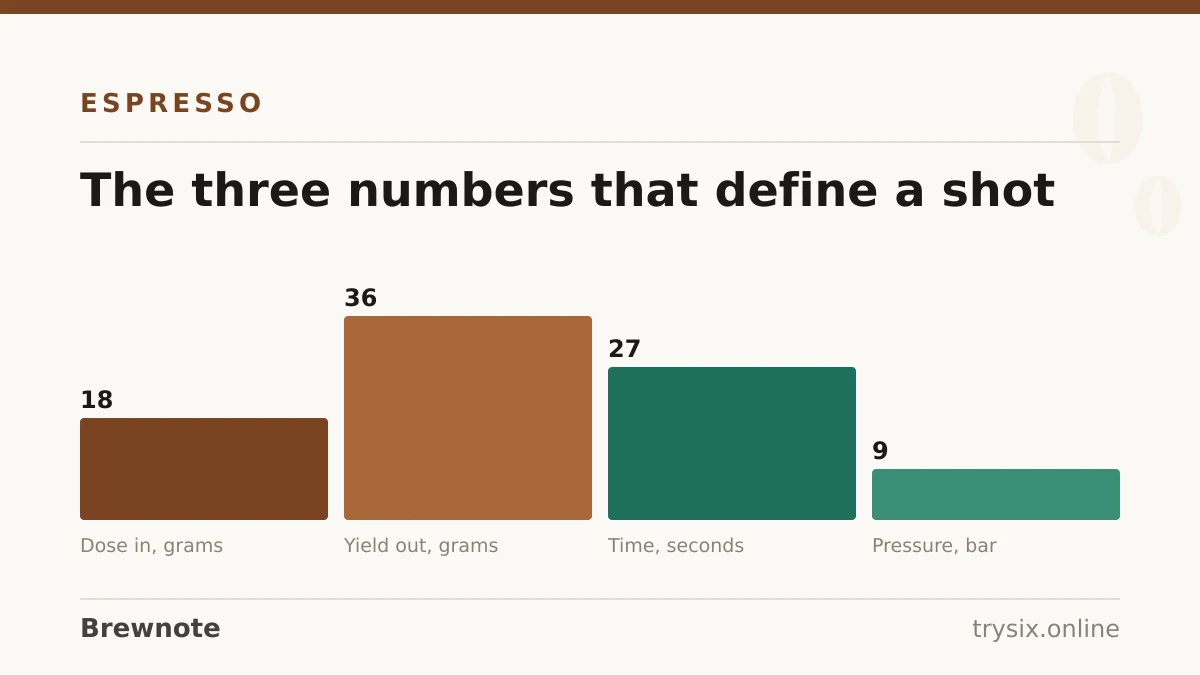
A shot is one serving of espresso. The numbers behind it: about 9 g of finely ground coffee for a single, water at roughly 9 bar for 25 to 30 seconds, yielding about 30 ml of liquid — a ratio of roughly 1:2 by weight.
In practice almost nobody pulls singles. Double baskets extract more evenly, and the economics of a café favour one 18 g double over two 9 g singles. When a menu says espresso, you are usually getting a double.
| Shot | Dose | Yield | Ratio | Character |
|---|---|---|---|---|
| Ristretto | 18 g | ~25 ml | 1:1 | Thick, sweet, short finish |
| Single (solo) | 9 g | ~30 ml | 1:2 | Standard, rarely served |
| Double (doppio) | 18 g | ~60 ml | 1:2 | The café default |
| Lungo | 18 g | ~110 ml | 1:3–1:4 | Lighter, more bitter, more caffeine |
Caffeine per shot
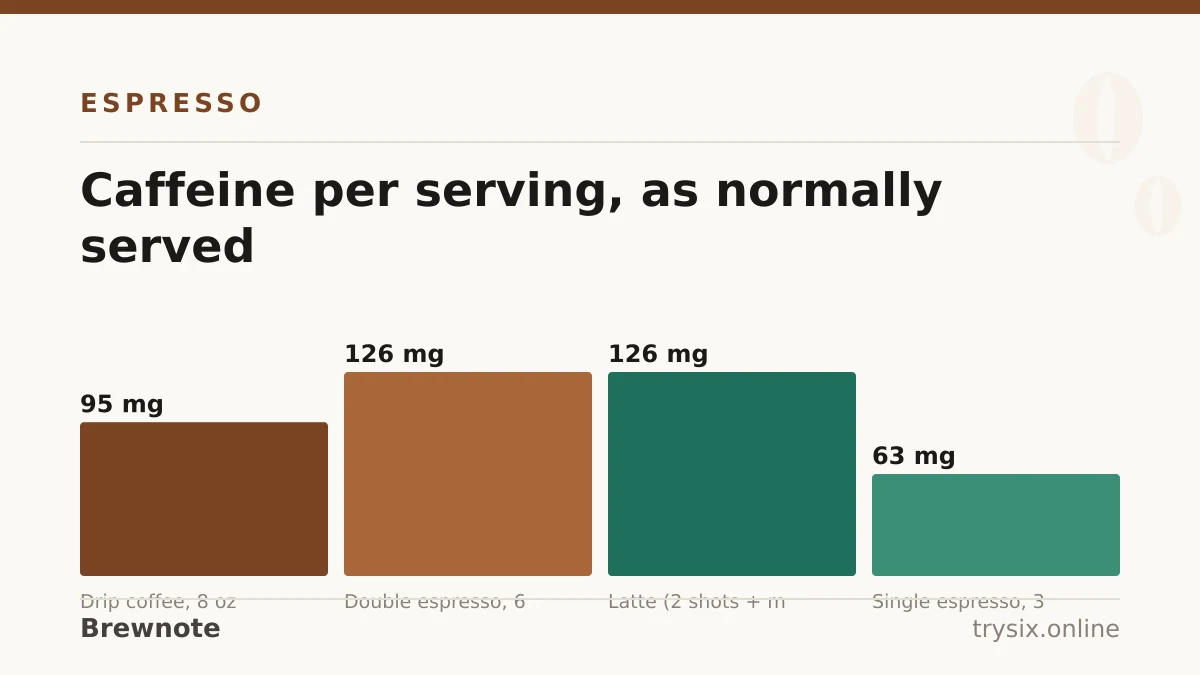
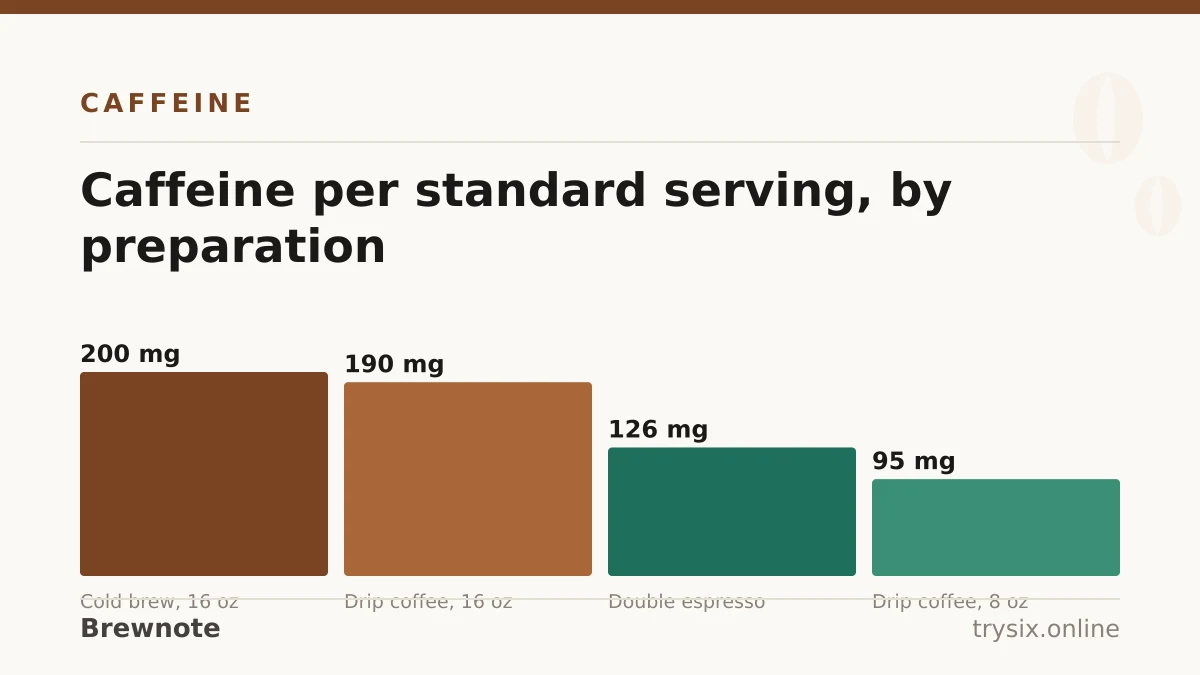
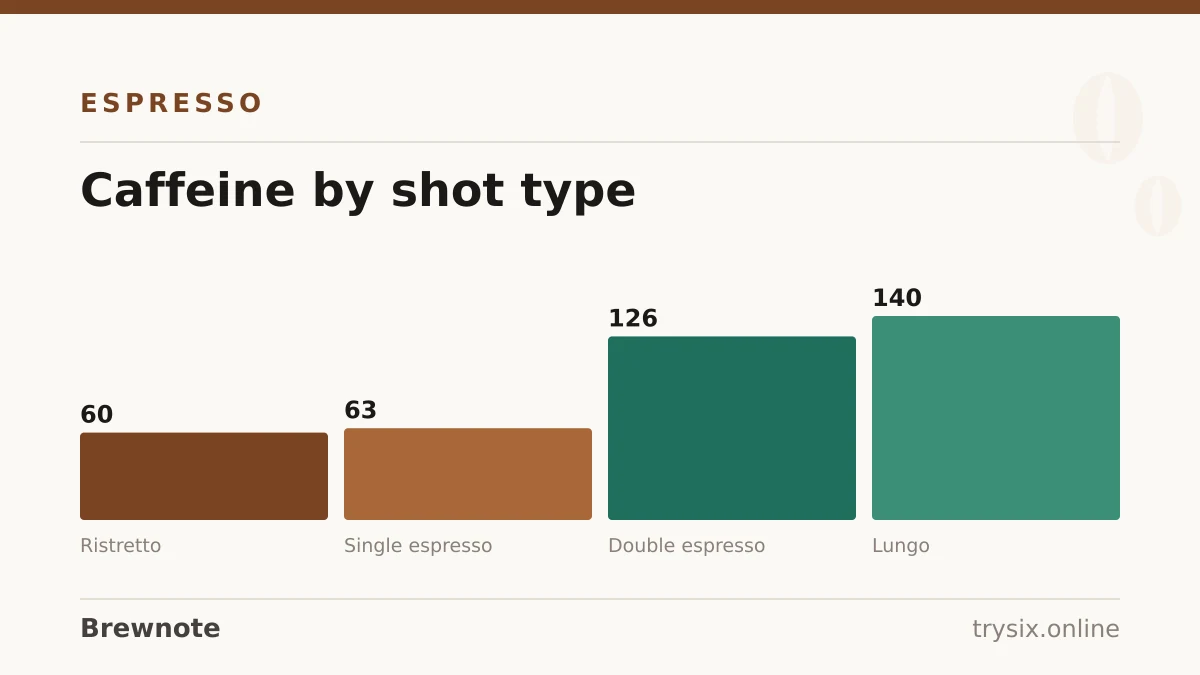
A single shot averages about 63 mg of caffeine and a double about 126 mg. That is less per serving than an 8 oz cup of drip coffee at roughly 95 mg — the shot is far more concentrated but far smaller.
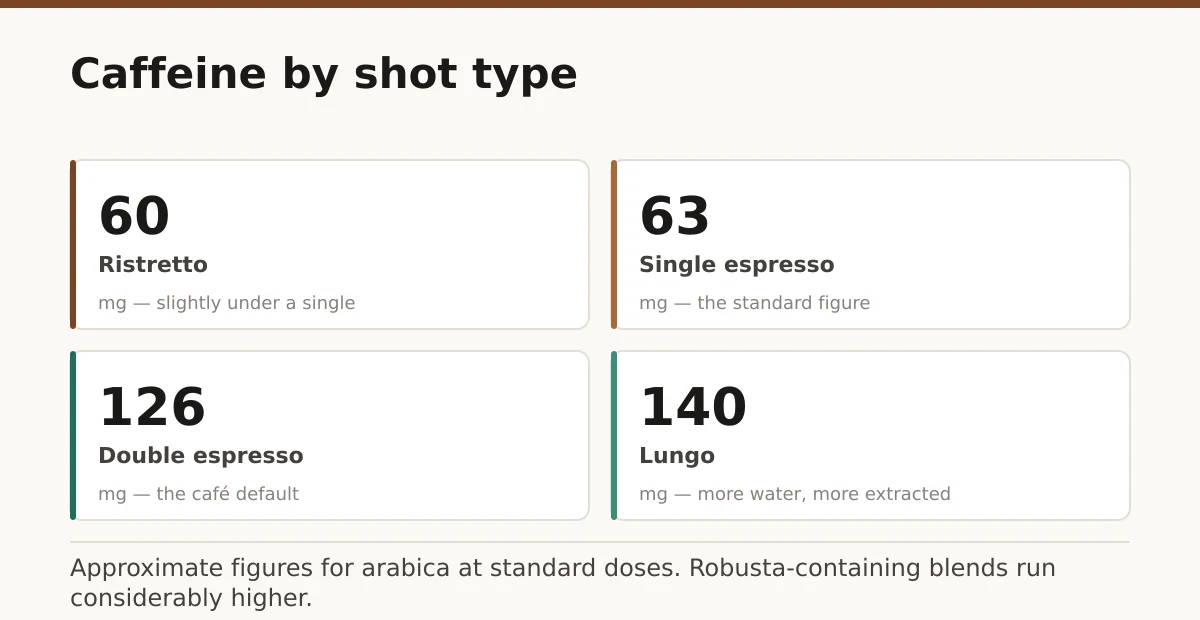
Those are averages across a wide real-world spread. Measurements of espresso from different outlets have found several-fold variation between samples of the same nominal drink, driven by dose, bean species and grind. How much caffeine is in a cup of coffee covers the ranges properly.
How many shots are in each drink
| Drink | Shots | Added | Caffeine |
|---|---|---|---|
| Espresso | 1–2 | Nothing | 63–126 mg |
| Macchiato | 1 | A spoon of foam | ~63 mg |
| Cortado | 1 | Equal steamed milk | ~63 mg |
| Cappuccino | 1–2 | Milk and foam in thirds | 63–126 mg |
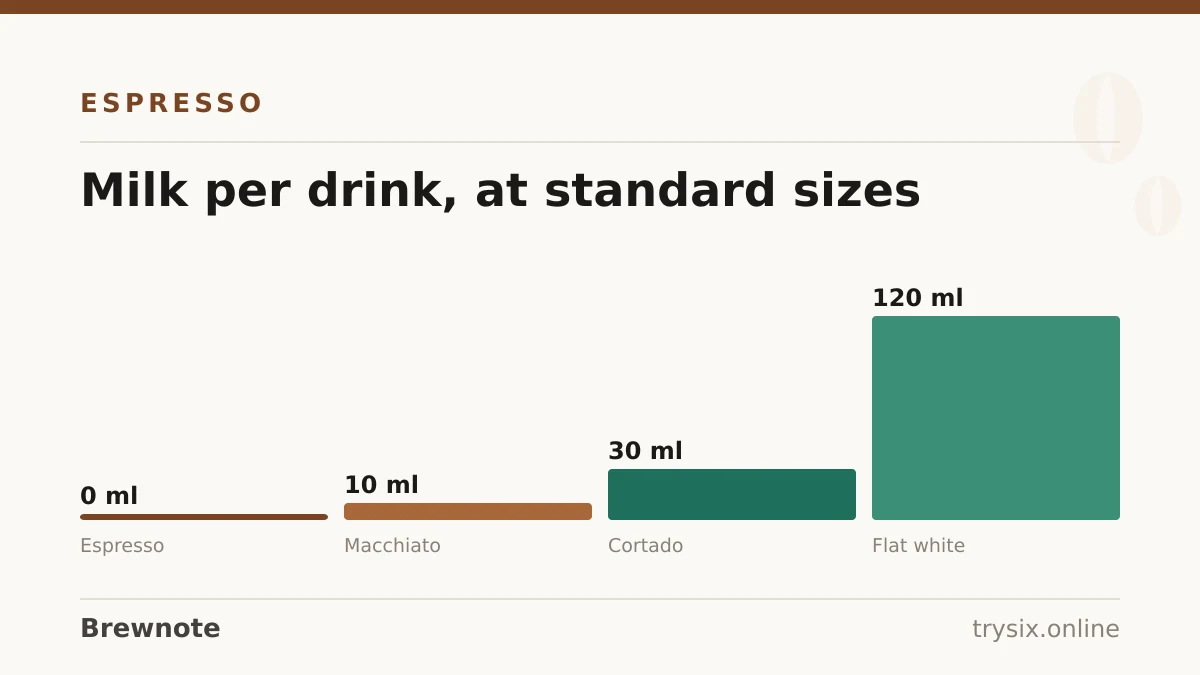
| Flat white | 2 | ~120 ml steamed milk | ~126 mg |
| Latte | 1–2 | 200 ml+ steamed milk | 63–126 mg |
| Americano | 1–2 | Hot water | 63–126 mg |
| Mocha | 1–2 | Chocolate and milk | 63–126 mg, plus cocoa |
The important pattern: milk adds volume, not caffeine. A 16 oz latte and a 8 oz flat white made with two shots each contain the same caffeine. If you want less caffeine, order fewer shots — ordering a larger milky drink does the opposite of what people often assume. Types of coffee drinks has the full menu with milk ratios.
Crema, and what it tells you
The reddish-brown foam on a fresh shot is crema: carbon dioxide from roasting, emulsified into the liquid under pressure and stabilised by coffee oils. It sits for a minute or two, then collapses.
- Thick, lasting crema generally means fresh coffee still holding roasting gases.
- No crema usually means stale beans or too coarse a grind.
- Robusta produces markedly more crema than arabica, which is why many traditional Italian blends include some — see types of coffee beans.
- Crema tastes bitter on its own. Stir the shot before drinking rather than sipping through it.
Ordering, and what the words mean
Getting what you actually want
Step 1: Ask for a single if you want less caffeine
The default is a double almost everywhere. Asking for a single roughly halves the caffeine in any espresso-based drink without changing anything else about it.
Step 2: Ristretto for sweetness, not strength
A ristretto is more concentrated per millilitre but slightly lower in total caffeine, because less water passed through the grounds. People order it for the sweeter, denser character.
Step 3: Lungo, not americano, if you want a longer black coffee from the machine
A lungo runs more water through the same grounds during extraction. An americano pulls a normal shot and adds hot water afterwards — a cleaner result, because the extra water never touched the coffee bed.
Step 4: Say the size in shots, not in cup size
Cup sizes vary between shops; shot counts do not. 'A flat white with one shot' is unambiguous in a way 'a small flat white' is not.
If you want to pull these at home, the dose-yield-time framework is the same one used in how to make espresso at home, and the underlying method is explained in what is espresso.