Caffeine & Decaf
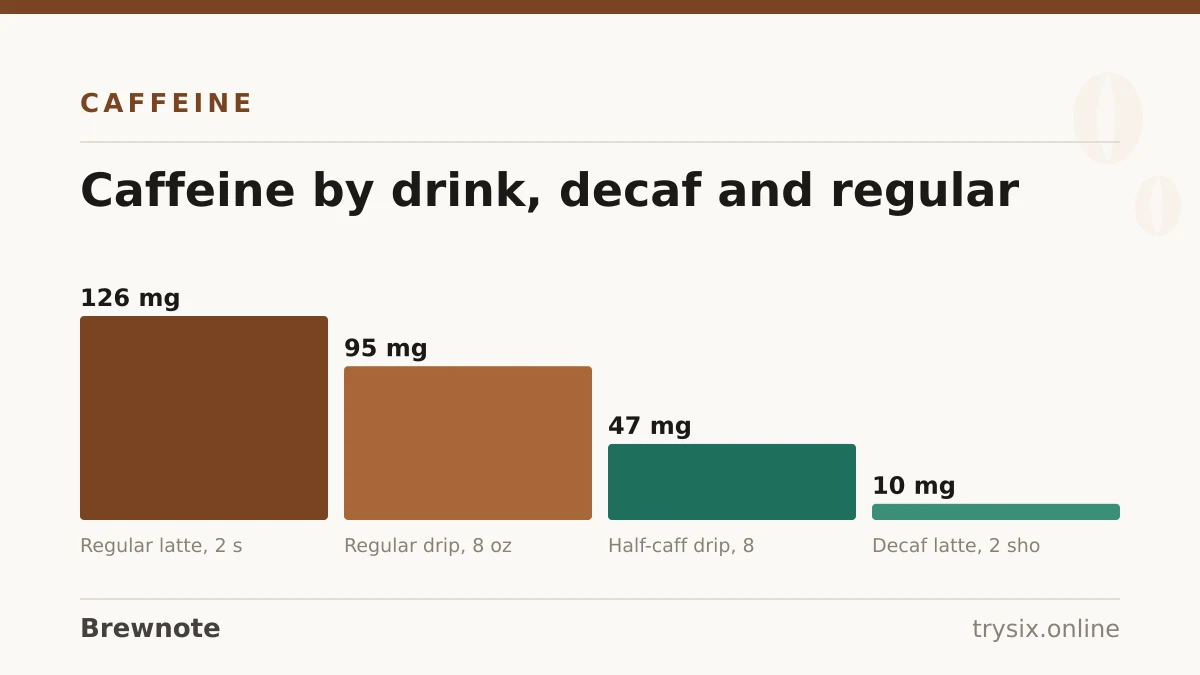
Decaf Espresso and Lattes: The Caffeine
A decaf shot carries 3–15 mg, several times a cup of decaf drip. Why espresso concentrates the residue, and what half-caff actually means.
Read
How much caffeine is actually in a cup, a shot, a pot — and in decaf.
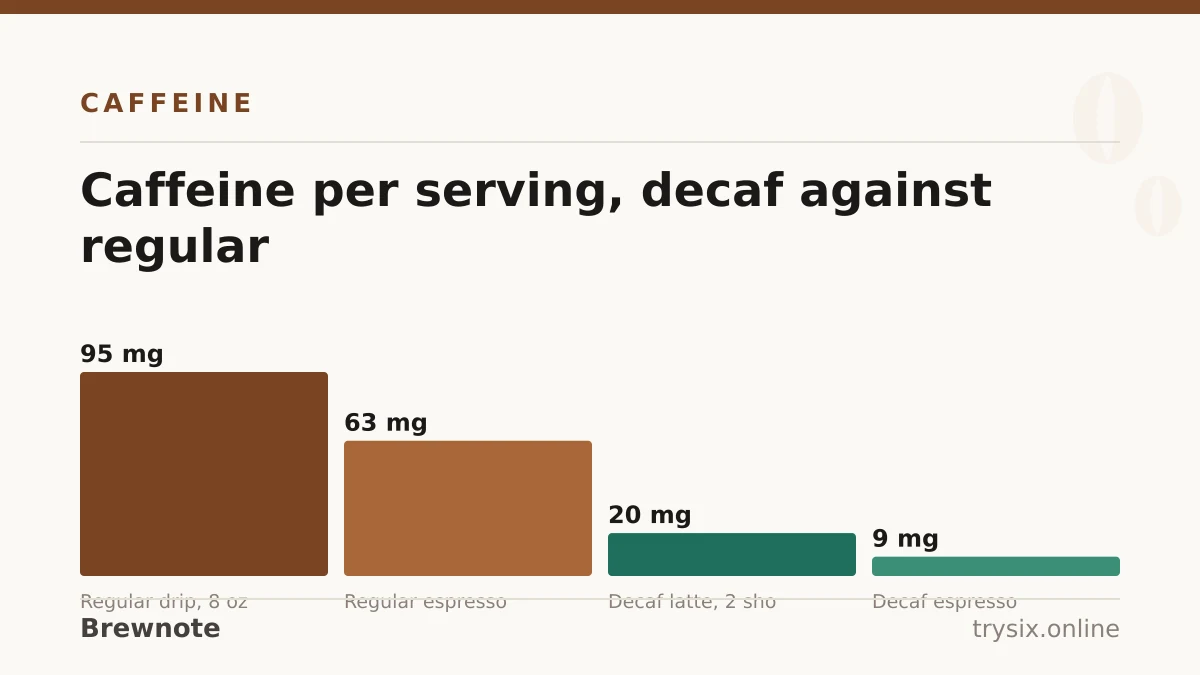
An 8 oz cup of brewed coffee averages about 95 mg of caffeine, a single espresso shot about 63 mg, and a cup of decaf about 2 mg. Those averages hide a wide spread: bean species, grind, dose and brew time all move the number, and two cups from the same café can differ by 50 percent.
These guides give the ranges rather than a single figure, and say where the evidence is genuinely uncertain — decaf's effect on hydration, for instance, is much thinner ground than the confident headlines suggest.
Caffeine & Decaf
A decaf shot carries 3–15 mg, several times a cup of decaf drip. Why espresso concentrates the residue, and what half-caff actually means.
Read
Caffeine & Decaf
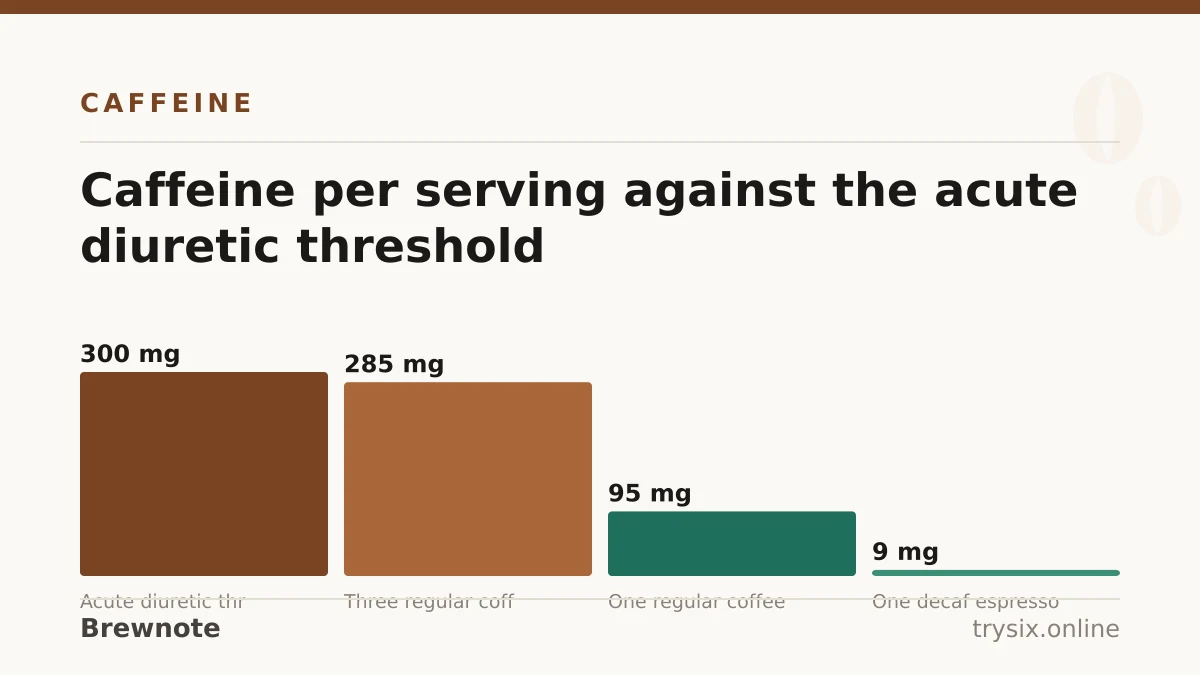
No. Decaf is close to water in its effect on fluid balance — and even regular coffee's diuretic reputation is weaker than commonly believed.
Read
Caffeine & Decaf
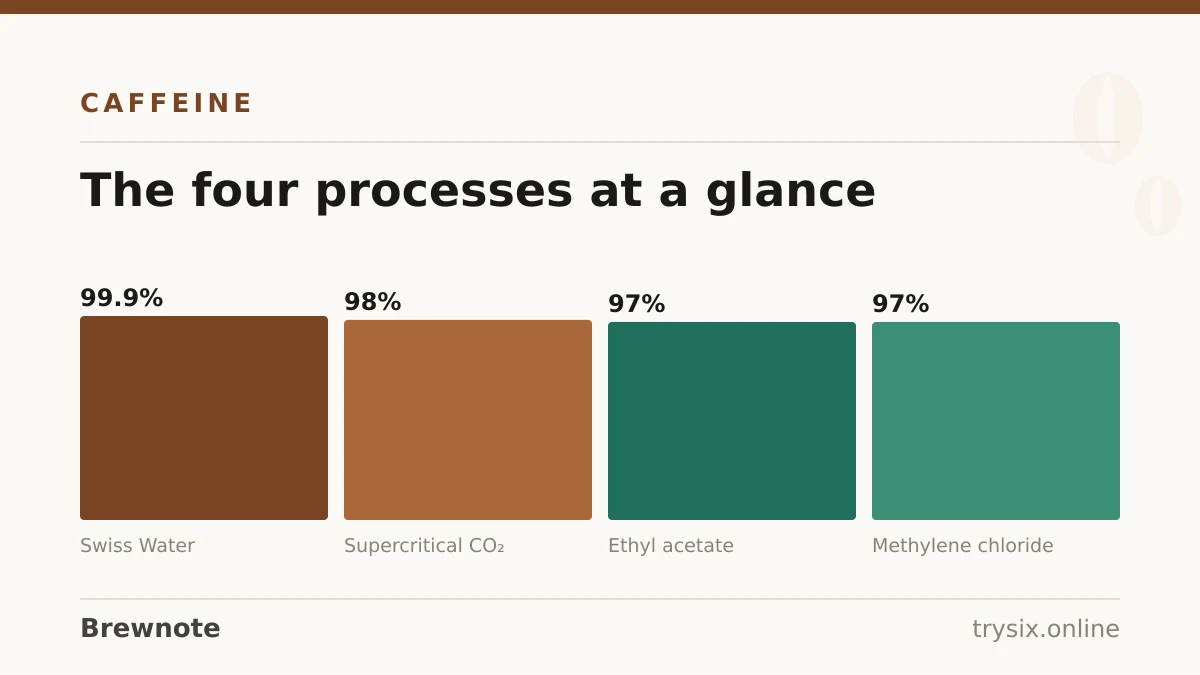
Four industrial processes — Swiss Water, CO2, ethyl acetate and methylene chloride — explained, with what each does to flavour and safety.
Read
Caffeine & Decaf
Yes — about 2 mg per 8 oz cup against 95 mg in regular. What the 97 percent rule means, and when the residue actually matters.
Read
Caffeine & Decaf
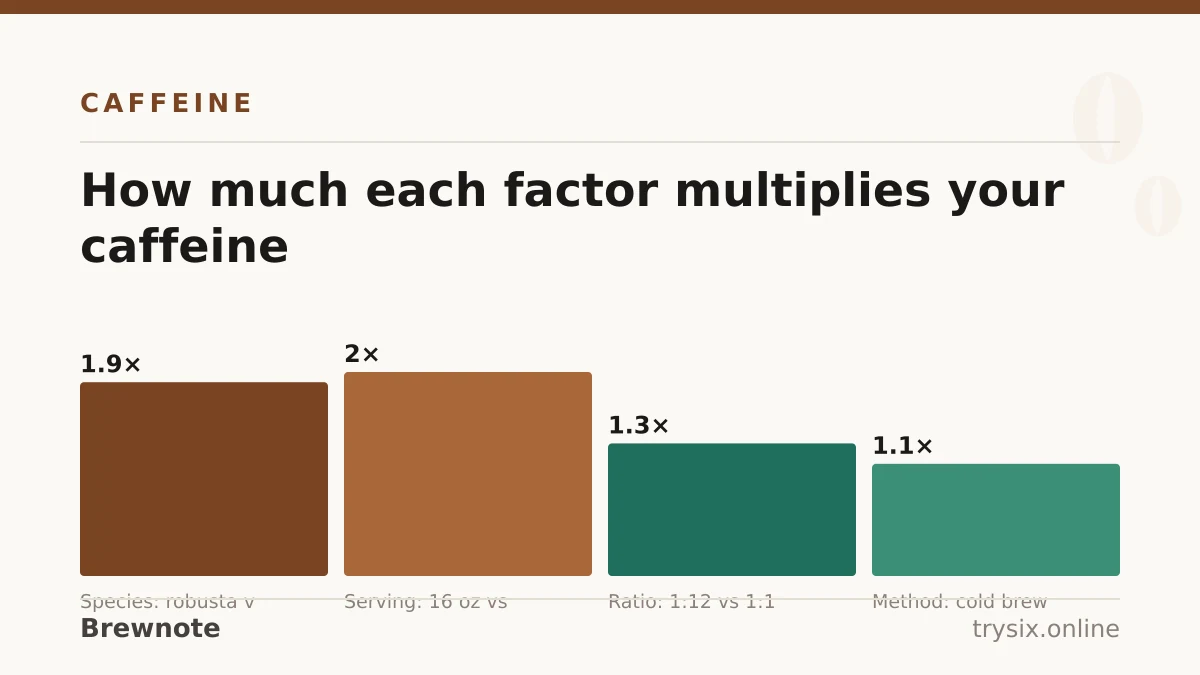
Robusta beans, a big serving and a strong ratio — ranked by how much each actually moves the number, with the brew methods compared.
Read
Caffeine & Decaf
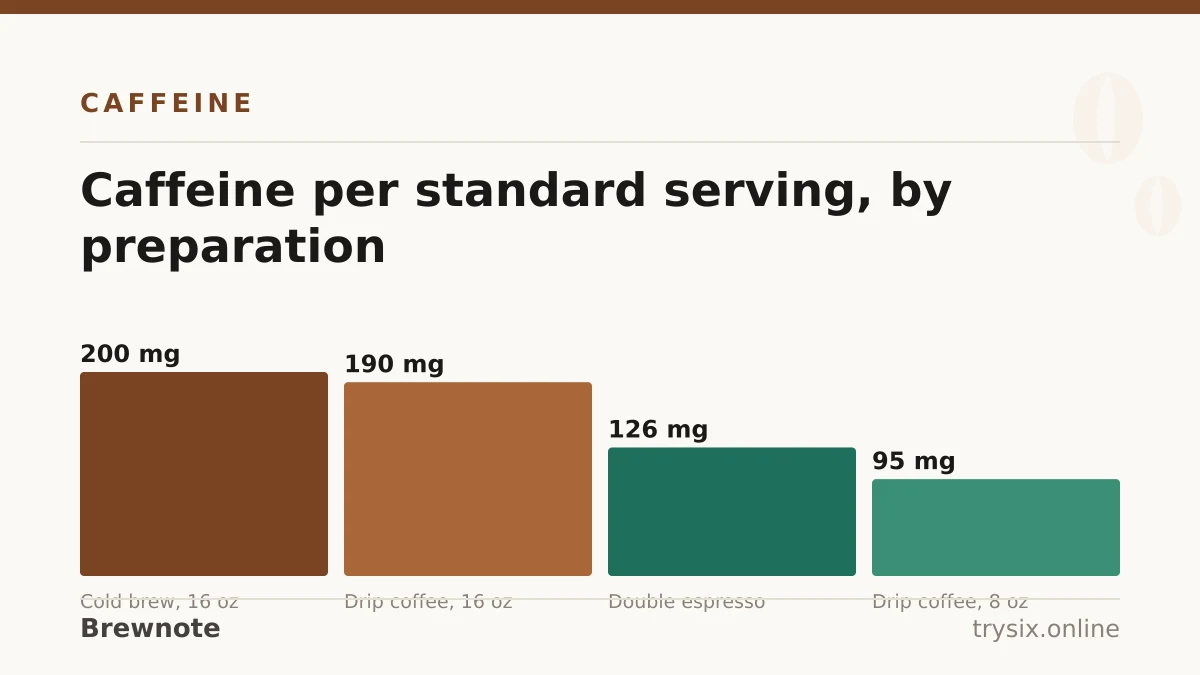
About 95 mg in an 8 oz cup — but the real range is wide. Milligram figures by serving size, brew method and pot, with the 400 mg guideline.
Read
About 95 mg in an 8 oz cup of brewed coffee, per USDA figures. A 12 oz mug is closer to 140 mg, and a full 12-cup pot brewed to its marked capacity holds roughly 1,000 mg spread across the carafe.
Yes, a small amount. US regulations require at least 97 percent of caffeine to be removed, which leaves roughly 2 mg in an 8 oz cup against about 95 mg in regular. A decaf espresso shot typically holds 3 to 15 mg.
The FDA cites 400 mg a day — about four 8 oz cups — as not generally associated with negative effects for healthy adults. That figure does not apply to pregnancy, to people on certain medications, or to anyone with a diagnosed heart-rhythm condition.
Brewing
Ratios, grind, water and time — the four dials that decide how a cup tastes.
Espresso
What actually defines espresso, what a shot contains, and what you can do without a machine.
Cold Brew & Iced
Steeping cold for 12–24 hours makes a different drink from pouring hot coffee over ice.
Roast Levels
Light, medium and dark describe how far a bean went in the roaster — not its strength.
Beans & Origins
Where coffee grows, how the cherry becomes a bean, and what to buy.