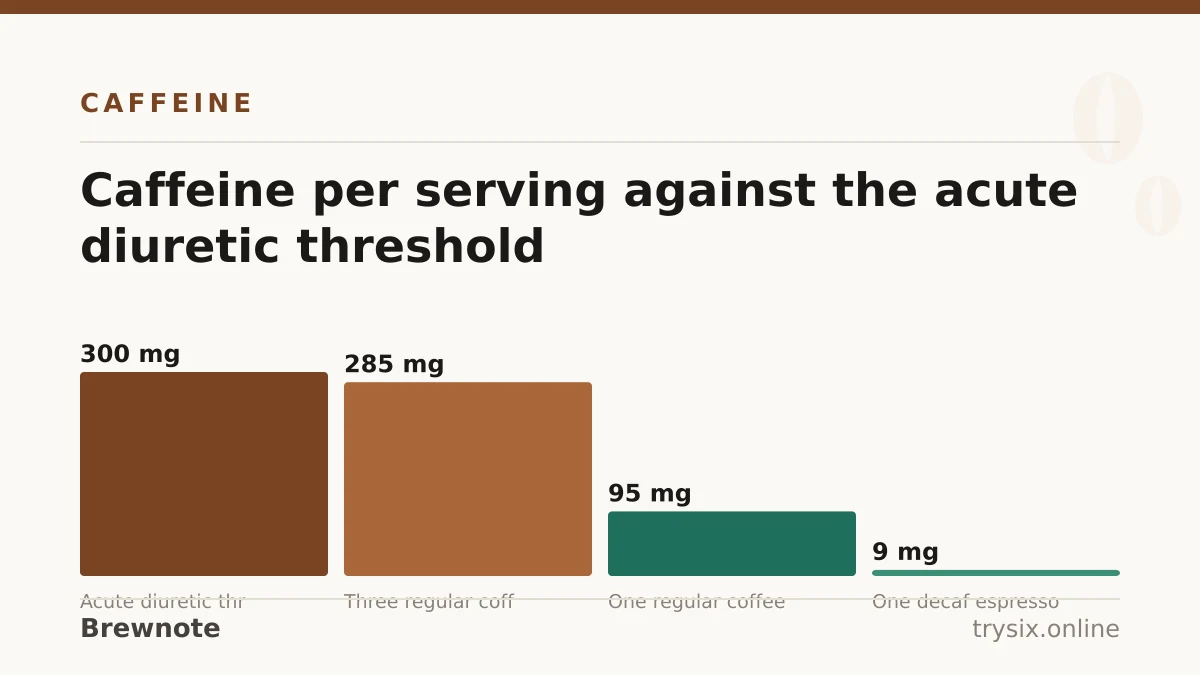
The idea that coffee dries you out is repeated so often it feels like settled fact, and decaf inherits the reputation by association. When you actually look at what has been measured, the picture is quite different — and the answer for decaf is about as clear as these things get.
The short version
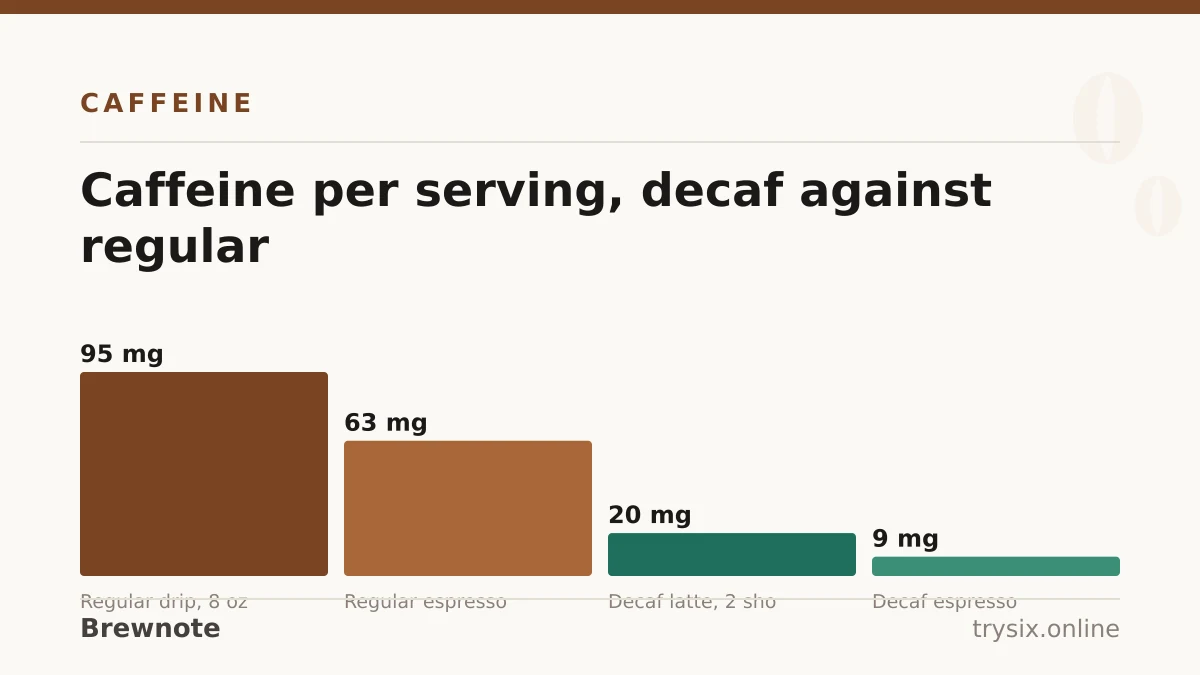
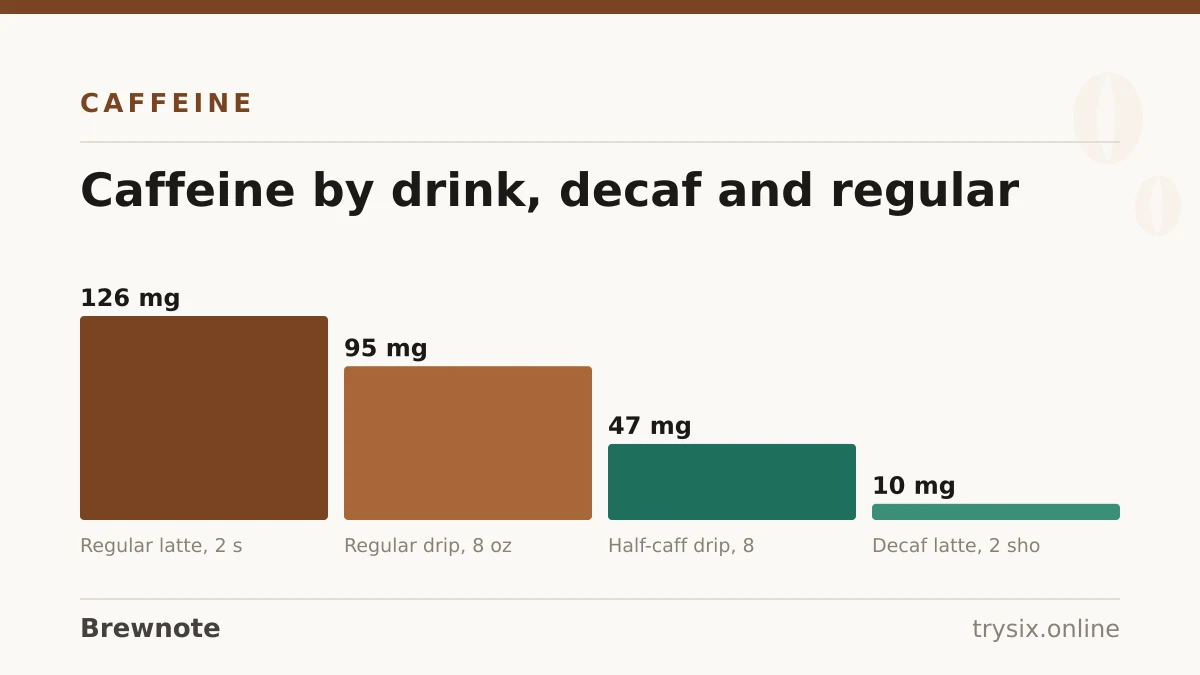
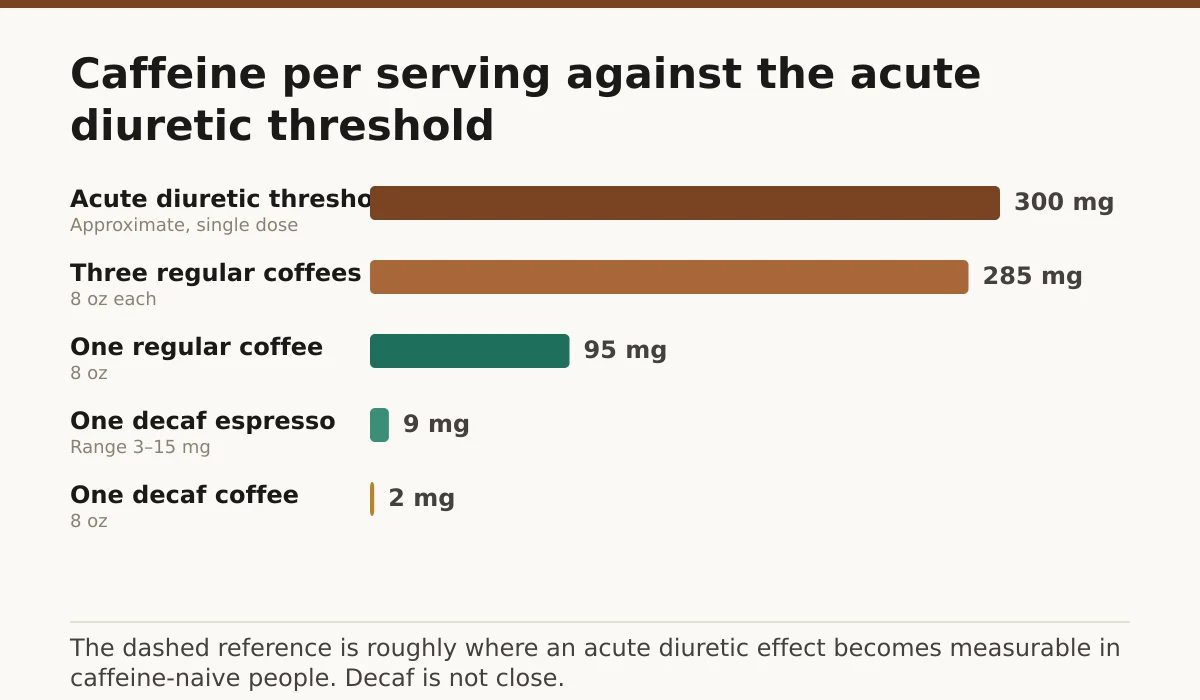
A cup of decaf is about 236 ml of water carrying roughly 2 mg of caffeine. There is no mechanism by which that dehydrates anybody. The question exists because decaf inherits regular coffee's reputation — and that reputation turns out to be shakier than the confidence with which it is repeated.
What the research on regular coffee found
The most useful study here is a 2014 counterbalanced crossover trial published in PLoS ONE, which took habitual male coffee drinkers and had them consume either coffee or an equal volume of water over three days, then swapped. It measured total body water, urine output and blood markers of hydration status.
Coffee, when consumed in moderation by caffeine-habituated males, provides similar hydrating qualities to water.
— Killer, Blannin & Jeukendrup, PLoS ONE (2014)
That is for regular, caffeinated coffee at four cups a day. Decaf, with roughly 2 percent of that caffeine, is further from any diuretic effect still.
| Claim | Evidence | Verdict |
|---|---|---|
| Decaf dehydrates you | No mechanism at 2 mg per cup | Not supported |
| Regular coffee dehydrates habitual drinkers | Controlled crossover trial found no difference vs water | Not supported at moderate intake |
| Caffeine is a diuretic at high single doses | Measurable at roughly 300 mg+ acutely | Supported |
| Tolerance reduces the effect | Habitual users show blunted response | Supported |
| Coffee counts toward fluid intake | Follows from the above | Supported |
Where the diuretic idea came from
It is not invented. Caffeine does have a diuretic action — it inhibits the reabsorption of sodium in the kidneys, which increases urine output. The problem is the dose and the population in which that was demonstrated.
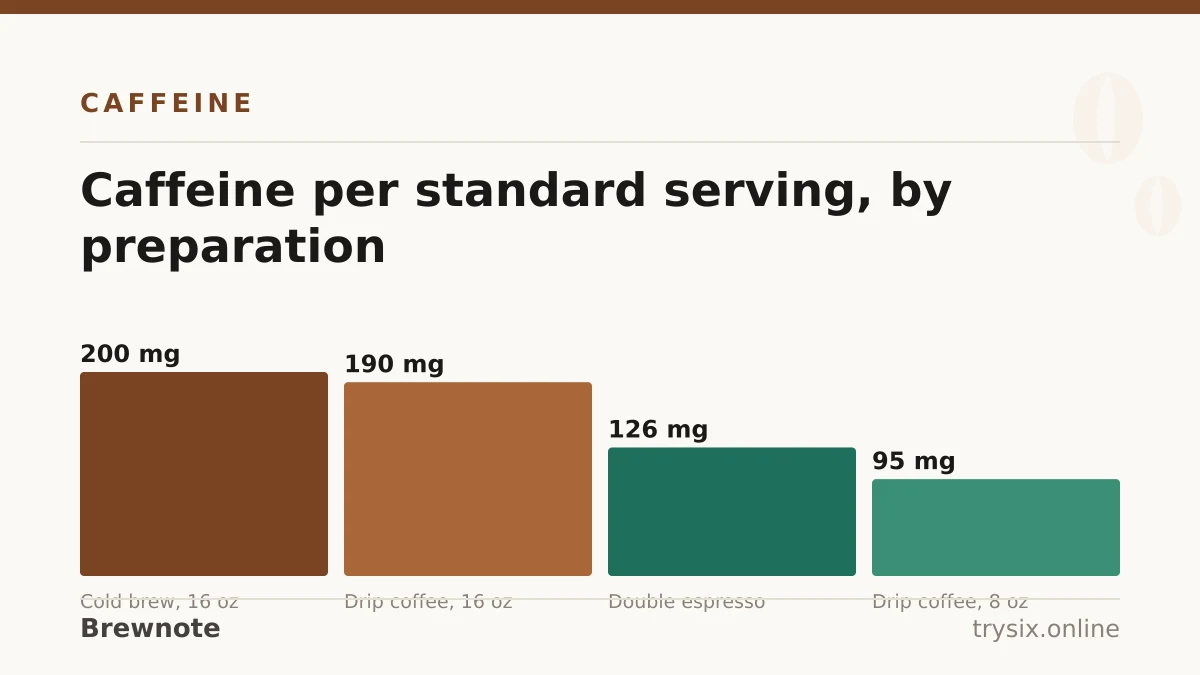
- The effect is dose-dependent, and becomes clearly measurable at around 300 mg or more taken at once — roughly three to four regular cups in quick succession.
- Much of the early research used caffeine-naive participants given a large bolus dose, which is not how people drink coffee.
- Habitual consumers develop tolerance to the diuretic response within days.
- The fluid in the drink was often not accounted for. A 240 ml cup adds 240 ml of water regardless of what else it contains.
What decaf does do
Decaf is not inert. It contains chlorogenic acids, other polyphenols and the same aromatic compounds as regular coffee, minus most of the caffeine. Some effects people attribute to caffeine survive decaffeination.
| Effect | In decaf? | Note |
|---|---|---|
| Fluid contribution | Yes | Effectively the same as water |
| Stimulant effect | Essentially no | ~2 mg is below the useful threshold |
| Gastric acid stimulation | Yes | Coffee does this independently of caffeine |
| Reflux trigger for some people | Yes | Which is why acidity is not the whole story |
| Polyphenol content | Yes | Reduced somewhat by processing |
| Bowel-stimulating effect | Partly | Reported for decaf too; mechanism unclear |
Decaf and anxiety
People sometimes report anxiety after decaf. At 2 mg of caffeine per cup, a pharmacological explanation is implausible for most people. More likely candidates are expectation effects, the other compounds in coffee, or — worth checking — that the drink was not actually decaf, which happens more often in busy cafés than anyone admits.
That said, 'implausible for most people' is not 'impossible for you'. Caffeine sensitivity varies genetically by a wide margin, and if you consistently notice something, the sensible response is to test it rather than to be argued out of it.
Practical guidance
If hydration is your actual concern
Step 1: Count coffee as fluid
Both regular and decaf contribute to daily fluid intake. Treating coffee as a hydration debt to be repaid with extra water is not supported by the evidence.
Step 2: Watch large single doses
The diuretic effect is acute and dose-dependent. Three coffees in an hour is a different proposition from three spread over a day.
Step 3: Do not use decaf as a hydration strategy
It is a fine drink, but plain water is cheaper and does not stimulate gastric acid.
Step 4: Separate the questions
If the underlying worry is caffeine intake rather than hydration, how much caffeine is in a cup of coffee has the figures and does decaf coffee have caffeine covers what remains in decaf.
As with everything on this site, this is general information rather than clinical advice. If you are managing a condition where fluid balance matters — kidney disease, heart failure, certain medications — that is a question for your clinician, not for a coffee article.