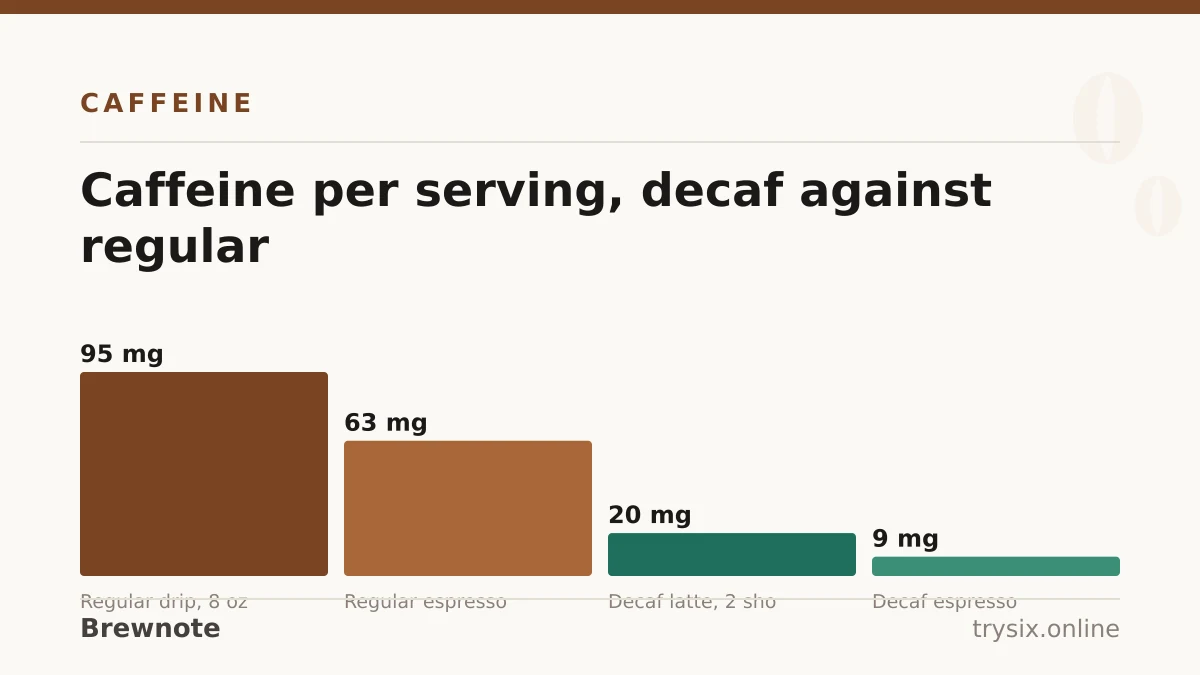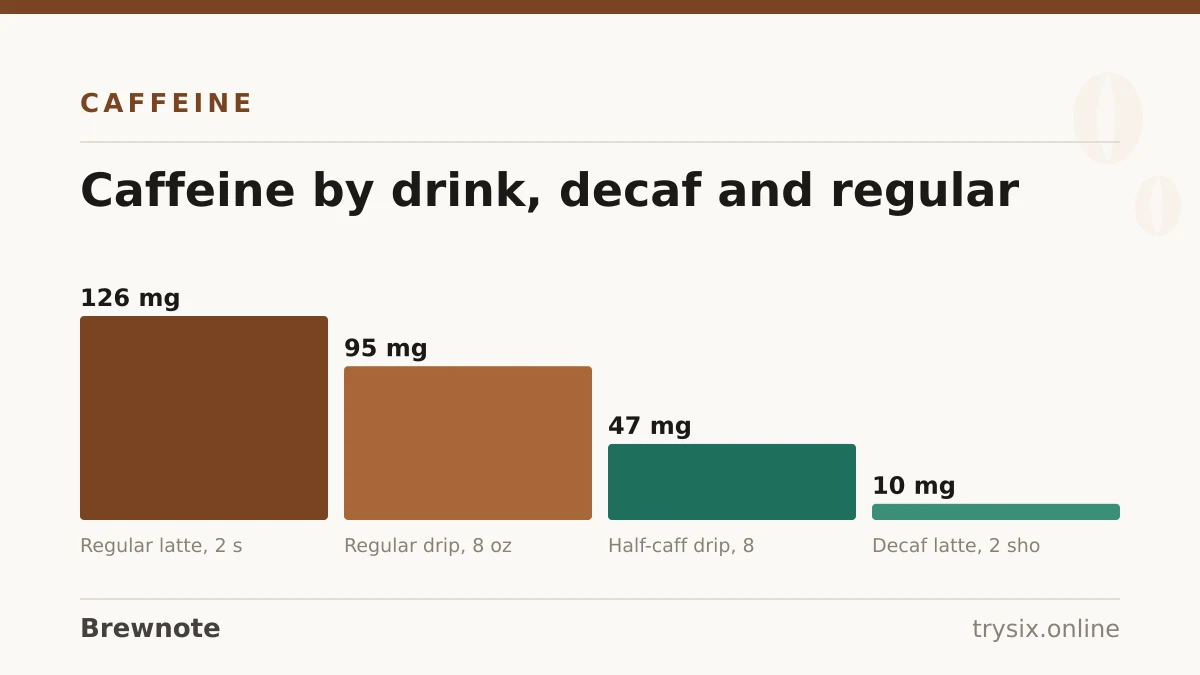
If you have switched to decaf to cut your caffeine down, there is a detail worth knowing that nobody mentions at the counter. A decaf espresso is not the same as a cup of decaf drip, and the gap is bigger than most people would guess. It matters most for exactly the people who care most.
Why decaf espresso has more than decaf drip
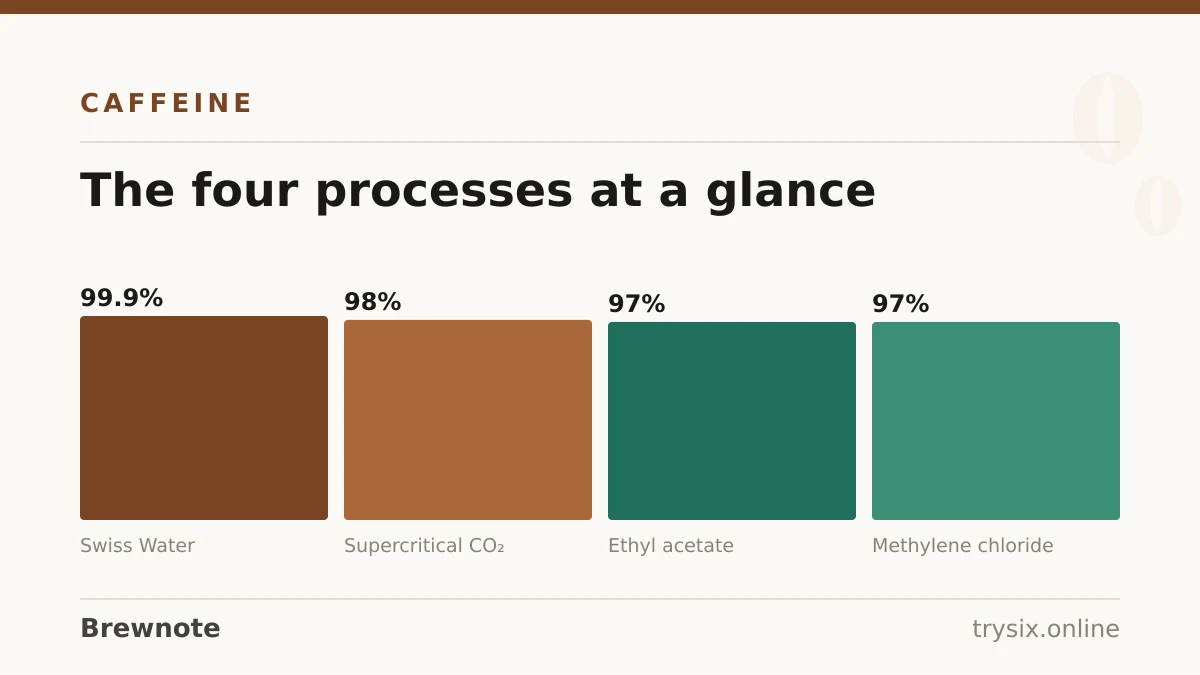
This surprises people, and the explanation is simply dose. Decaffeination removes a percentage of the caffeine — at least 97 percent — so what remains scales with how much coffee went into the drink.
An 8 oz cup of drip uses about 15 g of coffee spread across 240 ml. A double espresso uses 18 g concentrated into 60 ml. More coffee, less water: the residual caffeine is both greater in total and far more concentrated.
| Drink | Coffee used | Volume | Decaf caffeine | Regular equivalent |
|---|---|---|---|---|
| Drip coffee, 8 oz | ~15 g | 240 ml | ~2 mg | ~95 mg |
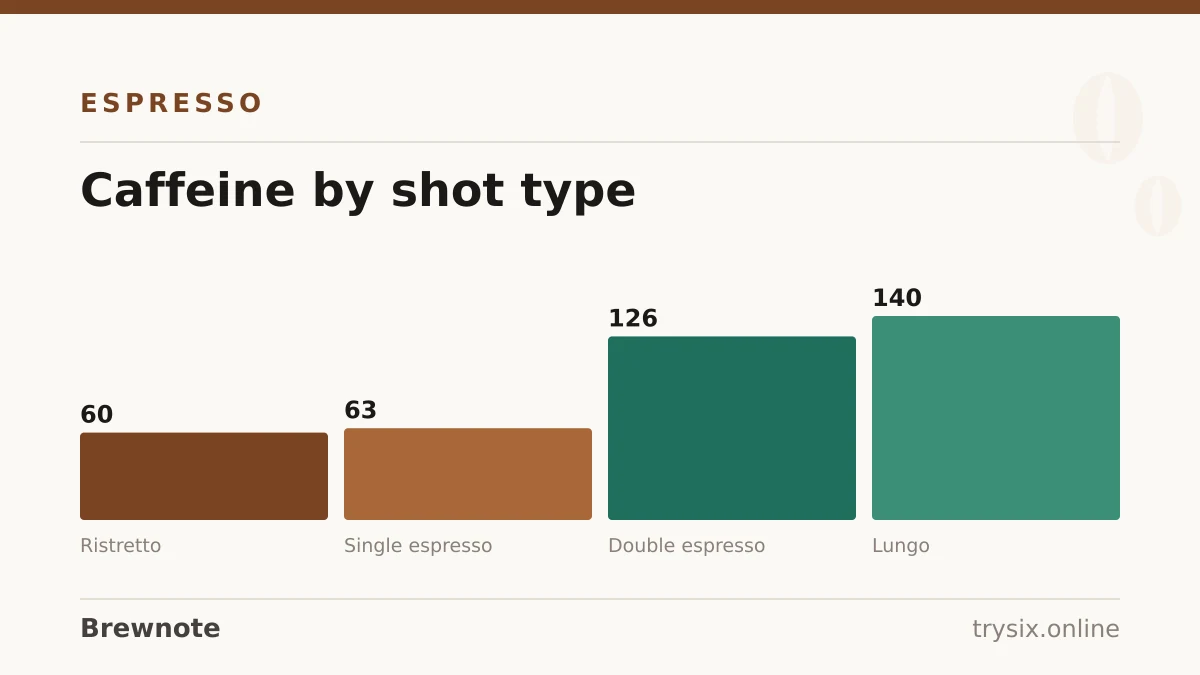
| Single espresso | ~9 g | 30 ml | 3–8 mg | ~63 mg |
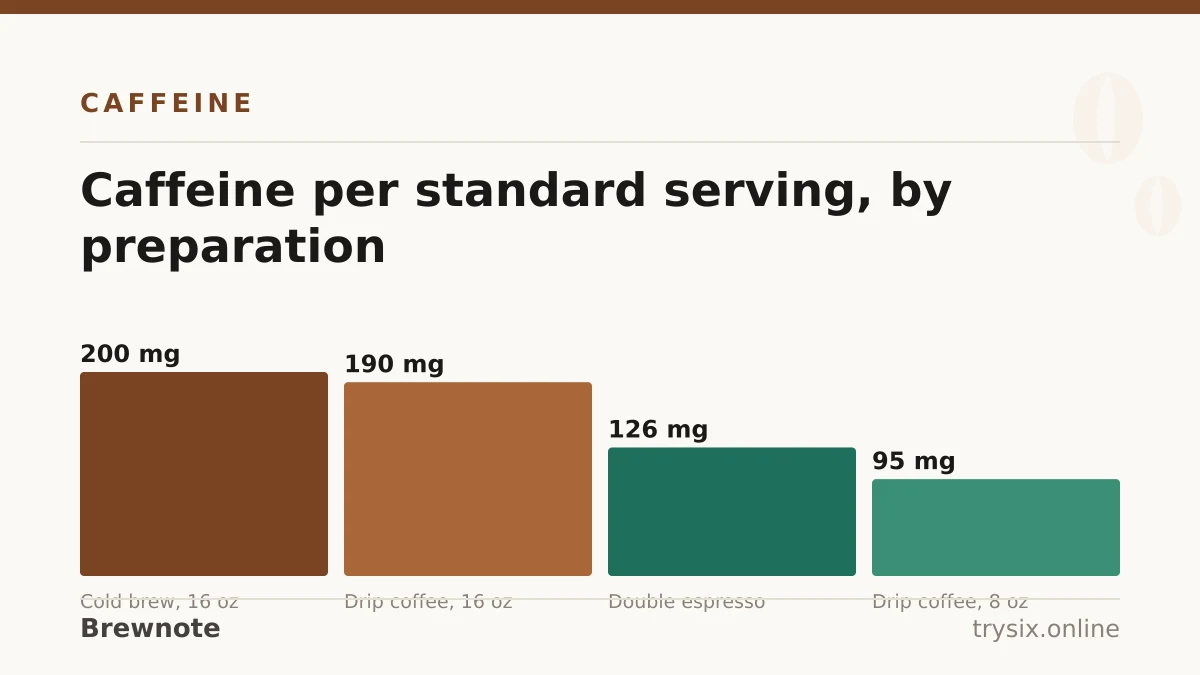
| Double espresso | ~18 g | 60 ml | 6–15 mg | ~126 mg |
| Latte, 2 shots | ~18 g | 300 ml | 6–15 mg | ~126 mg |
| Two decaf lattes | ~36 g | 600 ml | 12–30 mg | ~252 mg |
| Americano, 2 shots | ~18 g | 300 ml | 6–15 mg | ~126 mg |
Why the range is so wide
Three to fifteen milligrams is a five-fold spread for what is nominally the same drink, and the reasons are worth knowing because they are not going to be printed on a menu.
- The decaffeination process. Swiss Water typically achieves around 99.9 percent removal; the 97 percent floor leaves more than three times as much. See how is decaf coffee made.
- The starting bean. Robusta has roughly twice arabica's caffeine, so 3 percent residue of a robusta is more than 3 percent of an arabica.
- The dose. Baskets range from 14 g to 22 g, which is a 50 percent swing before anything else.
- Shot count. Many cafés pull doubles by default and add a third shot in larger sizes without saying so.
When it adds up
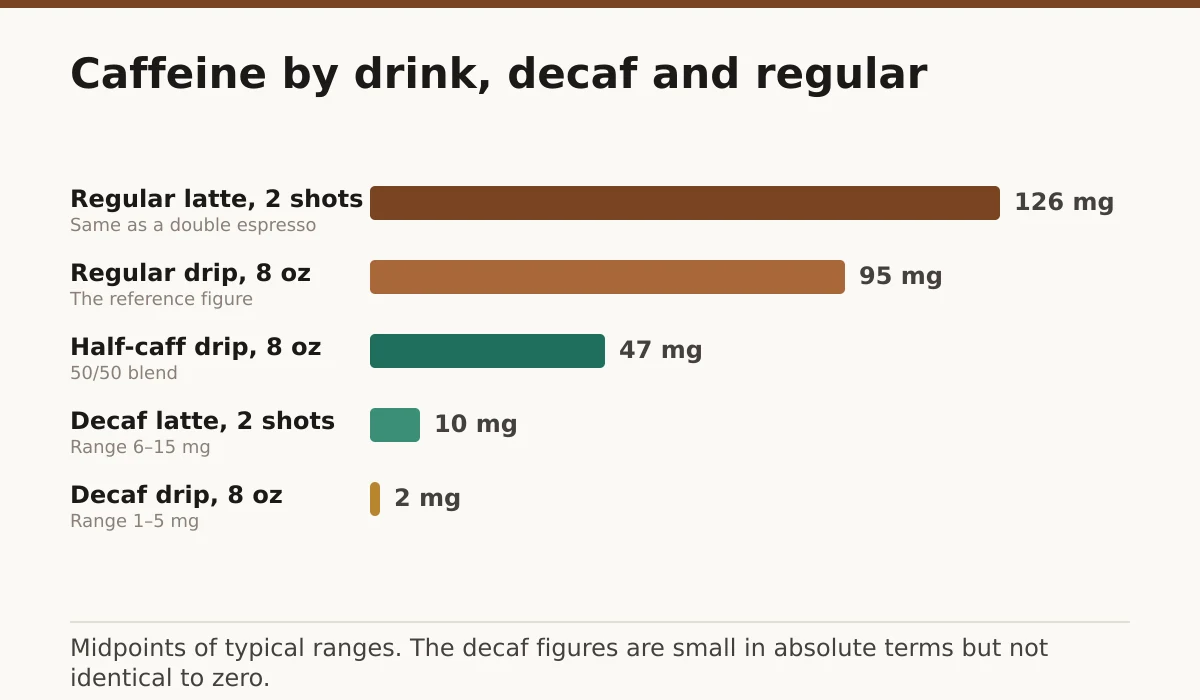
For most people, none of this matters — 10 mg is a twentieth of a strong regular coffee. The situations where it does are the same ones that apply to decaf generally, but reached sooner.
Someone drinking four decaf flat whites through the day is taking perhaps 40 to 60 mg, comparable to half a regular cup of coffee or a cup of tea. If a clinician has asked you to eliminate caffeine rather than reduce it, that is a real quantity and worth mentioning to them. Does decaf coffee have caffeine covers the general case.
Half-caff
Half-caff is a blend of regular and decaffeinated beans, usually in equal parts. An 8 oz brewed cup lands around 47 to 50 mg — roughly half a normal cup, and about the same as a cup of black tea.
It is a genuinely useful middle ground for people cutting down, because it keeps the flavour of regular coffee better than decaf does while halving the dose. You can also make it yourself by blending bags in whatever proportion you like, which gives finer control than the 50/50 commercial version.
| Blend | Regular : decaf | Approximate caffeine |
|---|---|---|
| Full strength | 100 : 0 | ~95 mg |
| Three-quarter caff | 75 : 25 | ~72 mg |
| Half-caff | 50 : 50 | ~48 mg |
| Quarter-caff | 25 : 75 | ~25 mg |
| Decaf | 0 : 100 | ~2 mg |
Making decaf espresso taste good
Decaffeinated beans behave differently under pressure, and treating them exactly like regular beans is why so much café decaf is poor.
Adjusting for decaf
Step 1: Go a step coarser
Decaf beans are more brittle after processing and produce more fines at the same grinder setting. Those fines over-extract and make the shot harsh. Coarsen one step and re-time it.
Step 2: Expect a faster shot
The more porous structure lets water through more easily. A recipe that ran 27 seconds on regular beans may run 20 on decaf at the same setting.
Step 3: Drop the temperature slightly
Decaf is more soluble. Brewing a couple of degrees cooler reduces the bitterness you pull.
Step 4: Buy medium, not dark
Decaf beans roast faster and scorch easily, so dark decaf is frequently over-roasted. A medium roast from a roaster who dates the bag is the safer purchase.
The underlying method is unchanged — dose, yield and time, as in how to make espresso at home. Decaf just needs the numbers re-dialled rather than assumed. And if you want less caffeine without switching to decaf at all, a single shot instead of a double halves it, as what is an espresso shot sets out.