Cold Brew & Iced
How to Make Iced Coffee
Three methods for iced coffee that isn't watery: flash-chilled over ice, brewed double strength, or chilled first. With ratios and timings.
Read
Steeping cold for 12–24 hours makes a different drink from pouring hot coffee over ice.
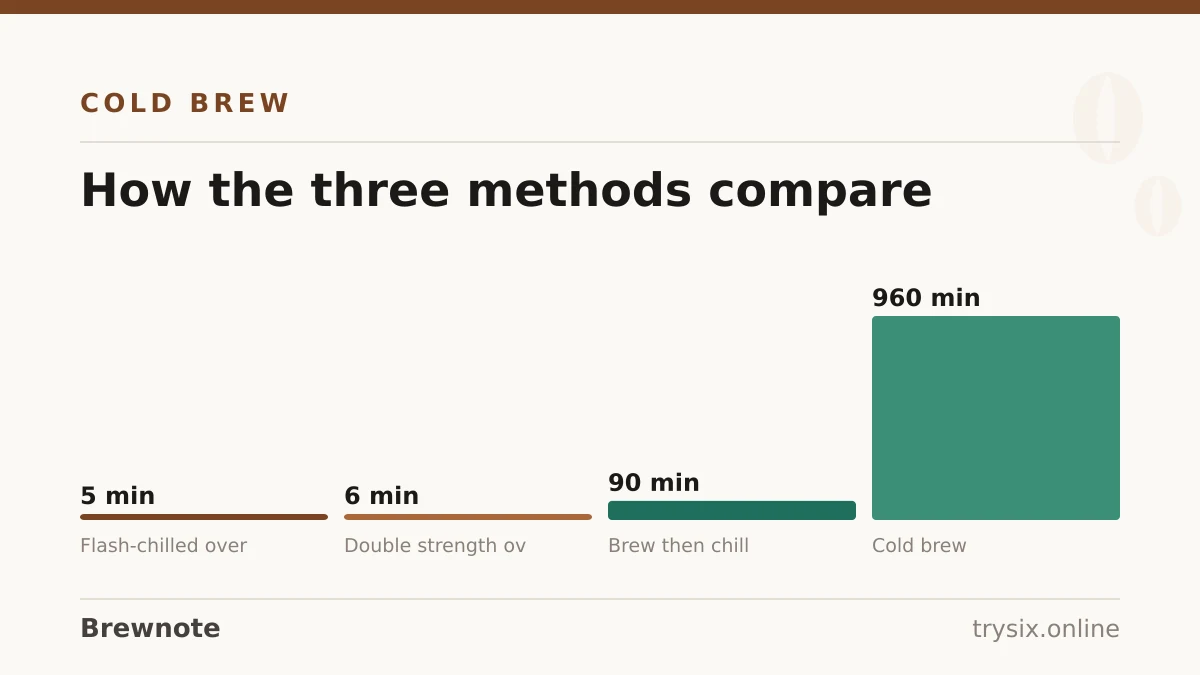
Cold brew and iced coffee are frequently treated as synonyms and are not. Cold brew never meets hot water: coarse grounds steep in cold or room-temperature water for 12 to 24 hours. Iced coffee is brewed hot and then chilled, which takes four minutes rather than a day.
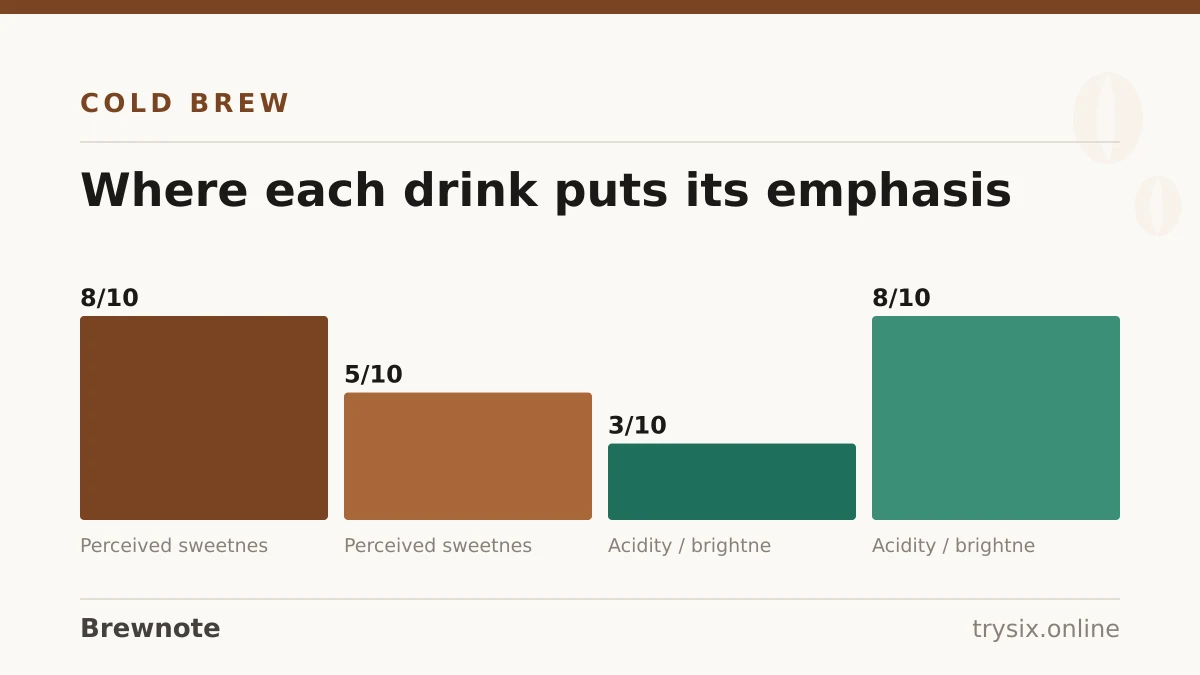
The difference shows up in the cup. Cold water extracts fewer of the acids and aromatic compounds that hot water pulls, so cold brew reads as smoother and less bright, and it keeps in the fridge for a week or more.
Cold Brew & Iced
Three methods for iced coffee that isn't watery: flash-chilled over ice, brewed double strength, or chilled first. With ratios and timings.
Read
Cold Brew & Iced
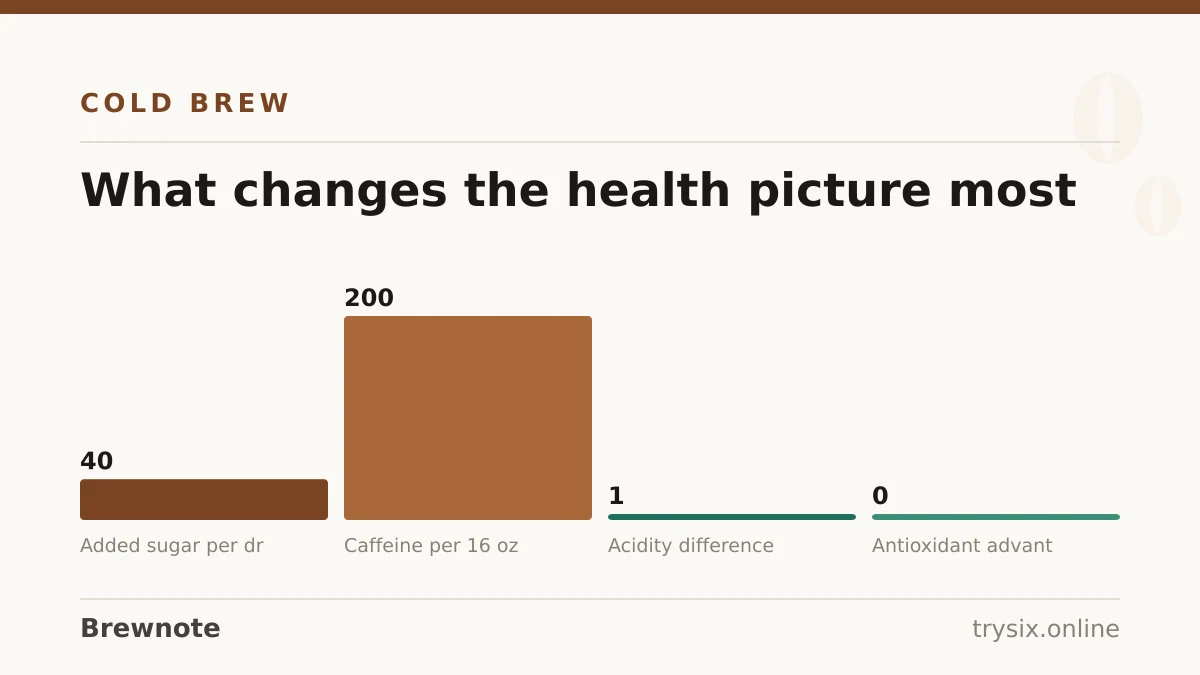
Cold brew is measurably less acidic than hot coffee. Whether that makes it healthier, or gentler on your stomach, is a much weaker claim.
Read
Cold Brew & Iced
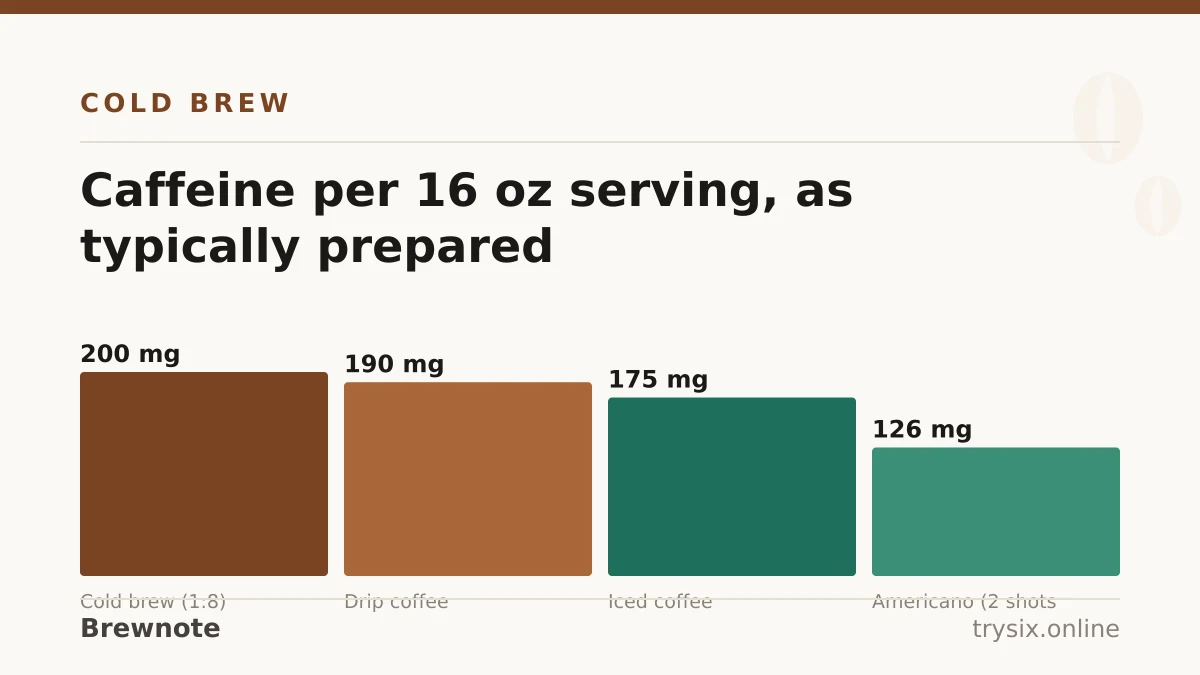
Cold brew is usually stronger as sold, but not because cold water extracts more. The honest answer depends on the ratio and the dilution.
Read
Cold Brew & Iced
Cold brew steeps for hours without heat; iced coffee is brewed hot and chilled. What that changes in taste, caffeine, cost and how long each keeps.
Read
Cold Brew & Iced
A 1:8 cold brew recipe you can pour straight over ice, with grind size, steep times, filtering technique and a fix for every common fault.
Read
Cold Brew & Iced
A 1:5 cold brew concentrate recipe by weight, with steep times, grind size, a dilution table and the mistakes that make it bitter.
Read
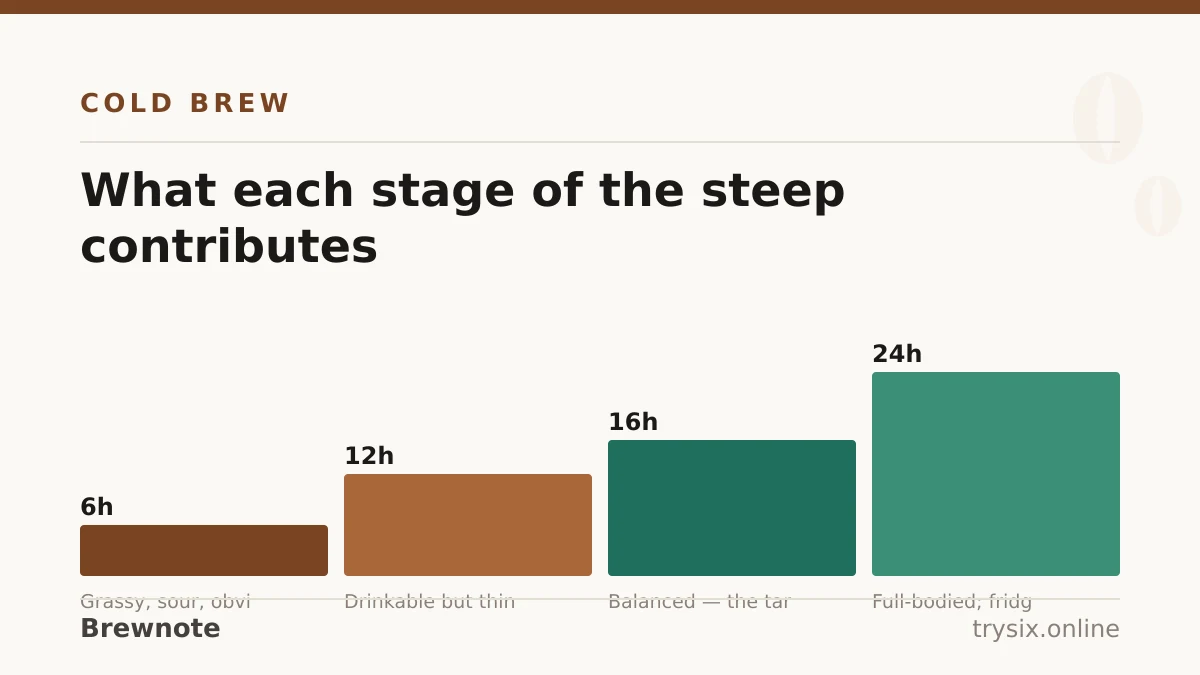
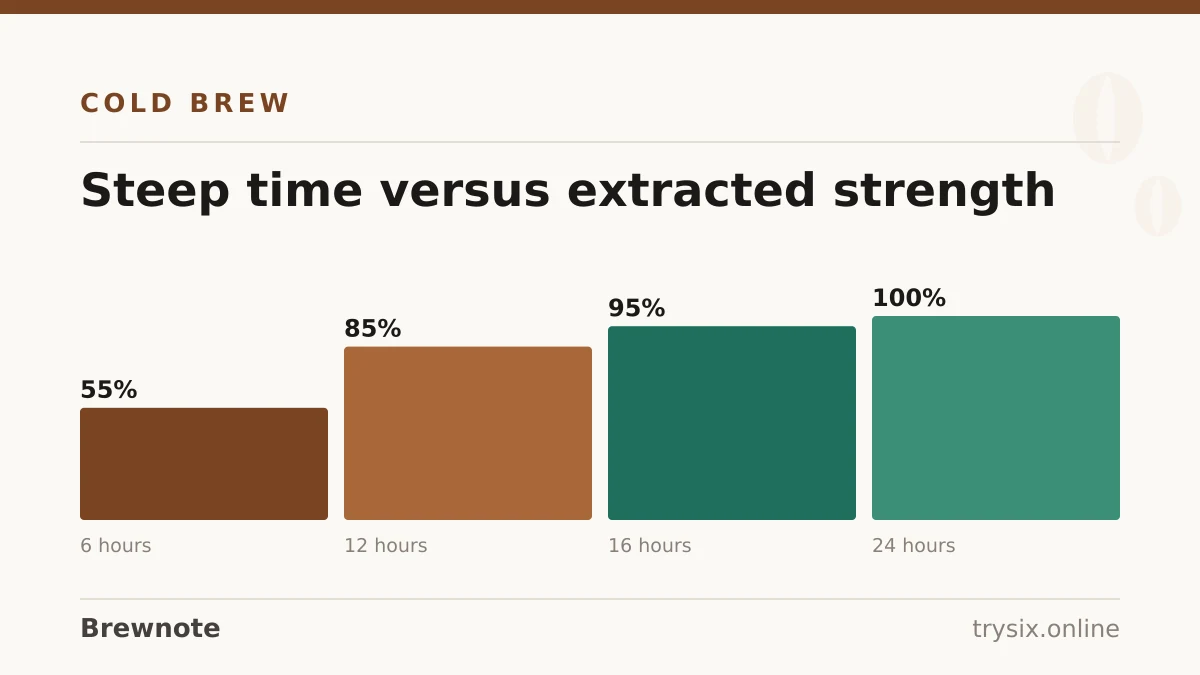
Twelve to 24 hours. Below 12 hours the result is thin and under-extracted; past about 24 hours you gain little caffeine and start picking up woody, papery flavours. Room temperature extracts faster than the fridge, so shorten the steep if you leave it on the counter.
Cold brew concentrate is much stronger — it is brewed at roughly 1:5 rather than 1:16. Once diluted to drinking strength the caffeine is broadly comparable to drip coffee. The number depends entirely on how much water you add back.
Yes, but standard supermarket grind is cut for drip and will make the brew muddy and over-extracted after 18 hours. A coarse grind, the texture of raw sugar, filters far more cleanly.
Brewing
Ratios, grind, water and time — the four dials that decide how a cup tastes.
Espresso
What actually defines espresso, what a shot contains, and what you can do without a machine.
Roast Levels
Light, medium and dark describe how far a bean went in the roaster — not its strength.
Caffeine & Decaf
How much caffeine is actually in a cup, a shot, a pot — and in decaf.
Beans & Origins
Where coffee grows, how the cherry becomes a bean, and what to buy.