They sit next to each other on the menu, cost about the same, and both arrive cold in a cup of ice. So the reasonable assumption is that they are the same drink with two names. They are not, and the difference is bigger than it looks — it changes the taste, the caffeine, and how long it keeps in your fridge.
The one difference everything follows from
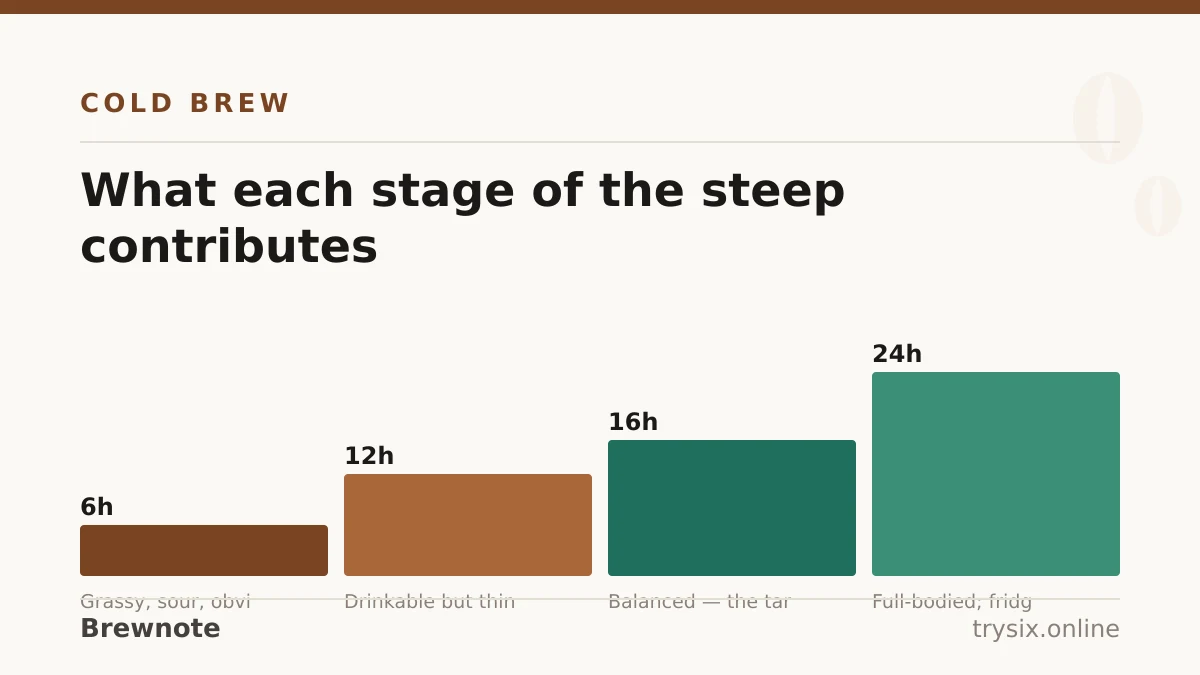
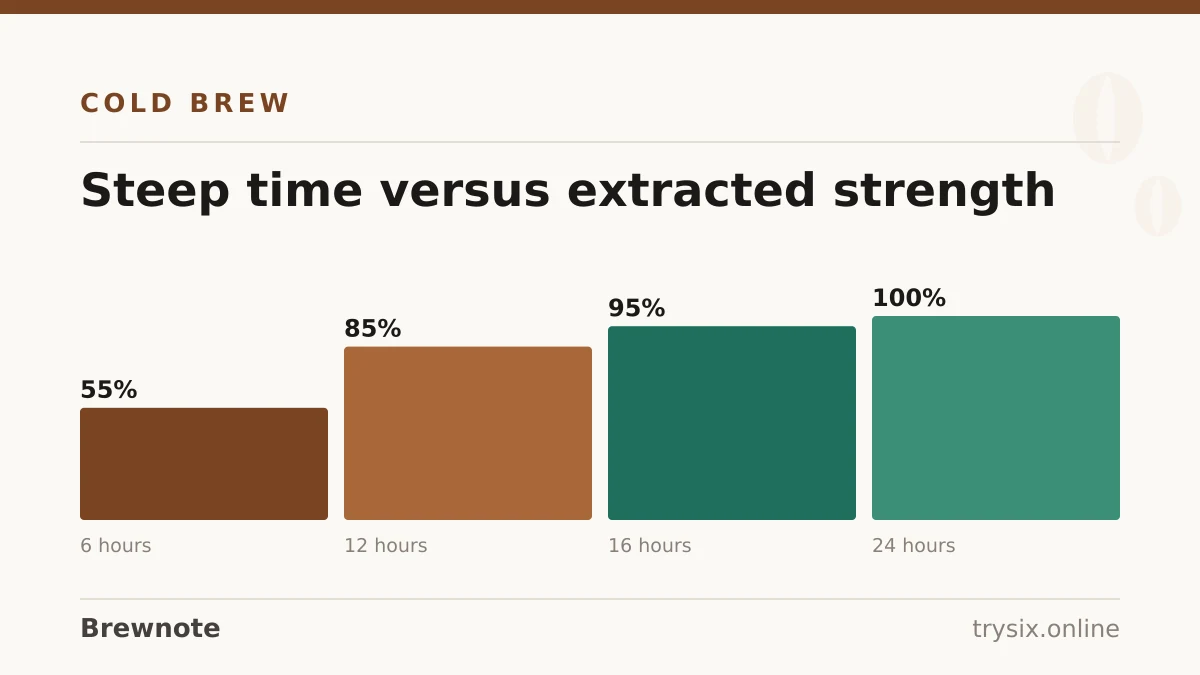
Hot water is a far better solvent than cold water. At 200°F it pulls acids, sugars, oils and hundreds of aromatic compounds out of ground coffee in about four minutes. At room temperature it pulls a narrower selection of them, and needs the better part of a day to do it.
So the two drinks are not variations on a theme. They contain measurably different mixtures, and everything below — the taste, the shelf life, the price — is downstream of that one fact.
Side by side
| Cold brew | Iced coffee | |
|---|---|---|
| Brew temperature | Cold or room temperature | 195–205°F |
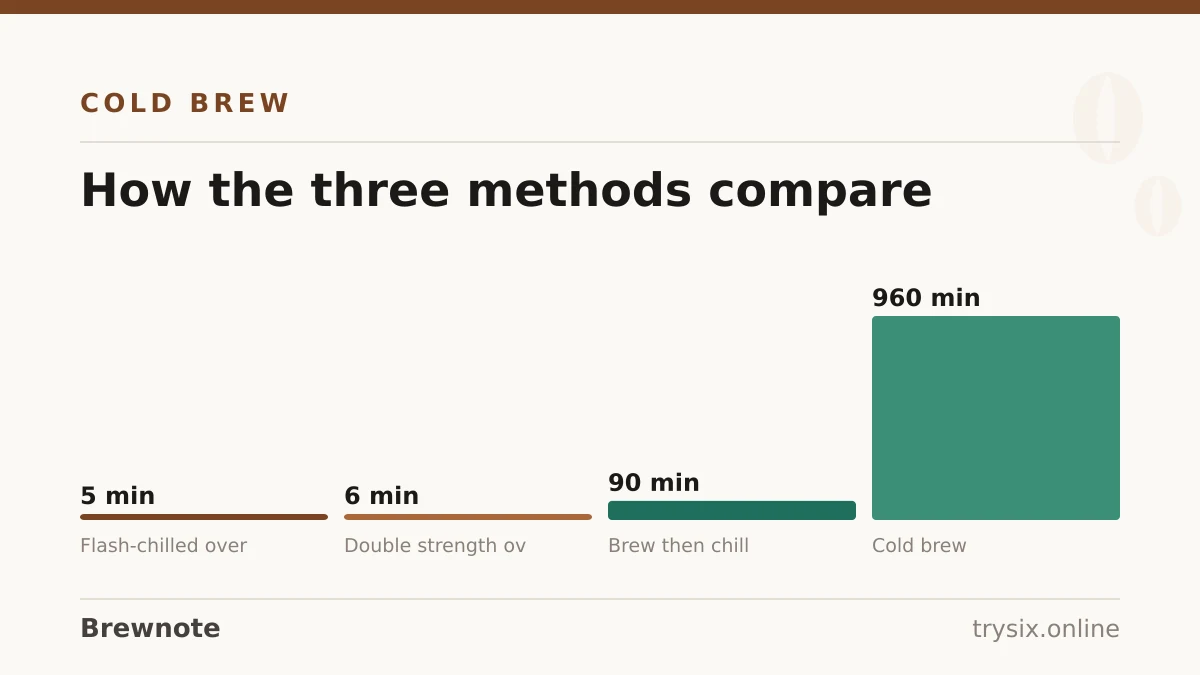
| Brew time | 12–24 hours | 3–5 minutes, then chilled |
| Typical ratio | 1:8 or stronger | 1:16, or 1:8 if brewed for ice |
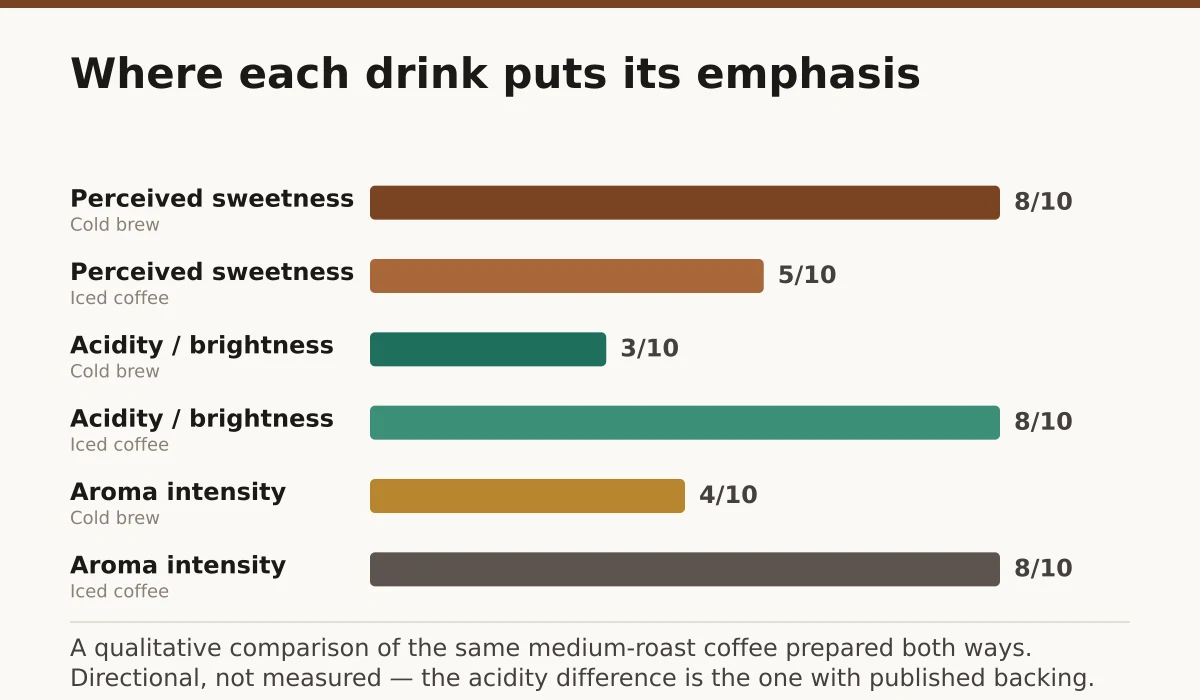
| Acidity | Measurably lower | Full — the brightness is the point |
| Aroma | Muted; fewer volatile compounds | Pronounced |
| Keeps for | About a week refrigerated | Hours — flattens quickly |
| Coffee used per glass | Roughly double | Standard |
| Time from decision to drink | A day | Five minutes |
What each one tastes like
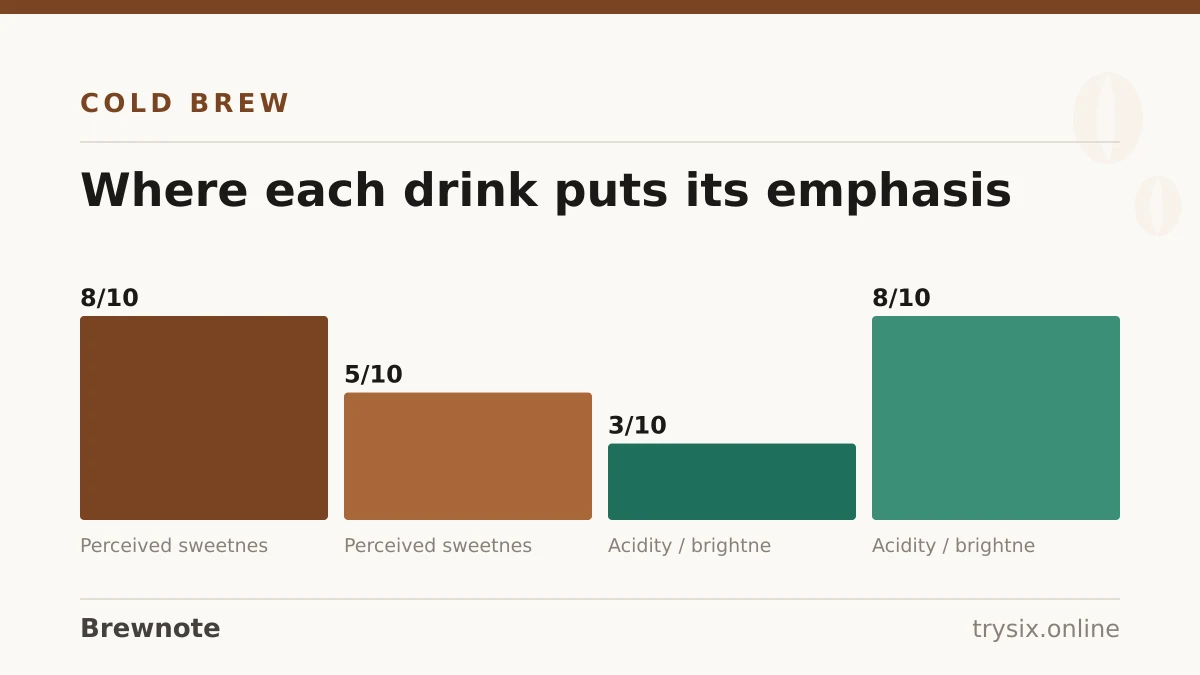
Cold brew reads as smooth, heavy and faintly sweet, with chocolate and nut notes forward. What it lacks is brightness: the citric and malic acids that make a Kenyan or Ethiopian coffee sing are largely left in the grounds. That is a real trade, not just a softening — an expensive floral coffee is substantially wasted on a cold steep.
Iced coffee keeps the full character of the hot brew, including the acidity. Chilled, that acidity reads as crispness. The risk is dilution: pour hot coffee over ice and you get a watery drink unless you compensate, which is what the flash-chill method exists to fix.
The caffeine question
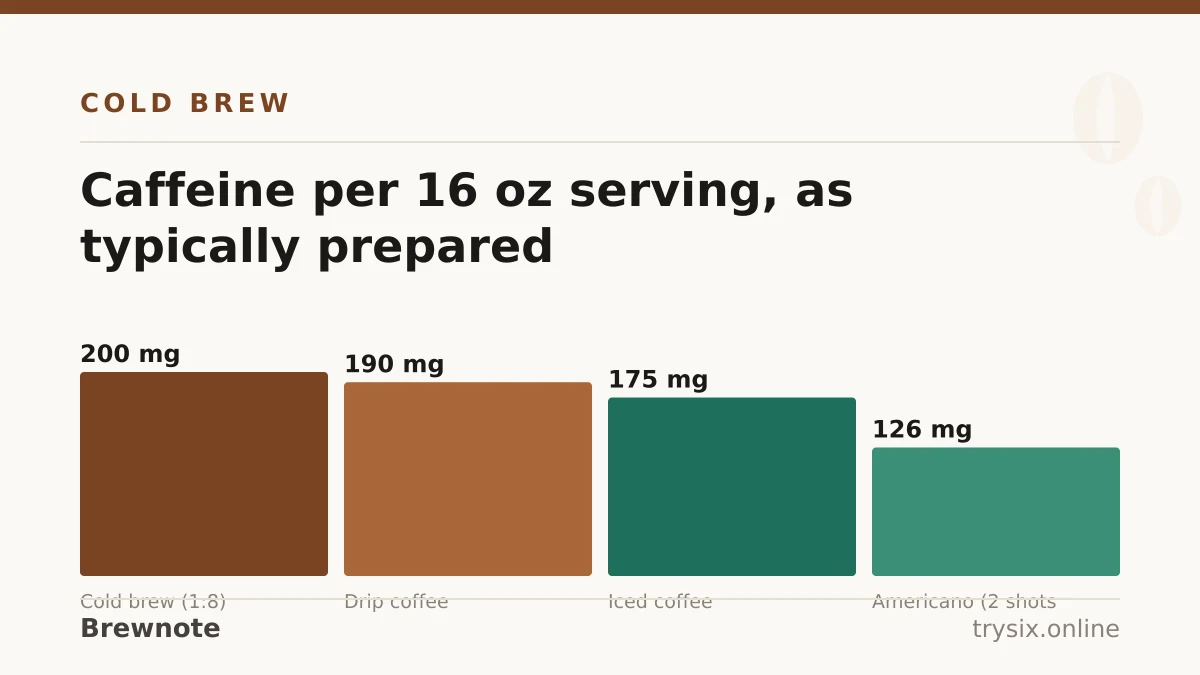
This is where most comparisons go wrong. Cold brew as sold in a café is usually stronger, because it is usually brewed at a stronger ratio — not because cold water extracts more caffeine. It does not; caffeine is more soluble hot.
Brew both at the same ratio and hot brewing extracts caffeine at least as efficiently. Brew cold brew at 1:8 and drip at 1:16, as people actually do, and the cold brew has roughly twice as much per millilitre. The full working is in is cold brew stronger, and the cross-method figures are in what coffee has the most caffeine.
Cost, and why cold brew is more expensive
At 1:8, a litre of cold brew uses 125 g of coffee. At 1:16, a litre of drip uses 62 g. Before any labour or equipment, cold brew costs twice as much in beans per litre — and cafés also carry the cost of a 20-hour lead time and refrigerated storage. The price gap on the menu is not a markup on trendiness; it is mostly arithmetic.
| Drink | Ratio | Coffee per litre | Relative bean cost |
|---|---|---|---|
| Drip coffee | 1:16 | 62 g | 1× |
| Iced coffee, brewed double-strength | 1:8 over ice | 125 g | 2× |
| Cold brew, ready to drink | 1:8 | 125 g | 2× |
| Cold brew concentrate | 1:5 | 200 g | 3.2× per litre of concentrate |
Which to make
- You want a glass in five minutes: iced coffee. Use the flash-chill method in how to make iced coffee.
- You want a batch in the fridge for the week: cold brew. Follow how to make cold brew coffee at 1:8.
- You bought an expensive, fruity, light-roast single origin: iced coffee. The cold steep will flatten exactly the qualities you paid for.
- You find hot coffee harsh or bitter: cold brew is worth trying, though see is cold brew healthy before treating the lower acidity as a health claim.
- You want milk drinks: cold brew concentrate, which is strong enough not to disappear into dairy.