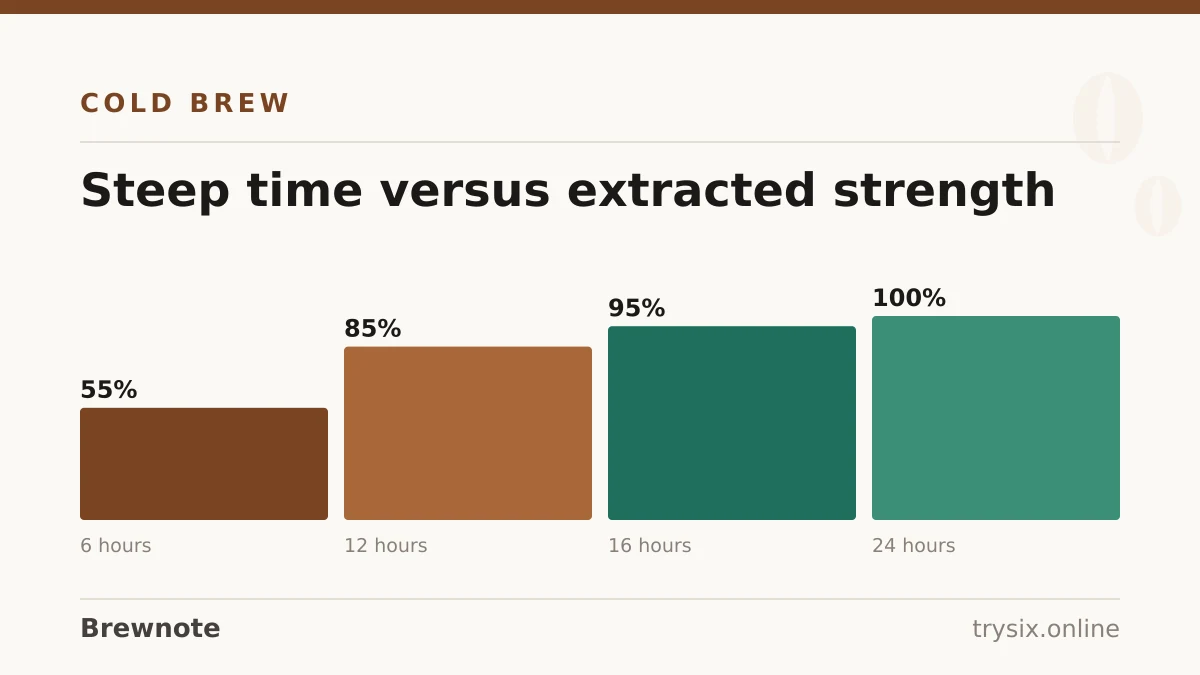
Making cold brew at full strength means brewing a new batch every couple of days and giving up a shelf of your fridge to it. Concentrate solves both problems: one jar lasts two weeks, takes up a fraction of the space, and turns into iced coffee, a hot mug or a milky drink in about ten seconds.
What concentrate actually means
Cold brew concentrate is not a different drink from cold brew. It is cold brew made with far less water, so it has to be watered down before you drink it. That is the whole distinction, and it matters because most disappointment with homemade cold brew comes from making concentrate by accident and then drinking it neat.
Drip coffee is brewed at roughly 1:16 — one gram of coffee for every 16 grams of water. Concentrate runs at 1:5, so about three times as much coffee sits in the same volume of water. That is why a 1:2 dilution lands you back near normal drinking strength.
What you need
- 200 g whole coffee beans, ground coarse — a medium roast is the most forgiving starting point
- 1 litre of cold filtered water (tap water is fine if yours tastes fine)
- A 1.5–2 litre jar or pitcher with a lid
- A fine mesh sieve and either a paper filter, a cloth, or a nut-milk bag for the final strain
- A kitchen scale — this recipe is by weight, and volume measures are where it goes wrong
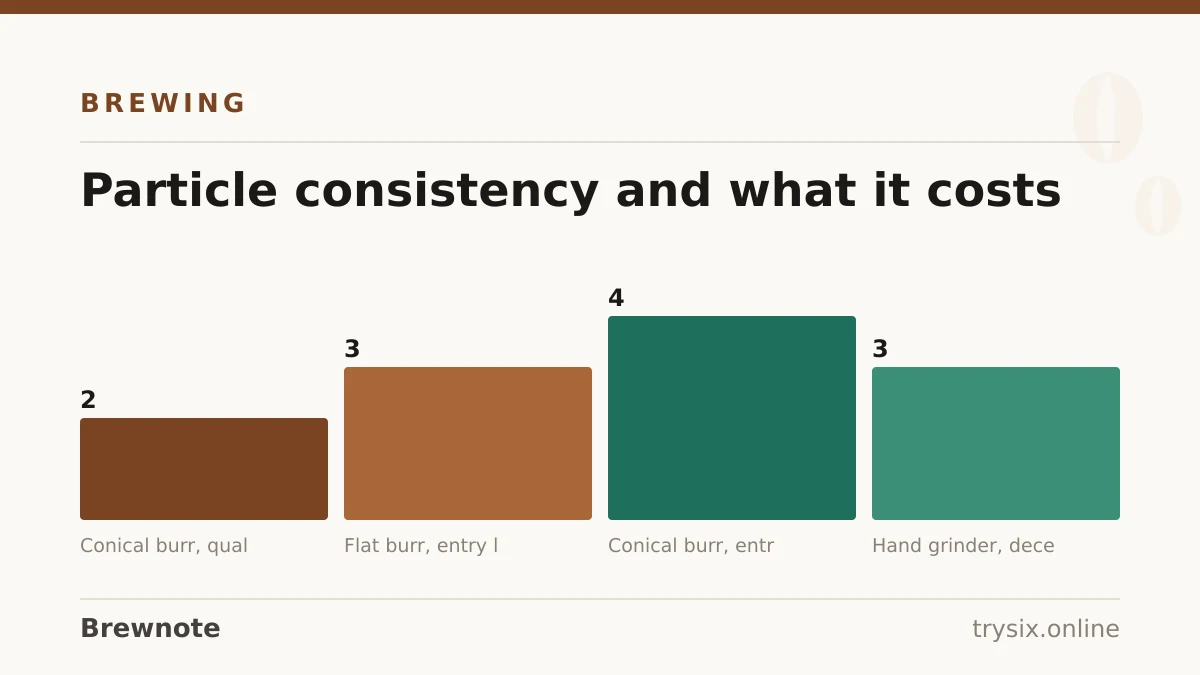
If you have no grinder, ask for a coarse or French press grind wherever you buy the beans. Standard supermarket pre-ground coffee is cut for drip machines and is too fine; it will still work, but shorten the steep to about 12 hours and expect more sediment. Our guide to grinding coffee beans covers the grind sizes in more detail.
The method
Step 1: Weigh and grind
Weigh 200 g of beans and grind them coarse. Coarse means visibly chunky, like raw sugar or coarse sea salt — not powder. Grind size controls how much surface area the water reaches, and over 16 hours a fine grind will over-extract badly.
Step 2: Combine
Tip the grounds into the jar, pour on 1 litre of cold water, and stir until no dry pockets remain. Dry clumps float and never extract, which quietly weakens the batch.
Step 3: Steep
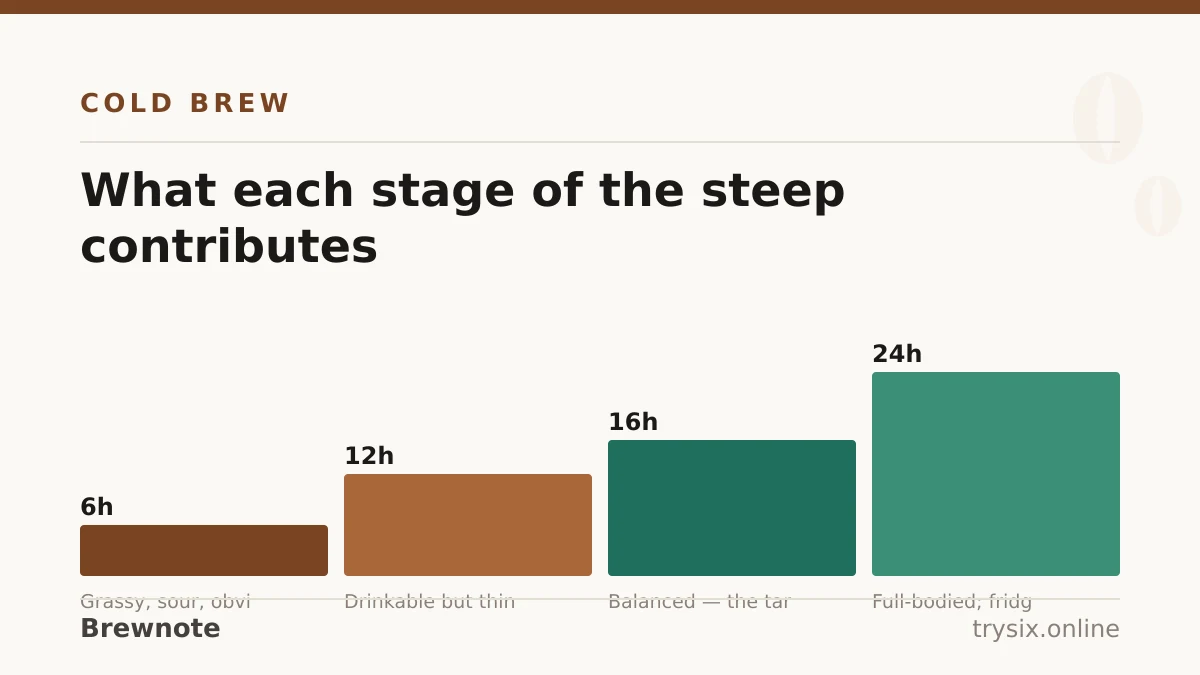
Lid on. Leave 16 hours at room temperature, or 24 hours in the fridge. Room temperature extracts faster because extraction rate rises with temperature; the fridge is slower but slightly cleaner tasting.
Step 4: Strain twice
Pour through a mesh sieve first to catch the bulk of the grounds, then through a paper filter or cloth to catch the fines. Do not press or squeeze the bed — squeezing forces bitter, over-extracted liquid through.
Step 5: Bottle and date it
Pour into a sealed bottle and write the date on it. Undiluted concentrate keeps around two weeks in the fridge; once diluted, drink it within about three days.
How long to steep
Steep time and temperature trade off against each other. A 2017 study in Scientific Reports measured caffeine and chlorogenic acid in cold brew across different times, temperatures and grind sizes and found that extraction rises steeply early on and then flattens — the curve is not linear, and the last few hours contribute far less than the first few.
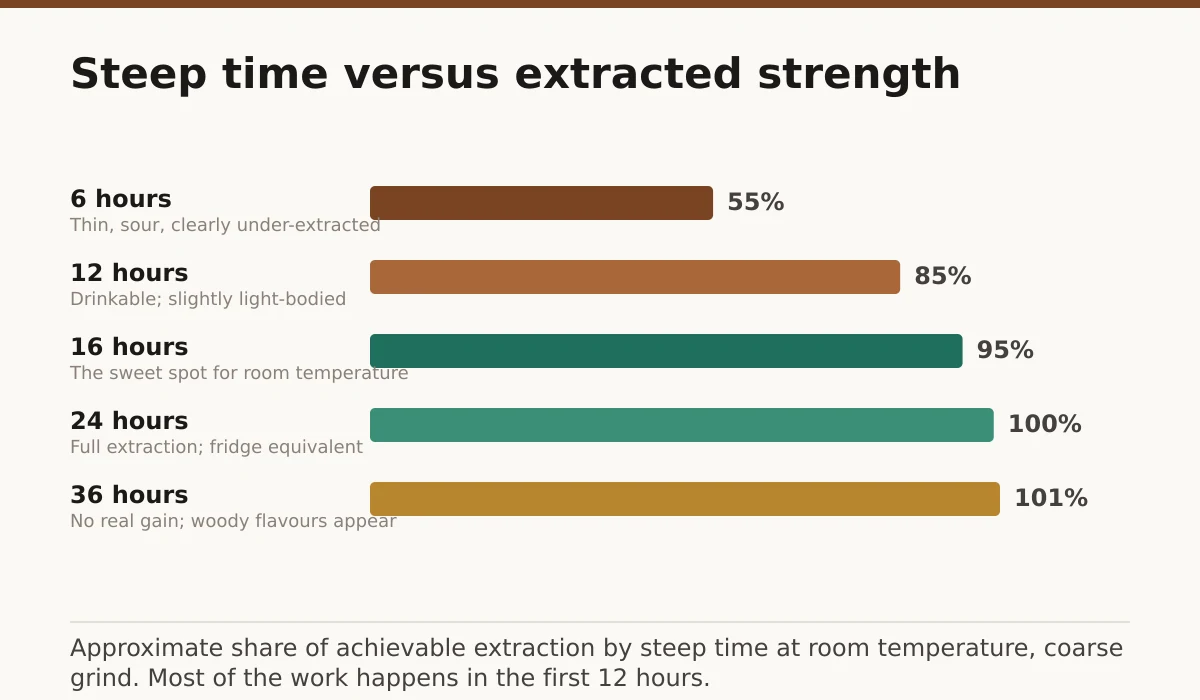
The practical reading: steeping longer than 24 hours is not a way to make cold brew stronger. If you want it stronger, use more coffee. Extending the steep mostly adds the papery, woody notes that come from the grounds themselves.
The dilution table
| You want | Concentrate | Add | Rough strength |
|---|---|---|---|
| A strong iced coffee | 1 part | 1 part water | About 1.5× drip |
| Standard iced coffee | 1 part | 2 parts water | About drip strength |
| Iced latte | 1 part | 1 part milk | Strong, milky |
| Hot cold brew | 1 part | 2 parts hot water | About drip strength |
| An affogato-style pour | 1 part | nothing | Very strong; use 30–60 ml |
Ice counts as dilution. A glass filled with ice adds roughly 30–60 ml of water as it melts, so if you are pouring over a full glass of ice, start one step stronger than the table suggests.
What goes wrong
| Problem | Most likely cause | Fix |
|---|---|---|
| Bitter, harsh, drying | Grind too fine, or squeezed the filter bed | Coarsen the grind; let it drain unaided |
| Sour and thin | Steeped under 12 hours, or ratio too weak | Steep 16 h; check you weighed 200 g |
| Muddy, silty texture | Only strained once | Second strain through paper or cloth |
| Weak even undiluted | Measured by volume, not weight | Weigh it — scoops vary with grind and roast |
| Tastes woody or papery | Steeped beyond 24–36 hours | Cut the steep back to 16–24 h |
Concentrate versus ready-to-drink
If you only ever drink it one way, skip the concentrate and brew at 1:8 instead. That produces cold brew you can pour straight over ice with no dilution step. Concentrate is worth the extra coffee when you want fridge space back, when you want to make hot and iced drinks from the same batch, or when you want it to keep longer.
Concentrate also behaves better in milk. Because it is already three times as strong, it survives being cut with milk without tasting like coffee-flavoured milk — which is exactly what a 1:8 batch does in a latte.
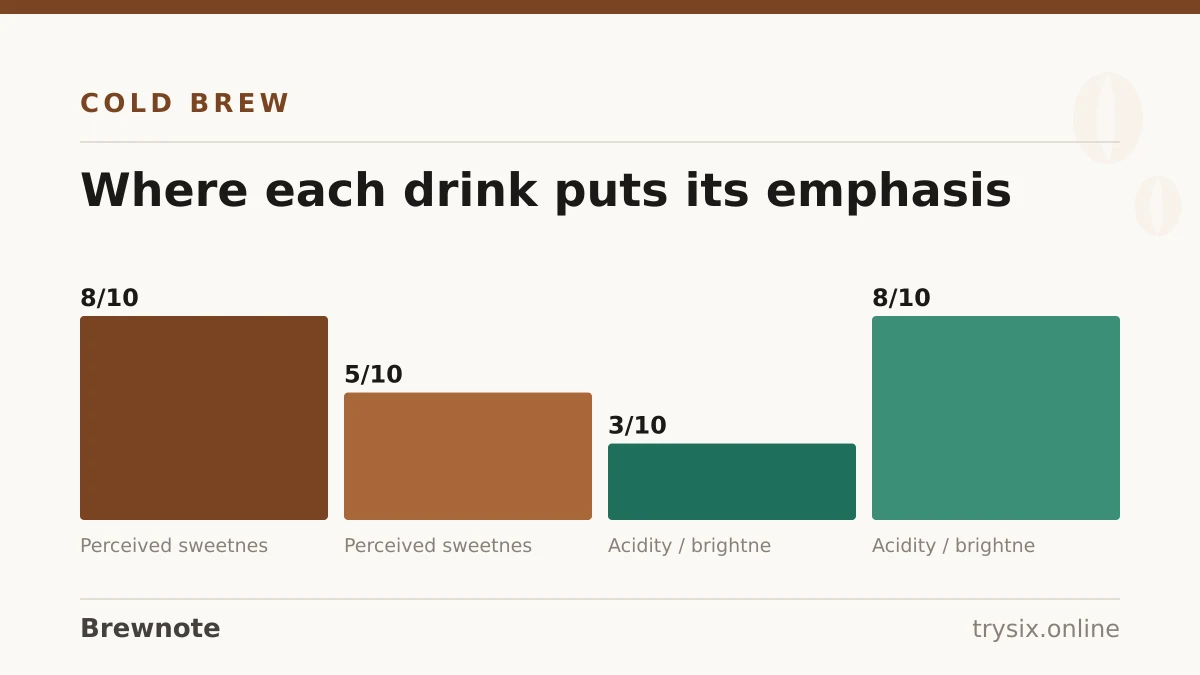
Cold brewing produced coffee with measurably lower titratable acidity than hot brewing at equivalent roast levels.
— Rao & Fuller, Scientific Reports (2018)
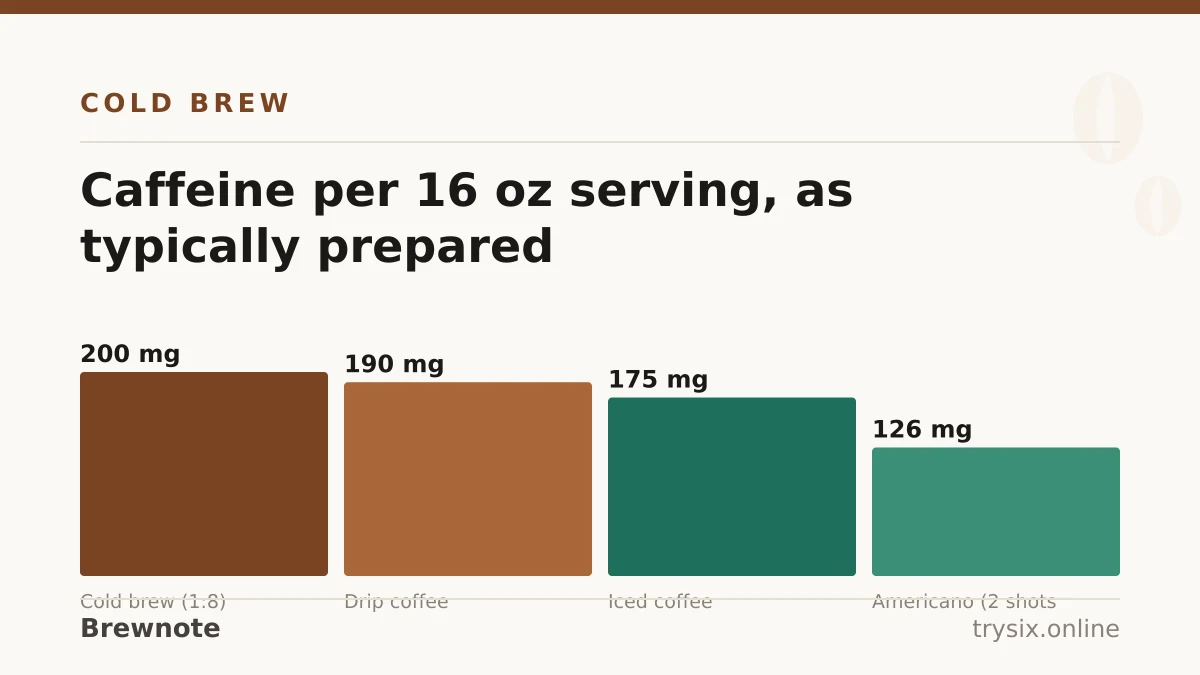
That lower acidity is the reason cold brew reads as smooth and slightly sweet even at high strength. It is also why some people find it easier on the stomach, though as our piece on whether cold brew is healthy explains, the evidence for that specific claim is much weaker than the marketing implies. If you want the caffeine question answered properly, see whether cold brew is stronger.