Beans & Origins
The Best Coffee for Beginners
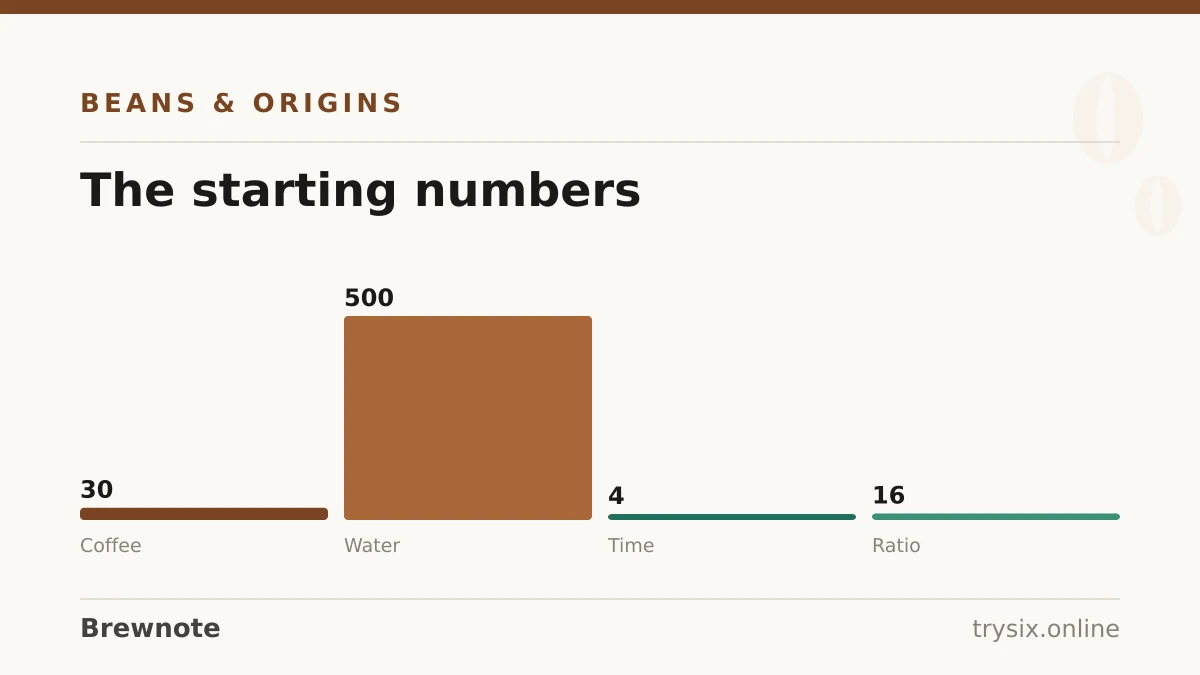
Start with a medium-roast washed Latin American coffee, a burr grinder and a scale. What to buy first, in what order, and what to skip.
Read
Where coffee grows, how the cherry becomes a bean, and what to buy.
Coffee is the seed of a fruit. A coffee cherry contains two flat-sided seeds, and everything between the tree and your grinder — picking, pulping, drying, hulling, sorting, shipping, roasting — is processing that seed without spoiling it.
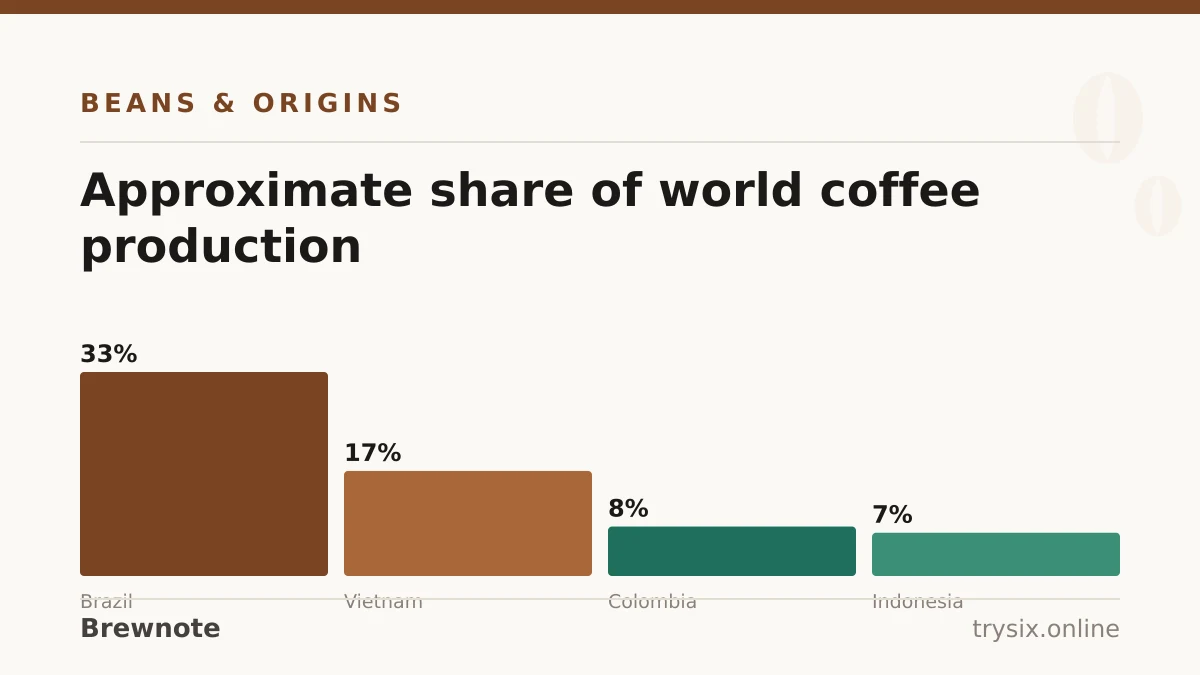
Nearly all of it happens in the Bean Belt, the band between roughly 25°N and 30°S. Brazil alone produces around a third of the world's coffee. These guides cover the geography, the processing methods that shape flavour, and how to buy beans that were roasted recently enough to taste like anything.
Beans & Origins
Start with a medium-roast washed Latin American coffee, a burr grinder and a scale. What to buy first, in what order, and what to skip.
Read
Beans & Origins
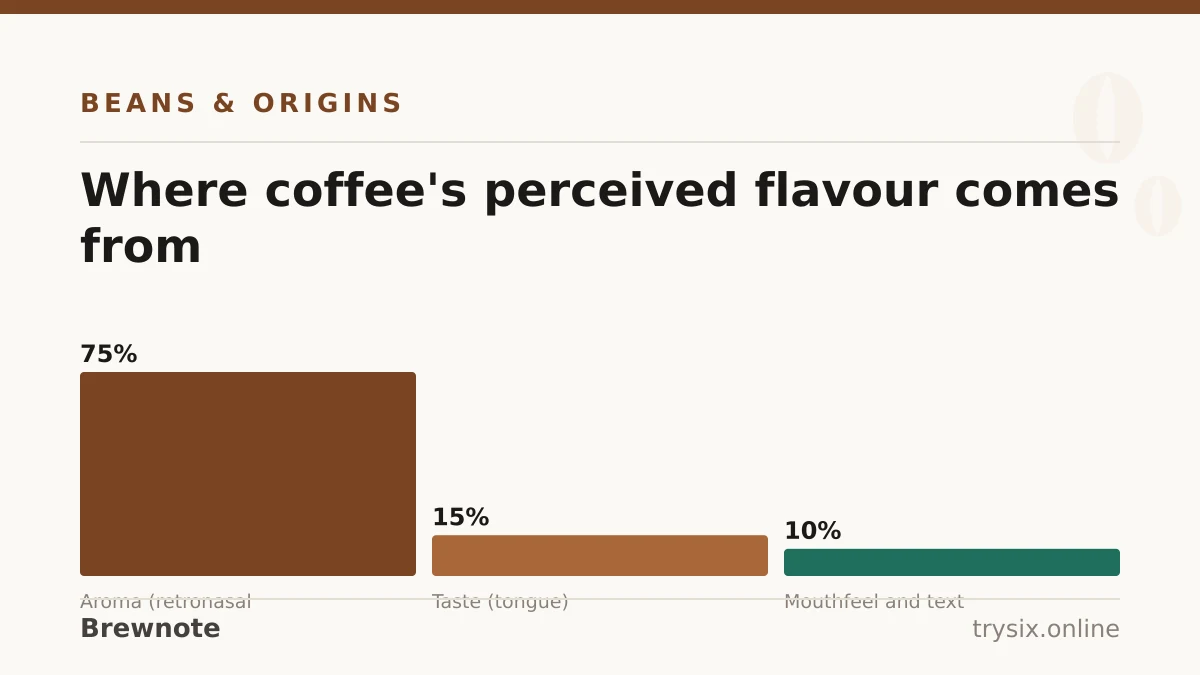
Bitter, acidic, sweet, and a body you feel rather than taste. How to describe what is in your cup, and why origin notes are not added flavourings.
Read
Beans & Origins
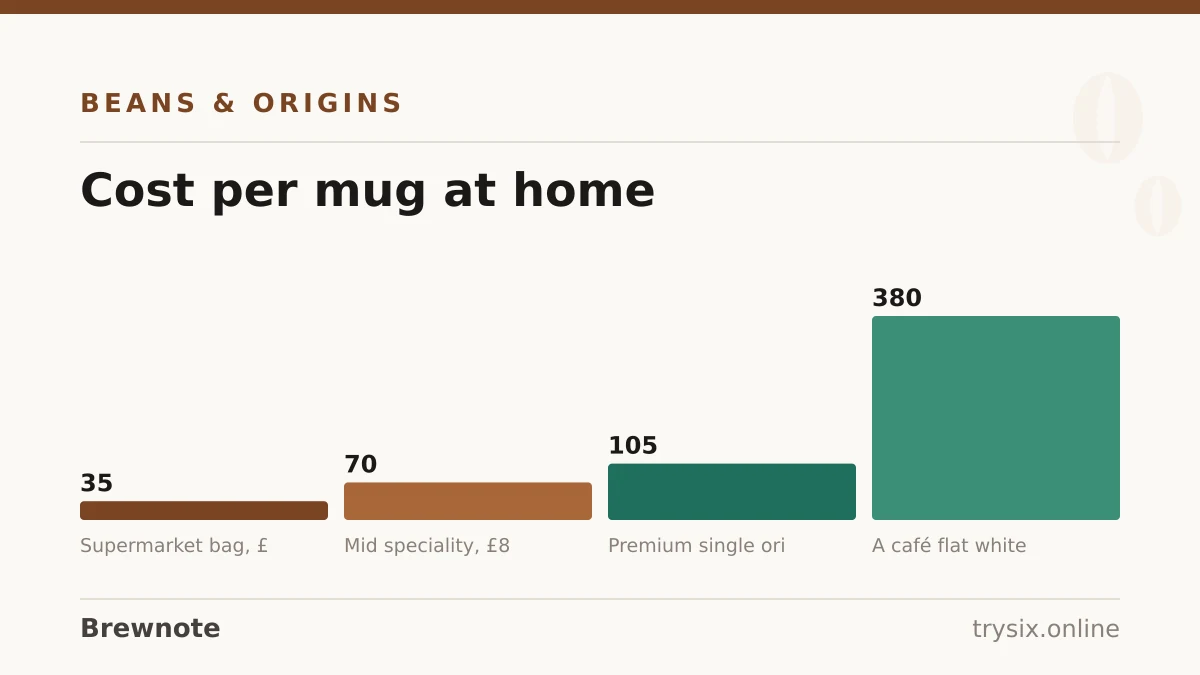
Roast date beats brand, price and origin. Where to find beans roasted within weeks, and the cost-per-cup maths that makes it affordable.
Read
Beans & Origins
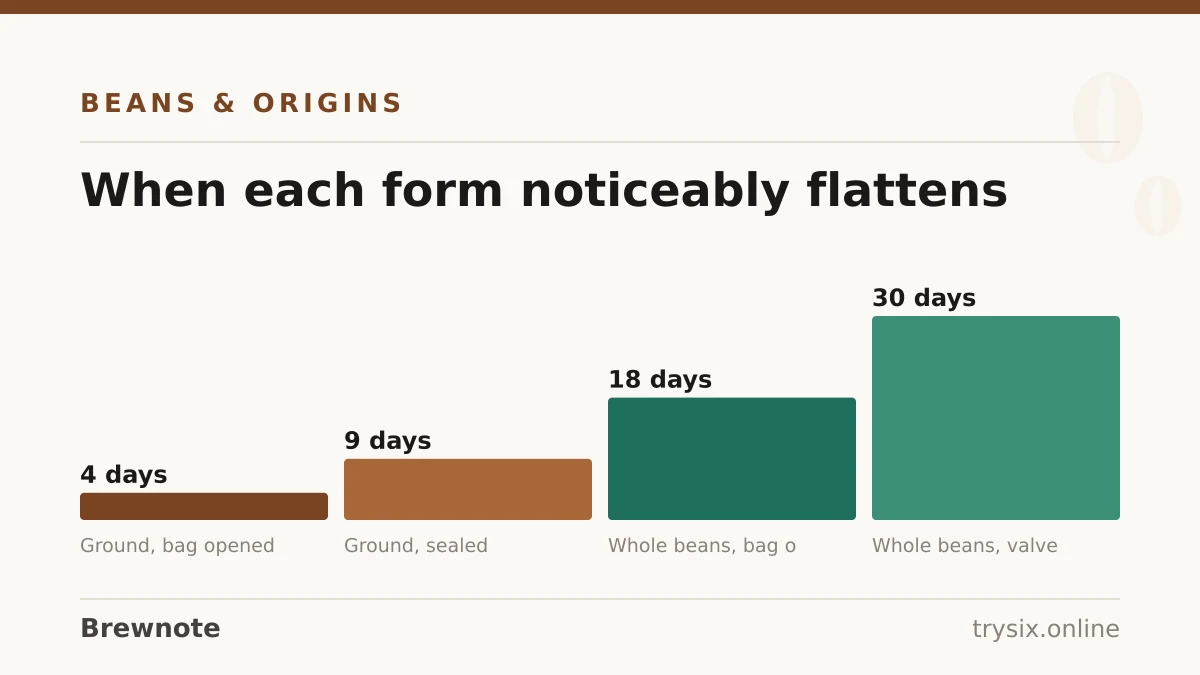
Oxygen is the enemy, not time. An airtight opaque container at room temperature — and an honest answer on the freezer question.
Read
Beans & Origins
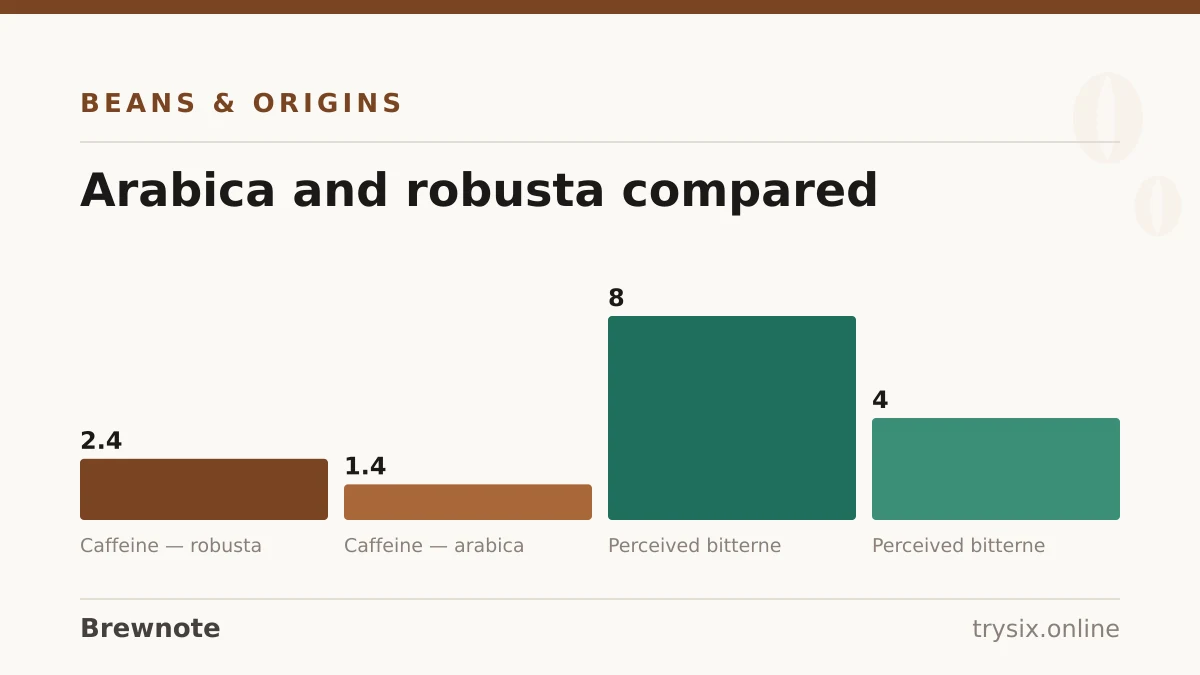
Arabica, robusta, liberica and excelsa compared — plus what single origin, blend and breakfast blend actually mean on a bag.
Read
Beans & Origins
The Bean Belt between 25°N and 30°S, the top producing countries, coffee's Ethiopian origin — and whether any is grown in the United States.
Read
Beans & Origins
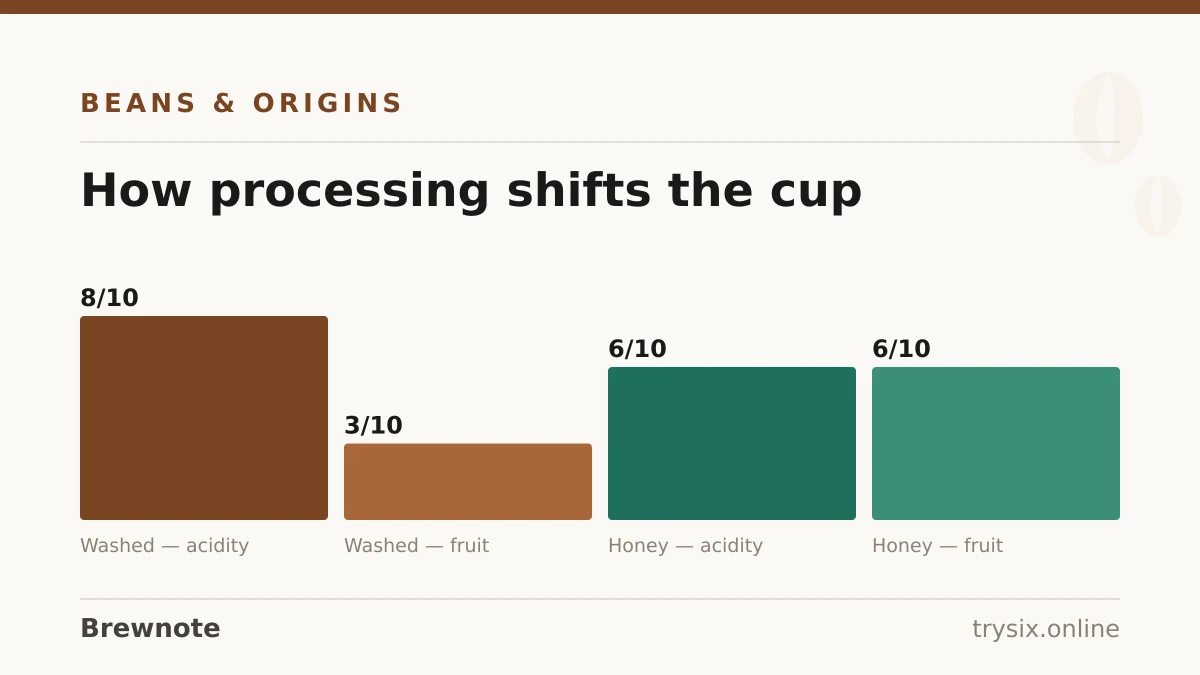
Picking, pulping, fermenting, drying, hulling, grading, shipping and roasting — and how washed, natural and honey processing change the flavour.
Read
Beans & Origins
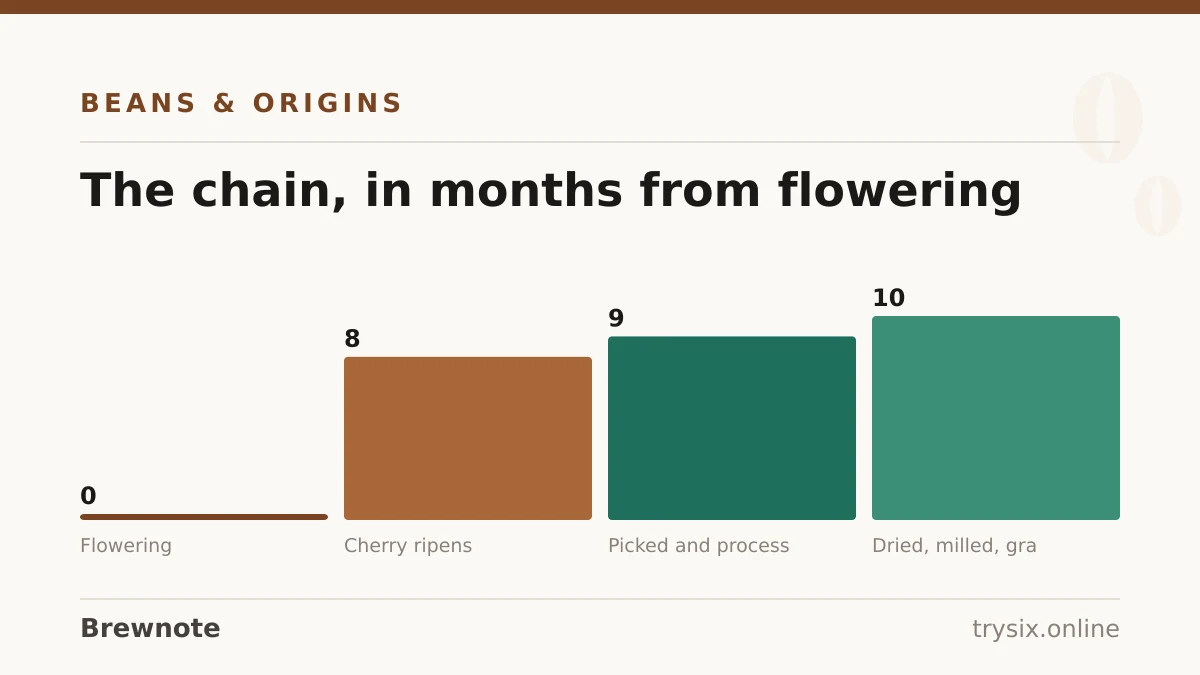
Coffee is the roasted seed of a fruit, brewed in water. The whole chain from cherry to cup, and a map of everything else on this site.
Read
Arabica is the more delicate species, grown at altitude, with more acidity and aroma and roughly half the caffeine. Robusta is hardier, cheaper, higher in caffeine, and tastes more rubbery and bitter — which is why it turns up in instant coffee and in Italian espresso blends for crema.
Yes, in Hawaii and Puerto Rico, and on a small commercial scale in California. Volumes are tiny relative to world production, and the labour cost is why Kona coffee is priced the way it is.
That the coffee comes from one identifiable place — one country at the loosest, one farm or lot at the strictest. It is a traceability claim, not a quality guarantee, though roasters usually reserve it for coffees worth tracing.
Brewing
Ratios, grind, water and time — the four dials that decide how a cup tastes.
Espresso
What actually defines espresso, what a shot contains, and what you can do without a machine.
Cold Brew & Iced
Steeping cold for 12–24 hours makes a different drink from pouring hot coffee over ice.
Roast Levels
Light, medium and dark describe how far a bean went in the roaster — not its strength.
Caffeine & Decaf
How much caffeine is actually in a cup, a shot, a pot — and in decaf.