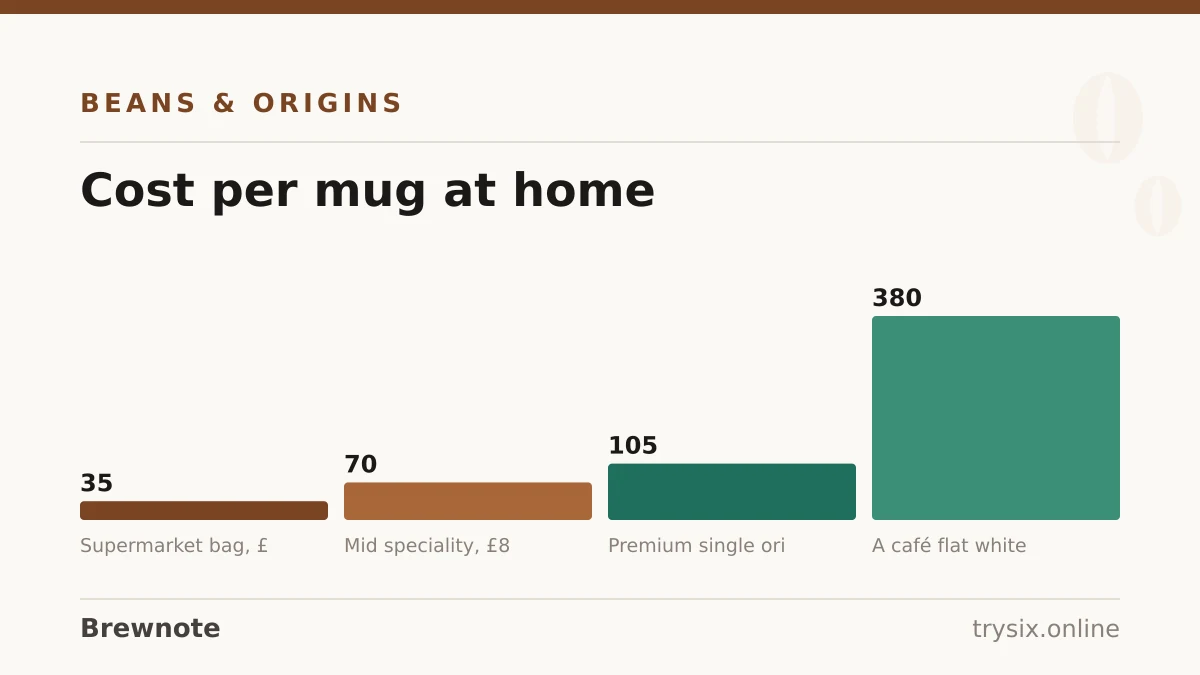
The single biggest improvement most people can make to their coffee costs about three pounds more per bag and takes no skill at all: buy beans that were roasted recently. The hard part is that most packaging is designed to stop you noticing when they were not.
The only label that matters much
Coffee bags carry two kinds of date and they are not equivalent. A best-before date, often 12 to 18 months out, is a shelf-life estimate that says nothing about when the coffee was roasted — it could have been roasted last week or ten months ago.
A roast date says exactly when. Coffee is at its best from about three days to four or five weeks after roasting, so a roast date lets you judge what you are buying. Roasters who print one are telling you they expect their coffee to be drunk fresh.
| Look for | Tells you | Priority |
|---|---|---|
| Roast date | Actual freshness | First |
| One-way valve | Packaged for fresh coffee | Second |
| Roast level | How it will taste | Third |
| Origin or region | Flavour character | Fourth |
| Processing method | Washed, natural or honey | Fifth |
| Best-before only | Very little | A warning sign |
Where to buy
| Source | Freshness | Price | Choice |
|---|---|---|---|
| Local roaster | Excellent — often days old | Medium-high | Limited but curated |
| Online direct from roaster | Excellent — roasted to order | Medium-high | Very wide |
| Subscription service | Excellent — regular small bags | Medium-high | Curated for you |
| Speciality grocer | Good — some print roast dates | Medium | Moderate |
| Supermarket | Poor to fair — usually no roast date | Low | Wide but generic |
| Café selling retail bags | Good — usually their own roast | High | Narrow |
The most underrated option is a subscription from a roaster who ships on a schedule. It solves the two problems at once: the coffee is roasted to order, and the bag size is matched to how fast you drink it, so nothing goes stale waiting.
What good coffee actually costs
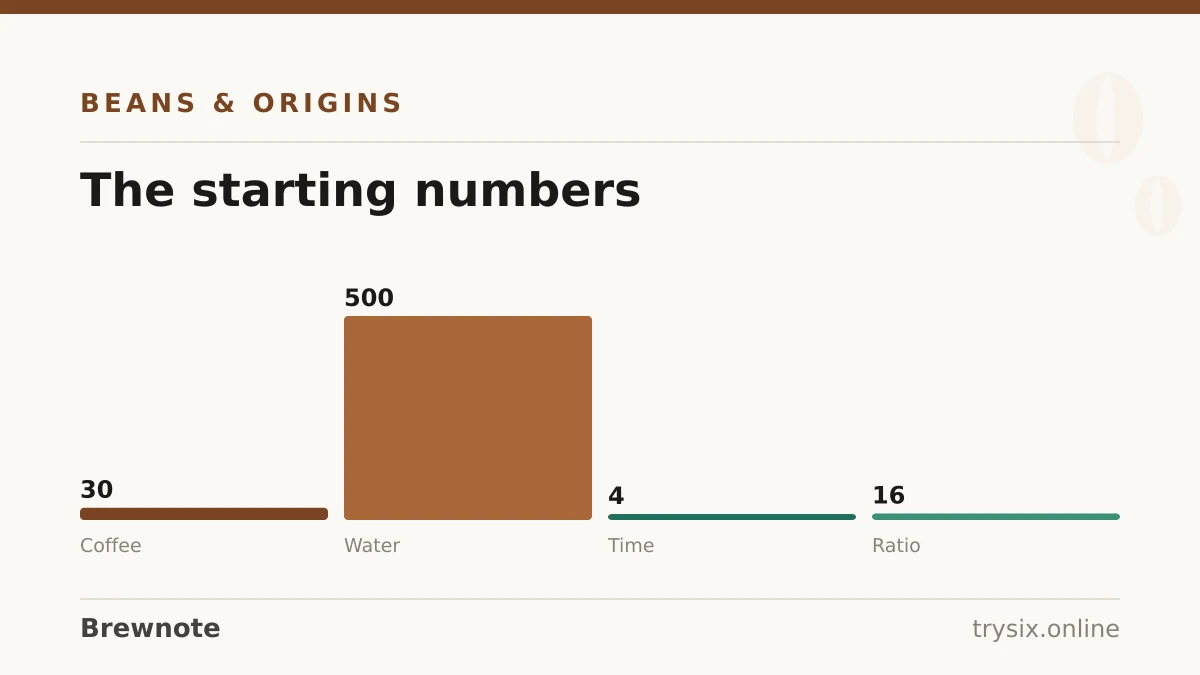
The price gap between supermarket and speciality coffee looks large per bag and is small per cup. At a 1:16 ratio, a 250 g bag makes about 16 mugs.
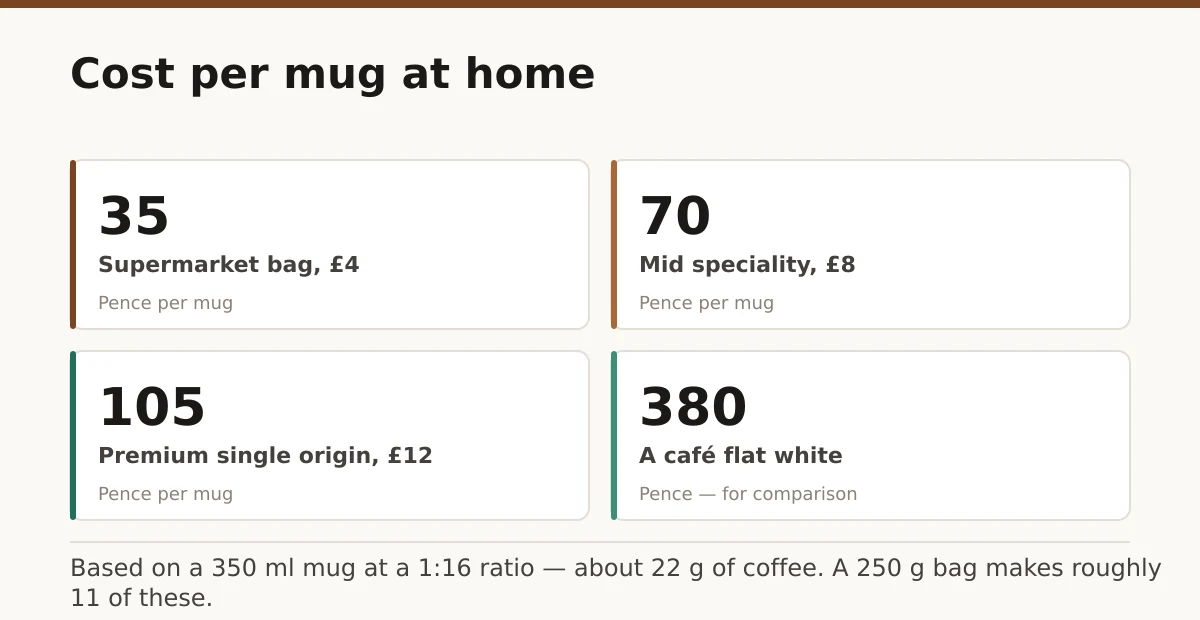
Even the most expensive bag on that list costs less than a third of a café drink. If you drink coffee at home daily, the upgrade from commodity to speciality coffee is one of the cheapest quality improvements available — considerably cheaper than any equipment purchase, and it makes more difference than most of them.
How much to buy
Matching quantity to consumption
Step 1: Work out your weekly use
One mug a day at 22 g is about 150 g a week. Two mugs a day is 300 g. A two-cup household drinking two each is over a kilo a month.
Step 2: Buy three to four weeks' worth
That is the window in which coffee is at its best. For one mug a day, that is a 500 g bag or two 250 g bags — and two smaller bags keeps the second one sealed longer.
Step 3: Resist the kilo bag on offer
Unless you genuinely drink a kilo a month or intend to freeze most of it in portions, the saving is spent on coffee that has gone flat. How to store coffee beans covers freezing properly.
Step 4: Buy whole beans
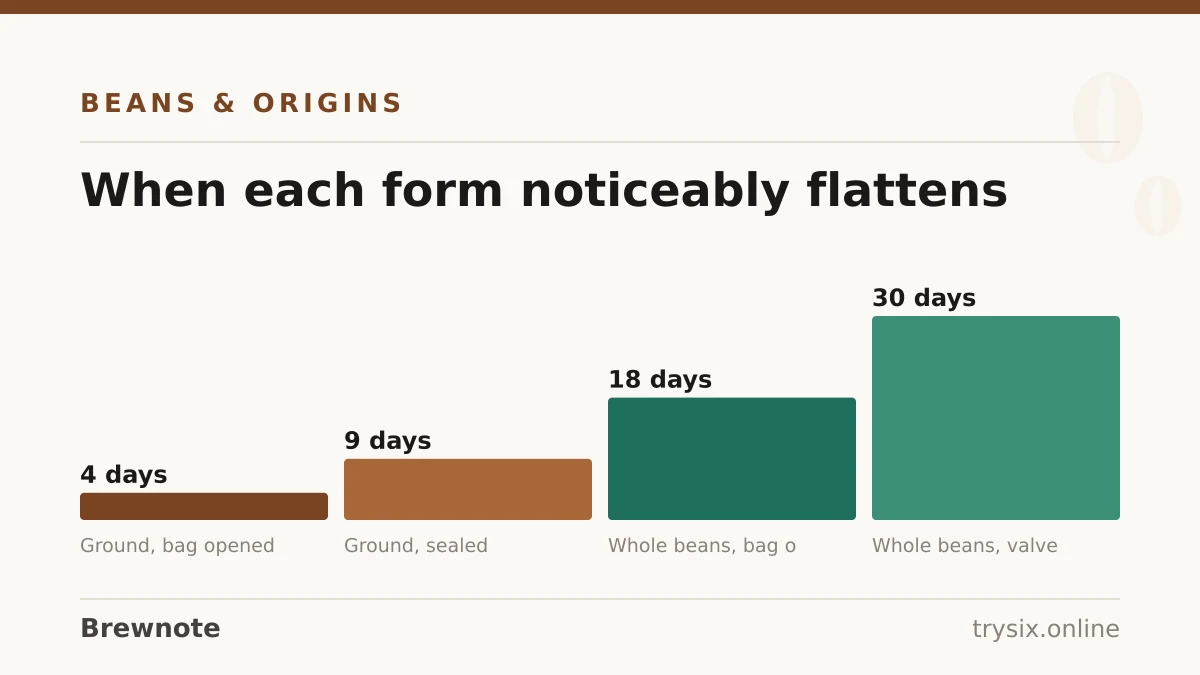
Ground coffee flattens within about a week. If you have no grinder, buy smaller bags more often, or have the shop grind it for the specific brewer you own.
Where to have beans ground
Almost every roaster will grind a bag at the counter, and many supermarkets with a bean section have a grinder beside it. Name the brewer rather than the grind — 'a filter machine', 'a cafetière', 'a Bialetti moka pot' — because fine and coarse mean different things to different people.
Be aware of what it costs you: ground coffee noticeably flattens within about a week. If you grind at home, how to grind coffee beans covers what to buy and the sizes for each method.
What to buy first
If you are starting out, a medium-roast washed coffee from Colombia, Guatemala or Brazil is the most forgiving thing on the shelf: balanced, tolerant of imprecise brewing, and easy to compare against. The best coffee for beginners has a fuller starting path.
Once you know what you like, origin and processing become worth exploring — types of coffee beans covers single origin against blends, and where do coffee beans come from covers what each growing region tends to taste like.