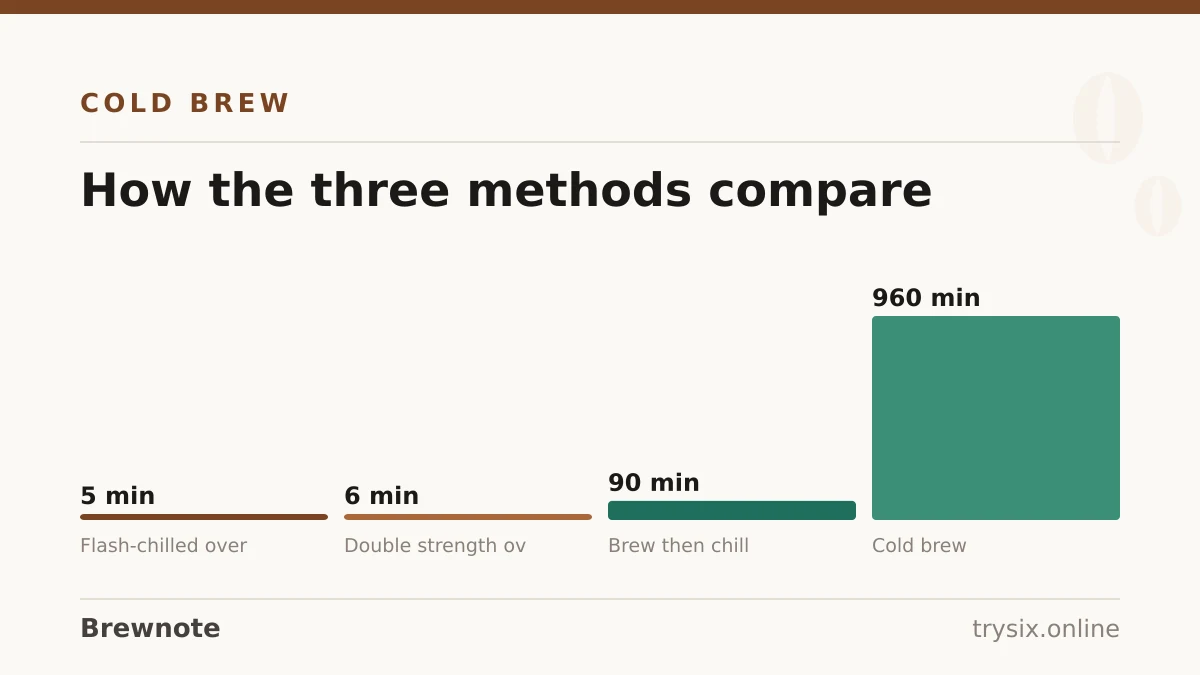
The obvious approach — brew coffee, let it cool, pour it over ice — produces something flat and watery, and almost everyone tries it first. The fix takes no extra time and no extra equipment. It just requires deciding, before you brew, that the ice is part of the recipe.
Why most homemade iced coffee is watery
A full glass of ice contributes 30 to 60 ml of water as it melts — in a 300 ml drink, that is a 10 to 20 percent dilution. Pour a normal 1:16 brew over it and you end up drinking something nearer 1:19, which tastes thin and slightly sour because it is under-concentrated rather than under-extracted.
The fix is not to use less ice. Less ice means a warmer drink that dilutes anyway, more slowly. The fix is to brew stronger and let the ice finish the job.
Method one: flash-chilled (the best one)
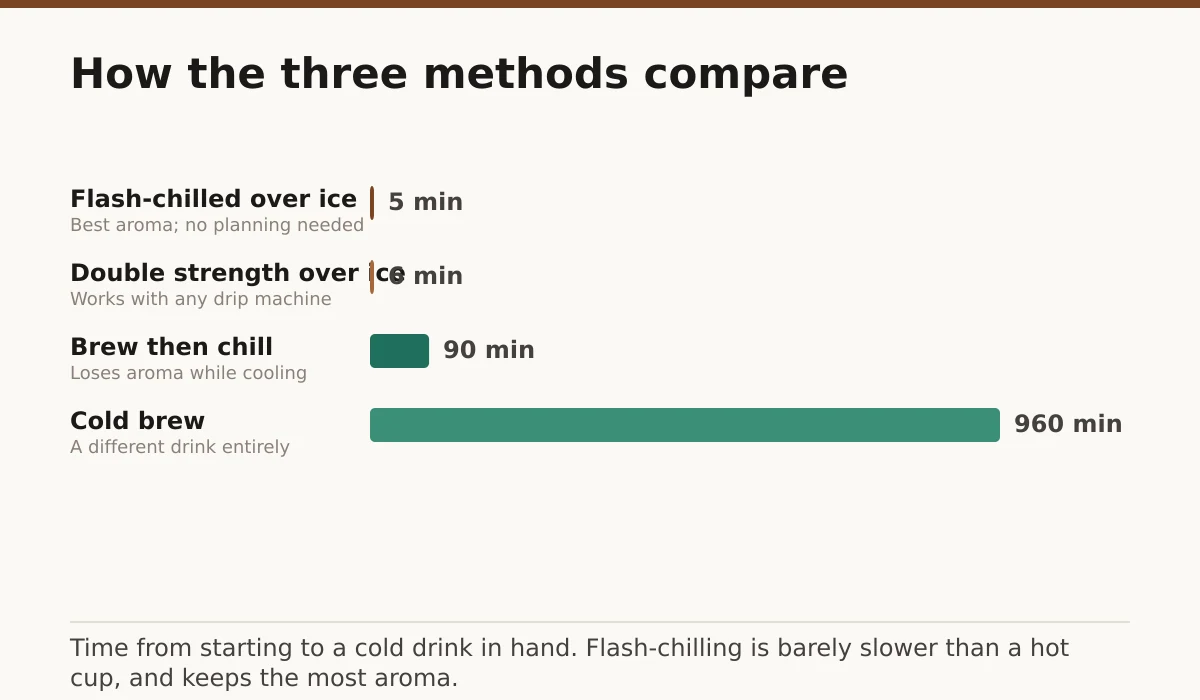
Also called Japanese-style iced coffee. You brew hot, but part of the brewing water is replaced by ice sitting in the vessel, so the coffee is chilled the moment it is extracted. That locks in the aromatic compounds that evaporate off a hot cup sitting on the counter.
Flash-chilled iced coffee, one large glass
Step 1: Weigh the ice
Put 150 g of ice into the carafe or jug you will brew into. This is part of your water, not an addition to it — that is the whole trick.
Step 2: Set up the brew
22 g of coffee, ground medium — slightly finer than for a hot pour-over, because the contact time will be shorter. Total water 350 g, of which 150 g is the ice already in the jug.
Step 3: Brew with 200 g of hot water
Water at 200°F. Bloom with 50 g for 30 seconds, then pour the remaining 150 g in stages. The coffee lands on the ice and drops to serving temperature immediately.
Step 4: Swirl and serve
The ice should be mostly melted. Swirl to combine — the first liquid through is stronger than the last — and pour over fresh ice in a glass.
Method two: double-strength, over ice
The simplest version, and the one that works with an ordinary drip machine. Use twice the coffee for the water your machine holds, brew normally, and pour the hot result straight over a glass packed with ice.
| Glass size | Coffee | Brew water | Ice in the glass |
|---|---|---|---|
| 12 oz / 350 ml | 22 g | 180 ml | A full glass — about 150 g |
| 16 oz / 475 ml | 30 g | 240 ml | A full glass — about 200 g |
| 1 litre batch | 125 g | 1 litre | Pour over ice per glass |
That 1:8 ratio will look wrong if you are used to weighing for hot coffee. It is correct for this purpose: you are brewing a concentrate that the ice will dilute. If you drink it hot by mistake it will taste overwhelming, which is the point.
Method three: chill it first
Brew a normal 1:16 pot, cool it fast, and refrigerate. This is the method for making a jug ahead of time when you do not want to commit a day to cold brew.
- Brew as normal, at 1:16.
- Cool it quickly — a shallow container, or the jug standing in a sink of cold water. Slow cooling on the counter is where the flavour goes.
- Refrigerate covered, and drink within about 24 hours. It flattens noticeably after that.
- Serve over ice, accepting that the ice will dilute it. If that bothers you, freeze some of the coffee into ice cubes and use those instead.
Coffee ice cubes, and other dilution fixes
- Freeze leftover coffee in an ice tray. Coffee cubes dilute an iced coffee with more coffee, which is the only genuinely zero-loss solution.
- Chill the glass. A cold glass melts less ice in the first minute, which is when most of the melt happens.
- Use bigger cubes. Surface area drives melting, so one large cube melts far more slowly than six small ones at the same total mass.
- Do not add cold water to hot coffee to cool it. That is dilution without the compensating chill of ice.
Milk, sweetener and the order you add them
Sugar does not dissolve in cold liquid. If you sweeten iced coffee, either stir the sugar into the hot coffee before it hits the ice, or use a simple syrup — equal weights of sugar and water, heated until clear, kept in the fridge. Granulated sugar tipped into a cold glass mostly ends up at the bottom.
Milk goes in last, after the ice, so you can see the strength. Iced coffee at 1:8 stands up to a splash of milk; at 1:16 it disappears into it. For milk-forward drinks, cold brew concentrate is the better base.
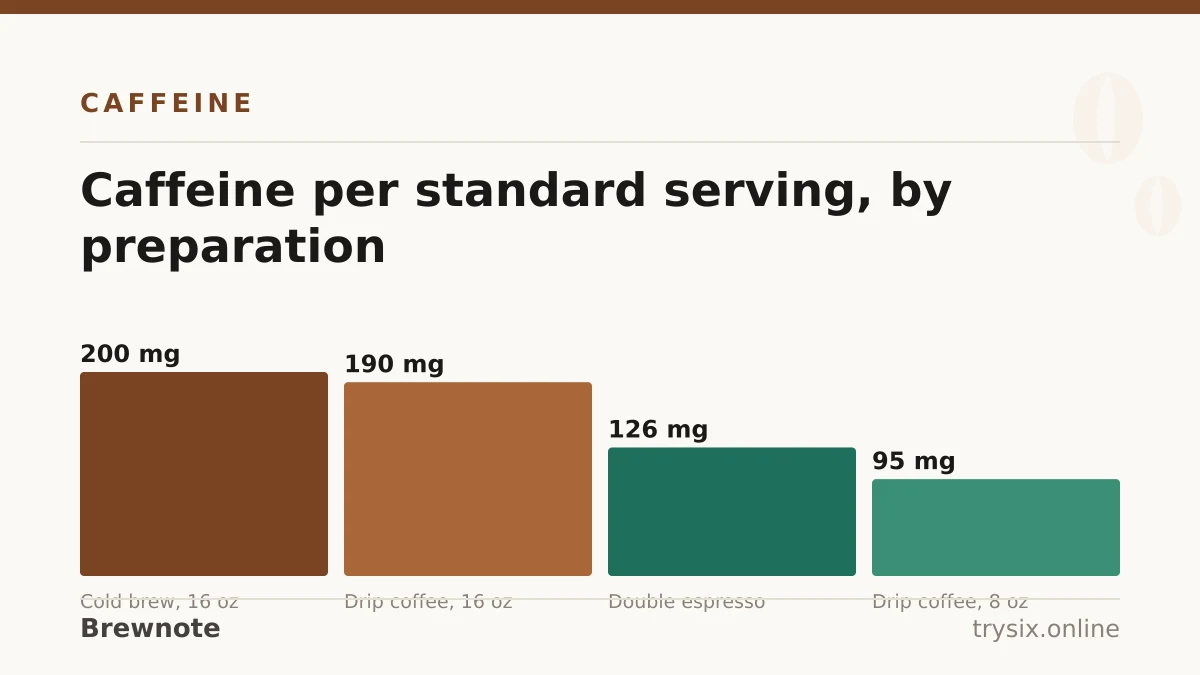
One thing iced coffee is not is a milder drink. Brewed at double strength, a 16 oz glass carries roughly the caffeine of a 16 oz hot coffee — see how much caffeine is in a cup of coffee — and it is far easier to drink quickly. If you are choosing between this and a cold steep, cold brew vs iced coffee sets out what each method does to the flavour.