Café au lait gets treated as a fancier way of saying latte, and it is not one. It is an older, simpler drink that needs no machine at all — just a pan, some milk, and coffee brewed a little stronger than you would normally drink it.
The drink
Café au lait is French for 'coffee with milk', and the recipe is as plain as the name. Strong brewed coffee, an equal volume of hot milk, poured together into a wide bowl or cup. It is a breakfast drink, traditionally taken with something to dip into it.
What matters is what it is not. It is not made with espresso, it has no foam layer, and it does not require any equipment beyond a way to brew coffee and a pan to heat milk. It predates espresso machines by centuries.
How it differs from the drinks it gets confused with
| Drink | Coffee base | Coffee : milk | Foam |
|---|---|---|---|
| Café au lait | Brewed, strong | 1:1 | None |
| Latte | Espresso, 1–2 shots | About 1:6 | Thin cap |
| Cappuccino | Espresso, 1–2 shots | About 1:2 | Thick, dry |
| Flat white | Espresso, 2 shots | About 1:2 | Thin microfoam |
| Café con leche | Espresso or very strong brew | 1:1 | None |
| Milk coffee (generic) | Brewed | Varies widely | None |
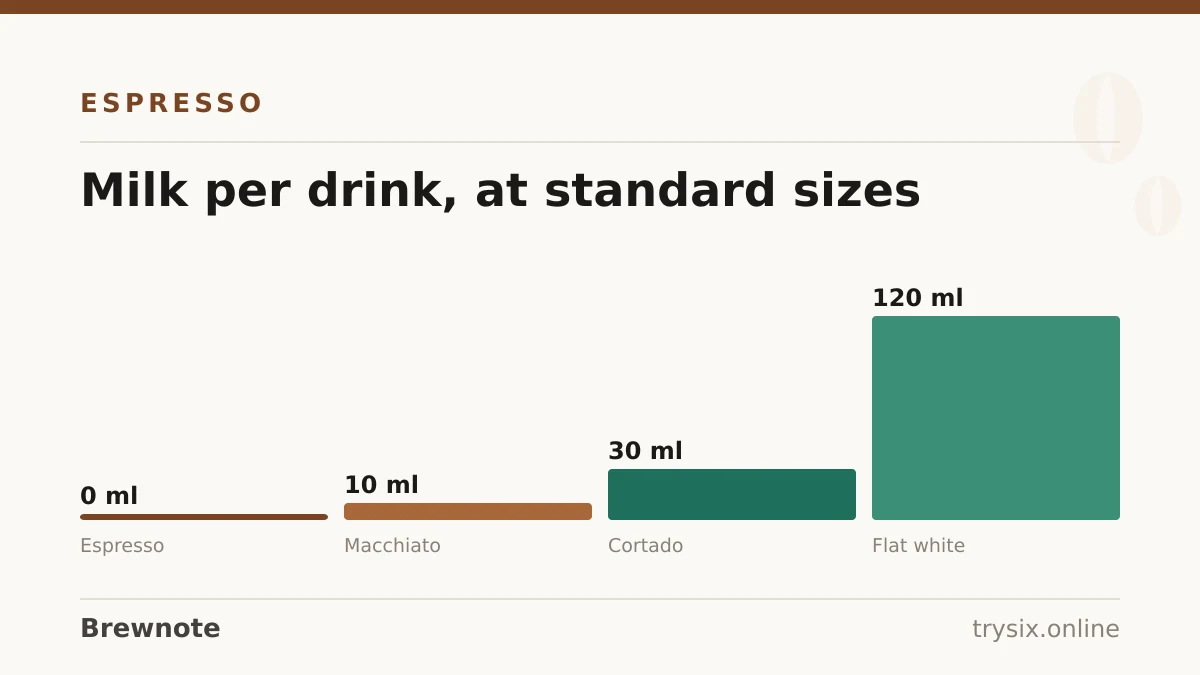
The two comparisons worth holding on to: a latte is much milkier and built on espresso; a café con leche is essentially the Spanish equivalent of café au lait, though it is more often made with espresso in modern cafés. The full espresso menu is in types of coffee drinks.
Making it
Café au lait for one
Step 1: Brew strong coffee
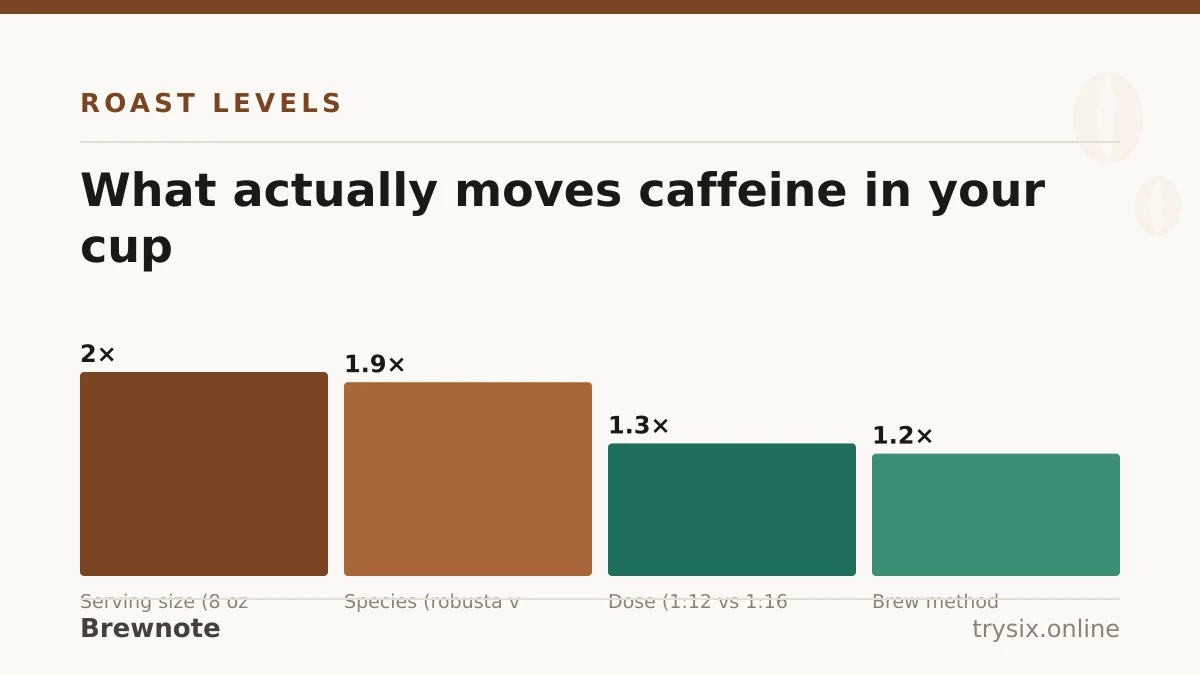
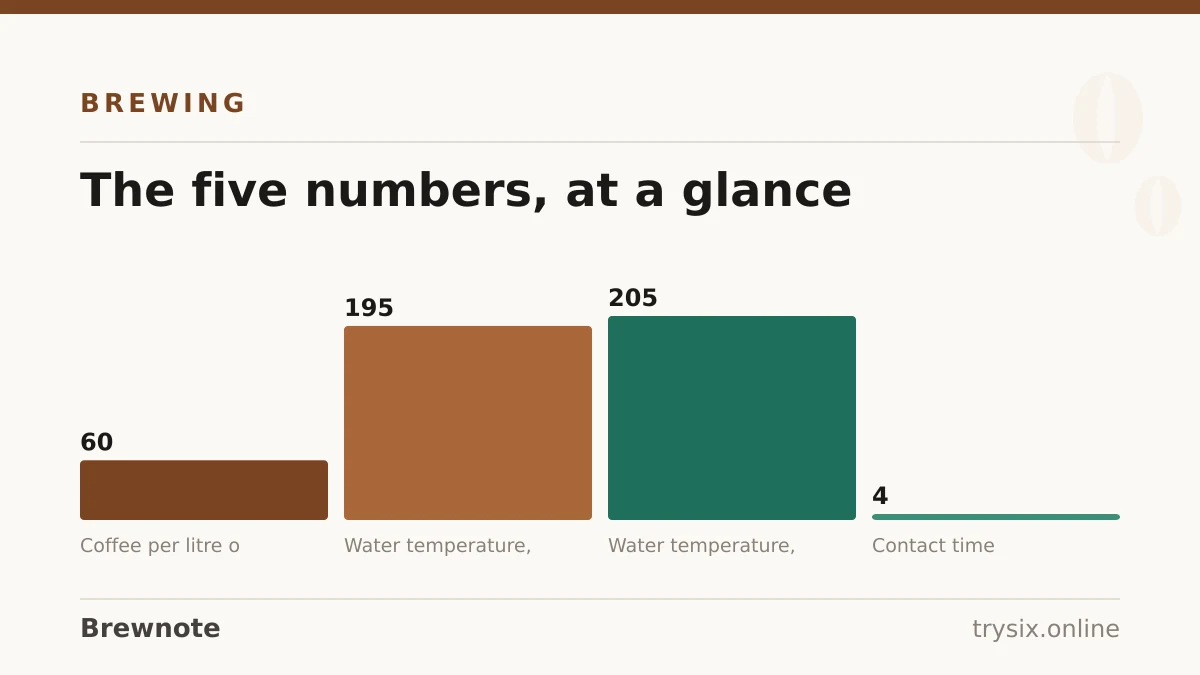
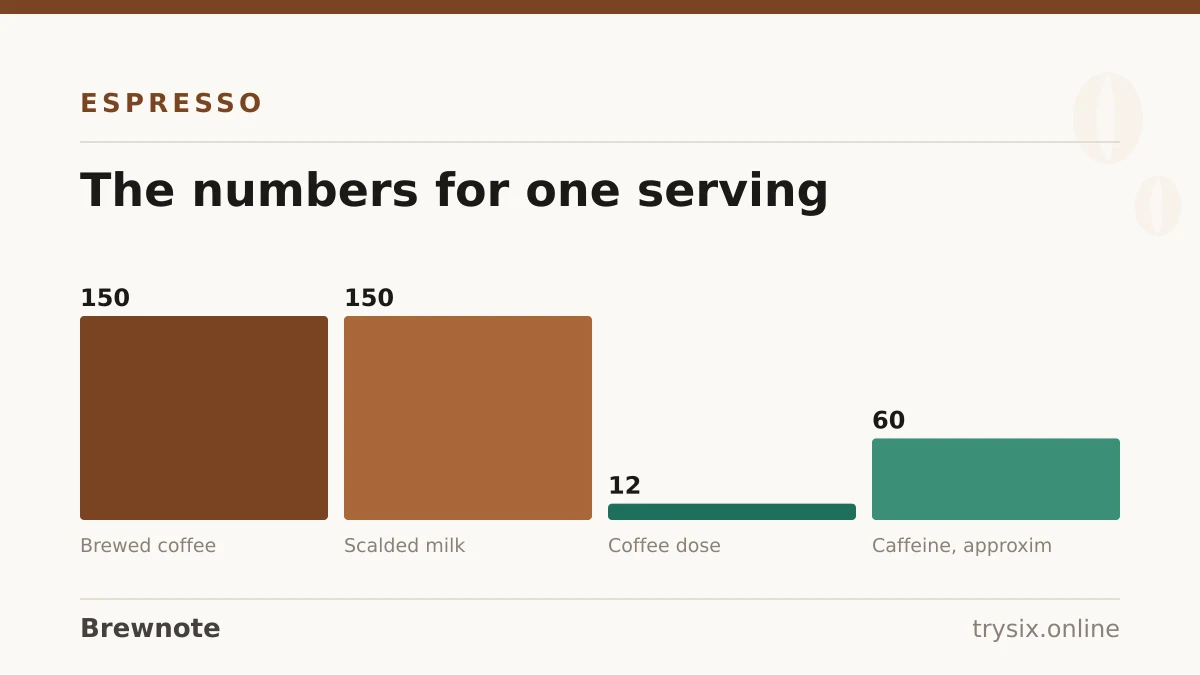
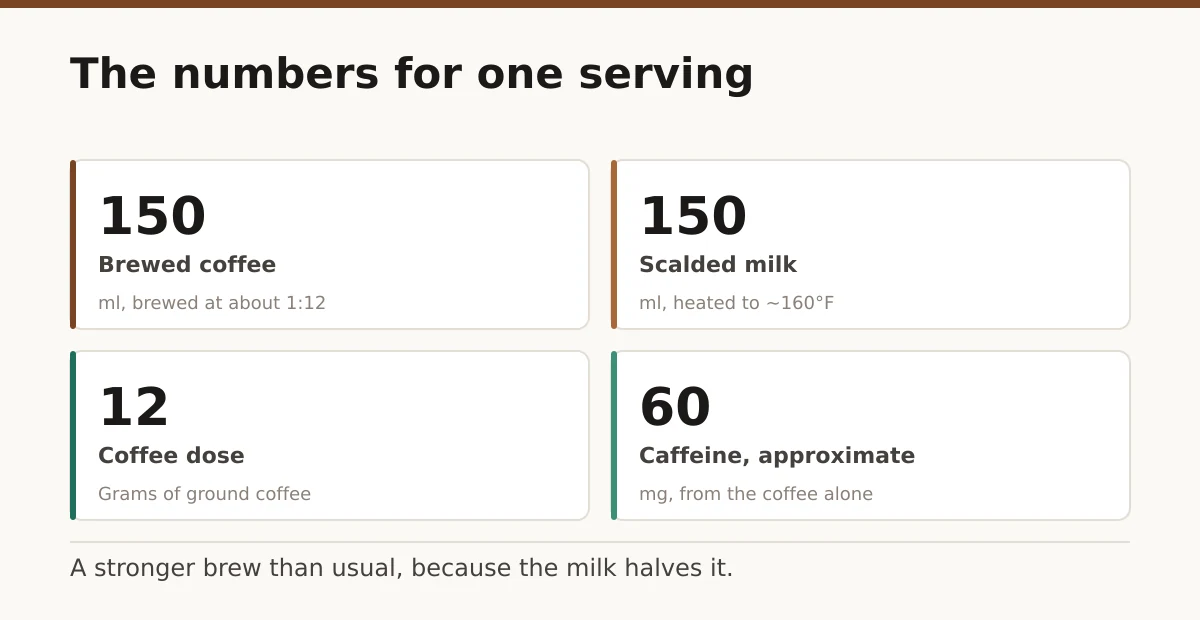
About 150 ml, brewed stronger than you would drink it black — 1:12 rather than 1:16, so roughly 12 g of coffee. It has to survive being cut in half with milk. A French press or a drip brew both work; see how to make the perfect cup of coffee for the ratios.
Step 2: Scald the milk
150 ml of whole milk in a small pan over medium heat until it steams and small bubbles form at the edge — around 160°F. Do not let it boil. Boiling makes milk taste cooked and can form a skin.
Step 3: Pour together
Traditionally both are poured simultaneously into a wide bowl from either side. In practice, coffee first then milk is fine.
Step 4: Serve without foam
There is no foam layer by design. If you want to whisk a little texture into the milk, nobody will object, but it is not part of the drink.
The New Orleans version
In New Orleans, café au lait usually means coffee blended with roasted chicory root, served with hot milk. Chicory is not coffee — it is the root of a relative of the dandelion, roasted and ground to look and brew like it — and it contains no caffeine.
The practice arrived via French colonial habit and entrenched during periods of coffee scarcity, particularly the Civil War blockade, when chicory extended a limited supply. It stayed because people came to prefer the taste: chicory adds a woody, faintly chocolatey bitterness and a heavier body.
- A typical New Orleans blend runs from about 10 to 30 percent chicory by weight.
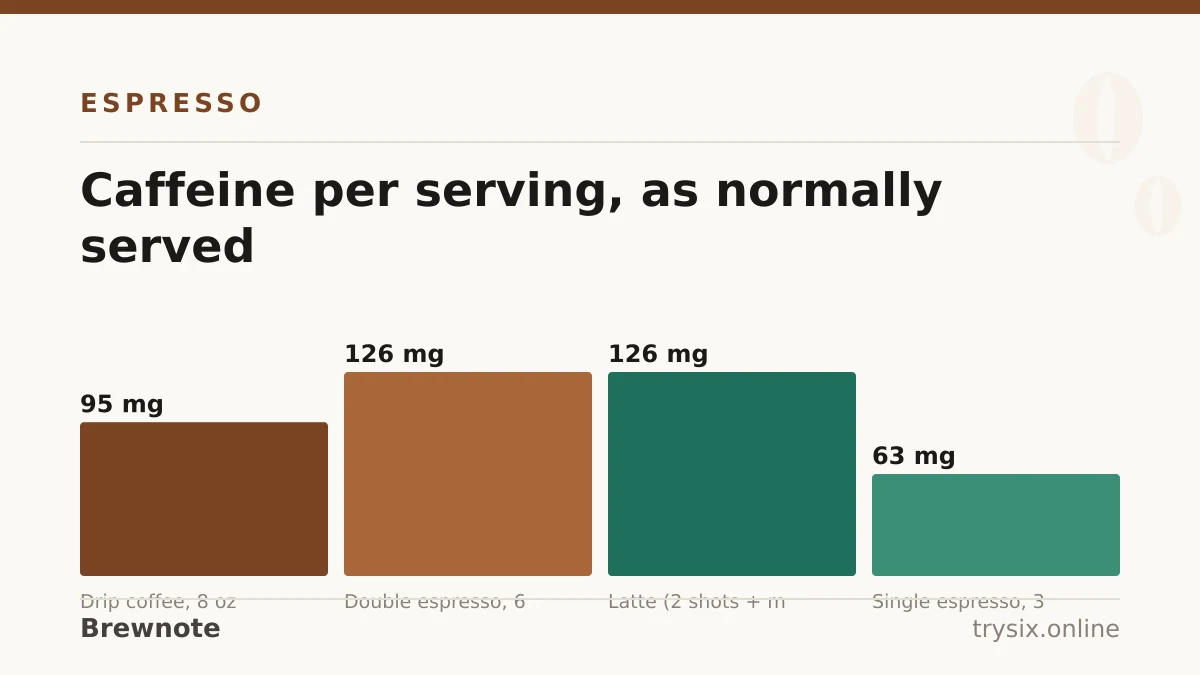
- Because chicory is caffeine-free, a chicory blend has proportionally less caffeine than straight coffee.
- It brews well strong, which suits the 1:1 milk ratio the drink calls for.
- It is traditionally served with beignets, which is a reasonable argument for the whole arrangement.
Which coffee to use
A medium or dark roast works better here than a delicate light one. The drink cuts the coffee with an equal volume of milk, and the floral, tea-like qualities of a light roast largely disappear behind dairy — whereas the caramel and cocoa notes of a darker roast come through. Light vs dark roast explains why.
Beyond that, ordinary rules apply: buy by roast date, grind for the brewer you own, and brew stronger than you would for a black cup. If you want the drink cold, brewing cold brew concentrate and cutting it with cold milk gives something close in spirit, if not in name.
| Choice | Works | Why |
|---|---|---|
| Medium-dark roast | Well | Caramel and cocoa notes survive milk |
| Dark roast | Well | Traditional; stands up to the ratio |
| Light roast single origin | Poorly | Delicate notes disappear behind dairy |
| Chicory blend | Traditionally | The New Orleans style; less caffeine |
| Instant coffee | Passably | Convenient; much less aromatic |