Maybe the machine broke, maybe you are in a rented kitchen, maybe you just like the moka pot your grandmother had. Whatever the reason, a hob and a pan make genuinely good coffee — and the moka pot in particular is one of the best value pieces of coffee equipment there is, if you stop tamping it.
Three quite different things
"On the stove" covers three methods that share nothing but a hob. The saucepan brew is immersion, like a French press without the press. The moka pot is pressure brewing, using steam to force water upward through a bed of coffee. A percolator cycles brewed coffee back over the grounds repeatedly.
| Method | Mechanism | Strength | Time | Main risk |
|---|---|---|---|---|
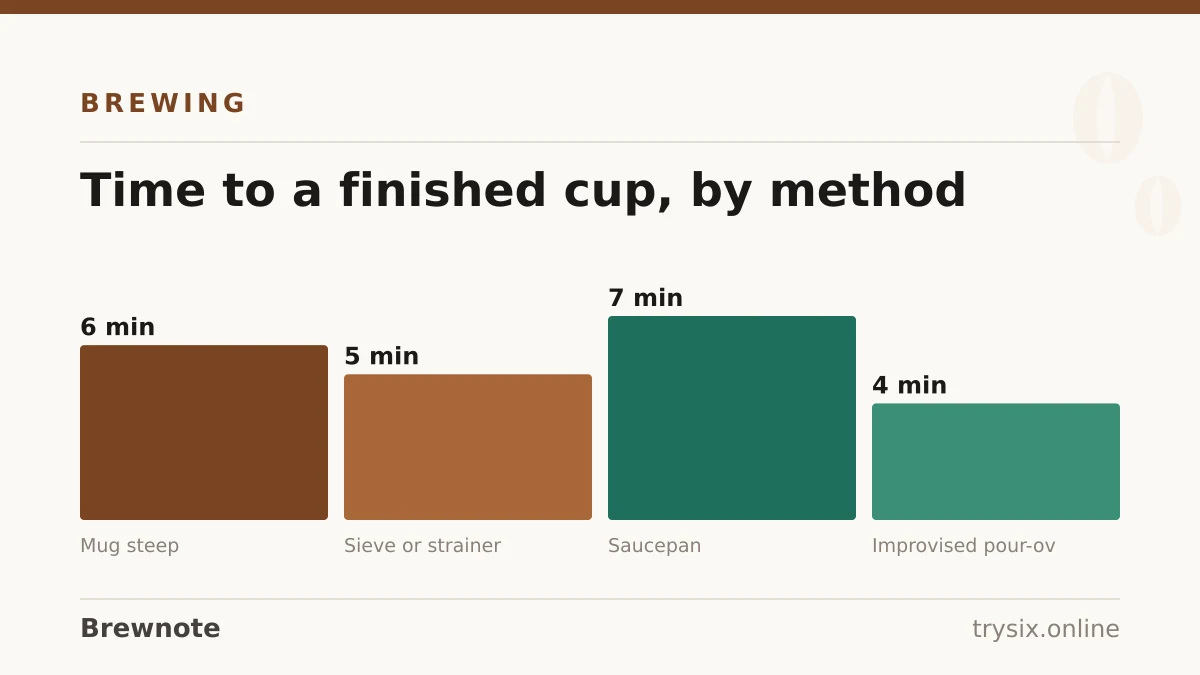
| Saucepan | Immersion, off the heat | Standard, 1:16 | 6 min | Boiling it by accident |
| Moka pot | Steam pressure, ~1.5 bar | Strong, roughly 1:8 | 5 min | Overheating; bitter sputter |
| Percolator | Recirculation | Variable, often over-extracted | 7–10 min | Over-extraction by design |
The saucepan brew
The oldest method, and the one that needs nothing you do not already own. It is the same technique as making coffee without a coffee maker, scaled up to a pan.
Saucepan coffee for two
Step 1: Boil 700 ml of water
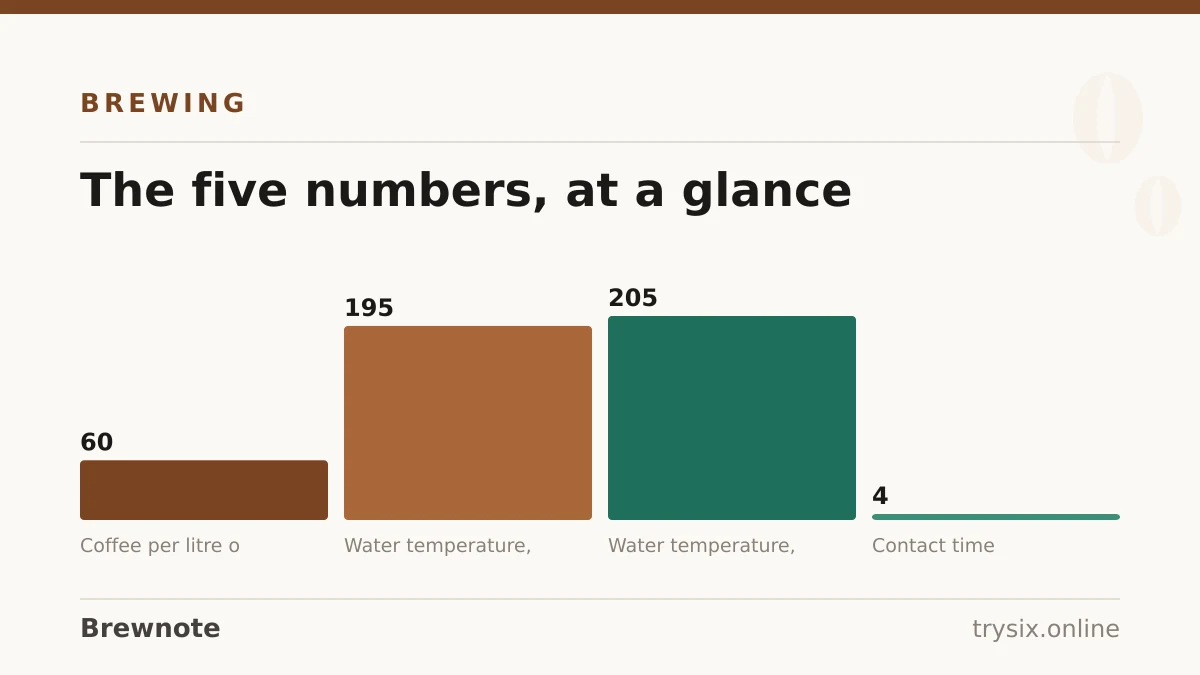
Straight boil in the pan, then take it off the heat entirely and wait 30 seconds. The target is 195–205°F; a rolling boil is above that and extracts harshly.
Step 2: Add 44 g of coffee
Medium-coarse grind. Stir once so nothing floats dry. That is a 1:16 ratio — the same as any drip brew.
Step 3: Wait four minutes
Off the heat the whole time. Do not put it back on the hob to keep it warm; coffee held near boiling turns bitter within minutes.
Step 4: Settle the grounds
Sprinkle a tablespoon of cold water over the surface. The temperature drop helps the floating crust sink. Wait two minutes.
Step 5: Pour slowly
Hold the pan steady and pour in one continuous motion, stopping before the settled bed reaches the lip. Or pour through a sieve if you want it clean.
The moka pot
An aluminium or steel pot in three parts: a water chamber at the bottom, a funnel-shaped coffee basket that sits in it, and an upper chamber the coffee arrives in. Heat the base, the water boils, steam pressure pushes the hot water up through the coffee bed and out into the top.
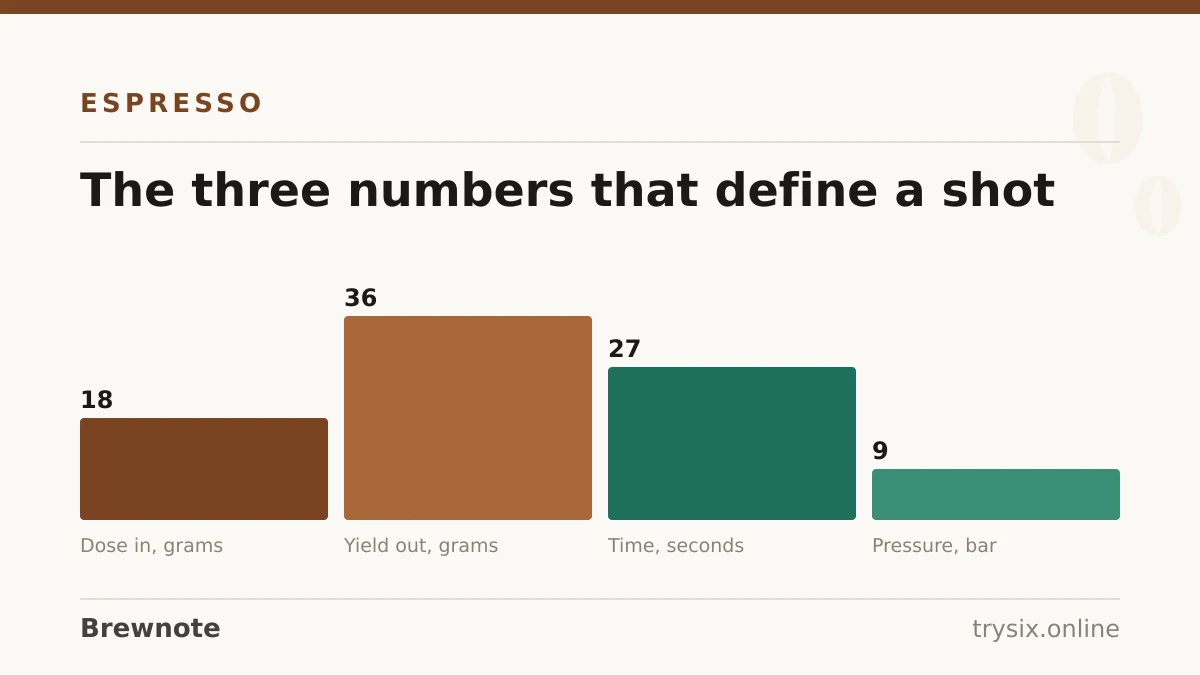
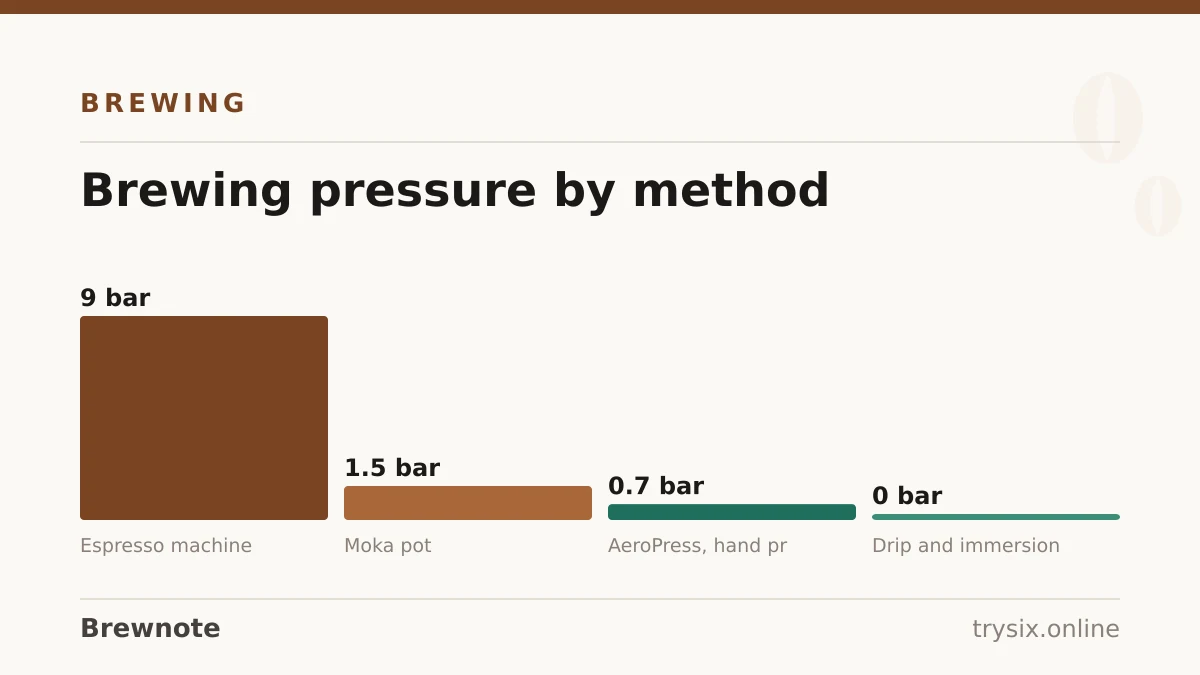
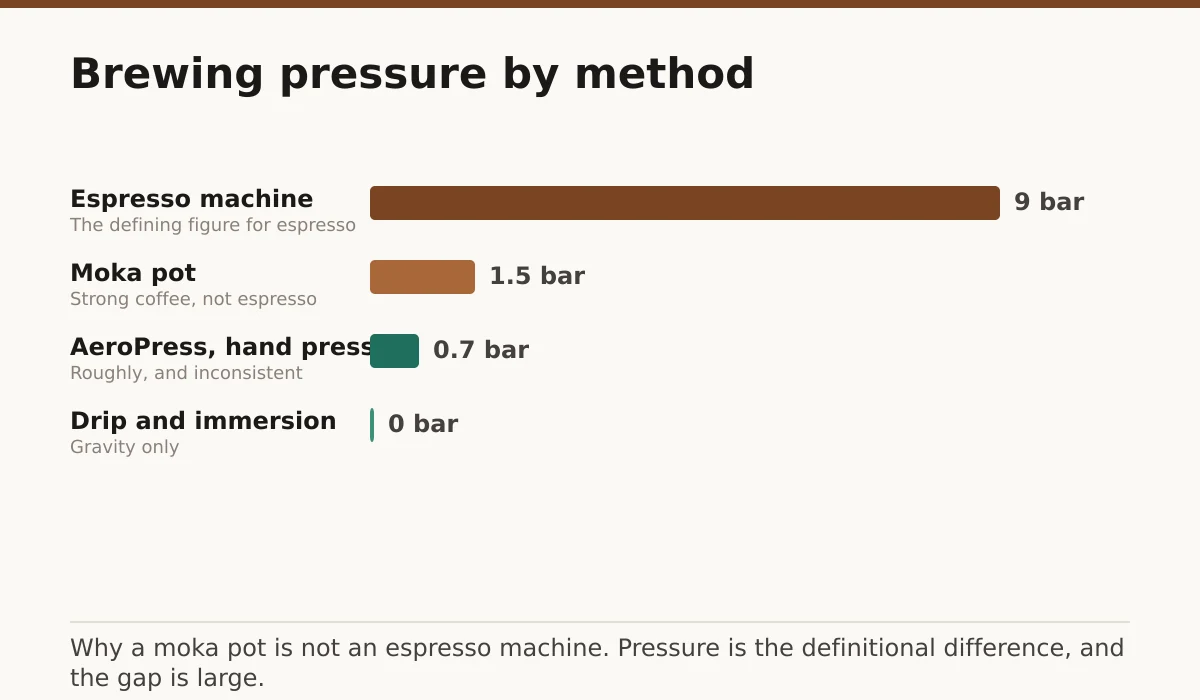
It reaches roughly 1.5 bar of pressure. An espresso machine runs at about 9 bar, which is why moka coffee is strong and concentrated but is not espresso — no proper crema, a different extraction profile, a different drink. How to make espresso at home covers what a moka pot can and cannot stand in for.
Moka pot, three-cup size
Step 1: Fill the base with hot water
To just below the safety valve — never above it. Starting with hot water shortens the time the pot spends heating, which keeps the coffee in the basket from cooking before brewing starts.
Step 2: Fill the basket, level, no tamping
Fine-medium grind, finer than drip but coarser than espresso. Fill to the rim and level it with a finger. Tamping a moka basket raises the pressure past what the pot is designed for and can force it to sputter or stall.
Step 3: Assemble and heat on medium
Screw the top on — use a cloth, the base is already hot. Medium heat, and leave the lid open so you can see what happens.
Step 4: Watch for the honey-coloured stream
Coffee should rise steadily as a dark, syrupy stream. When it lightens to a pale, foamy sputter, the water is spent and what is coming through is steam and bitterness.
Step 5: Kill the heat immediately
Take it off the hob at the first sputter and run the base under a cold tap for a few seconds. This stops the extraction dead. Close the lid and serve.
The percolator
A percolator boils water in its base, sends it up a central tube, and drips it over a basket of coffee — then the resulting coffee falls back into the base and gets boiled and cycled again. It repeats until you take it off the heat.
That recirculation is the problem. Coffee that has already given up its soluble material is passed through fresh boiling water repeatedly, so percolators over-extract almost by design. It is why percolator coffee has a reputation for bitterness, and why the method largely disappeared once drip machines arrived.
- Use a coarse grind — coarser than you would for drip — to slow extraction.
- Once it starts percolating, count four to six minutes and no more. Listen for the perk rate; it should be a slow blip, not a frantic bubble.
- Keep the heat low after it starts. High heat keeps the base at a rolling boil, which is the worst case.
- A percolator is genuinely good for camping, where robustness matters more than nuance.
Which to use
| If you want | Use | Because |
|---|---|---|
| An ordinary cup with no equipment | Saucepan | Nothing to buy; standard 1:16 ratio |
| Something strong for milk drinks | Moka pot | Roughly 1:8, stands up to dairy |
| Coffee for a group outdoors | Percolator | Robust and self-regulating over a fire |
| Actual espresso | None of these | 9 bar needs a pump — see the espresso guide |